Introduction
Testosterone does not appear from nowhere. It is the final output of a precisely orchestrated hormonal cascade that begins in the brain. And at the very top of that cascade -- the master switch that initiates the entire process -- sits kisspeptin.
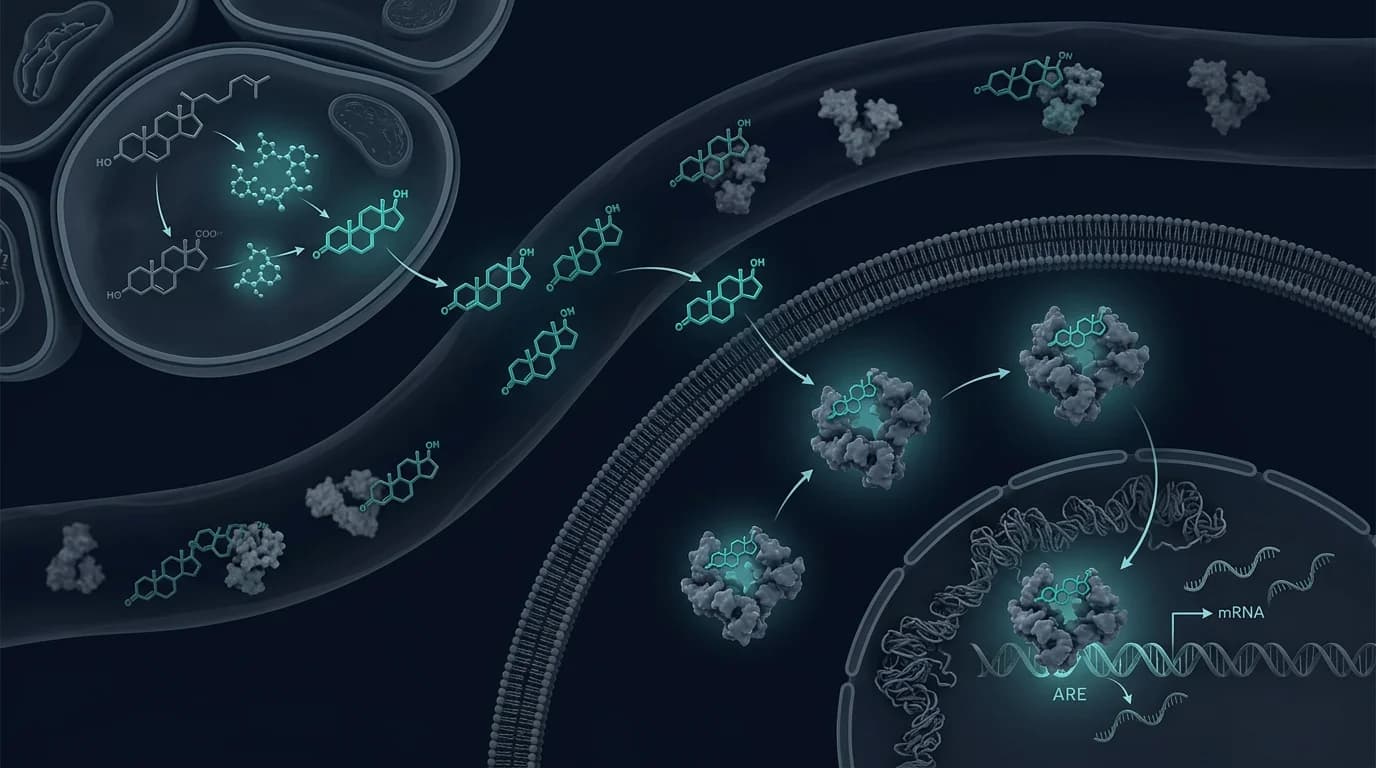
Kisspeptin-10 is the minimum active fragment of the kisspeptin family, discovered in 2003 and now recognized as the most potent known stimulator of GnRH (Gonadotropin-Releasing Hormone) release. When kisspeptin activates GnRH neurons in the hypothalamus, it triggers a cascade: GnRH stimulates LH release from the pituitary, LH stimulates Leydig cells in the testes, and Leydig cells produce testosterone.
For those seeking to optimize testosterone production at the source, kisspeptin represents the most upstream pharmaceutical target currently available. In this article, you will learn how kisspeptin controls testosterone production, why this matters for metabolic health, and how FixMyT helps you understand where in your own metabolic tree the optimization opportunity lies.
Understanding Testosterone: The Expression of Your Metabolism
In the FixMyT framework, Testosterone occupies the apex of Level 4: Androgen Expression. Its subtitle is "Expression" because testosterone represents the final output of the entire metabolic tree -- the culmination of everything working properly upstream.
This is a critical insight: testosterone is not an isolated hormone. It is the expression of:
- Nutrition (Level 1): Providing the raw materials and energy for hormone production
- Mitochondria (Level 1): Powering the steroidogenic enzymes
- Gut, Liver, Thyroid (Level 2): Processing, clearing, and activating hormones
- Low interference (Level 3): Cortisol, estrogen, prolactin, serotonin in check
- Protective hormones (Level 4): Progesterone and DHT supporting the system
When testosterone is low, the root cause could be anywhere in this tree. This is why simply replacing testosterone often fails to address the underlying issues. And it is why kisspeptin -- which activates the natural production pathway -- represents such an interesting approach.
Symptoms of low testosterone include fatigue, low libido, muscle loss, fat gain, brain fog, depression, and reduced motivation. These symptoms cascade through every aspect of life.
What Is Kisspeptin-10?
Kisspeptin-10 is a 10-amino-acid peptide derived from the KISS1 gene product. It acts through the KISS1R receptor (formerly GPR54) on GnRH neurons in the hypothalamus.
Key characteristics of Kisspeptin-10:
- Sequence: 10 amino acids (C-terminal fragment of larger kisspeptins)
- Receptor: KISS1R (GPR54)
- Classification: Reproductive neuropeptide
- Research status: Phase 2/3 clinical trials; investigational
- Half-life: Approximately 28 minutes
- Administration: IV or subcutaneous in research settings
The discovery that kisspeptin is essential for reproduction came from studying patients with KISS1R mutations who had hypogonadotropic hypogonadism -- complete failure of reproductive development due to absent kisspeptin signaling. This proved that kisspeptin is not just one signal among many, but THE essential gate for reproductive hormone production.
For the complete technical profile, see the full Kisspeptin-10 profile on PepGuide.
How Kisspeptin-10 Supports Testosterone Function
Kisspeptin's relationship to testosterone is direct and mechanistically clear. It activates the entire production cascade:
1. GnRH Neuron Stimulation
Kisspeptin is the most potent trigger for GnRH release:
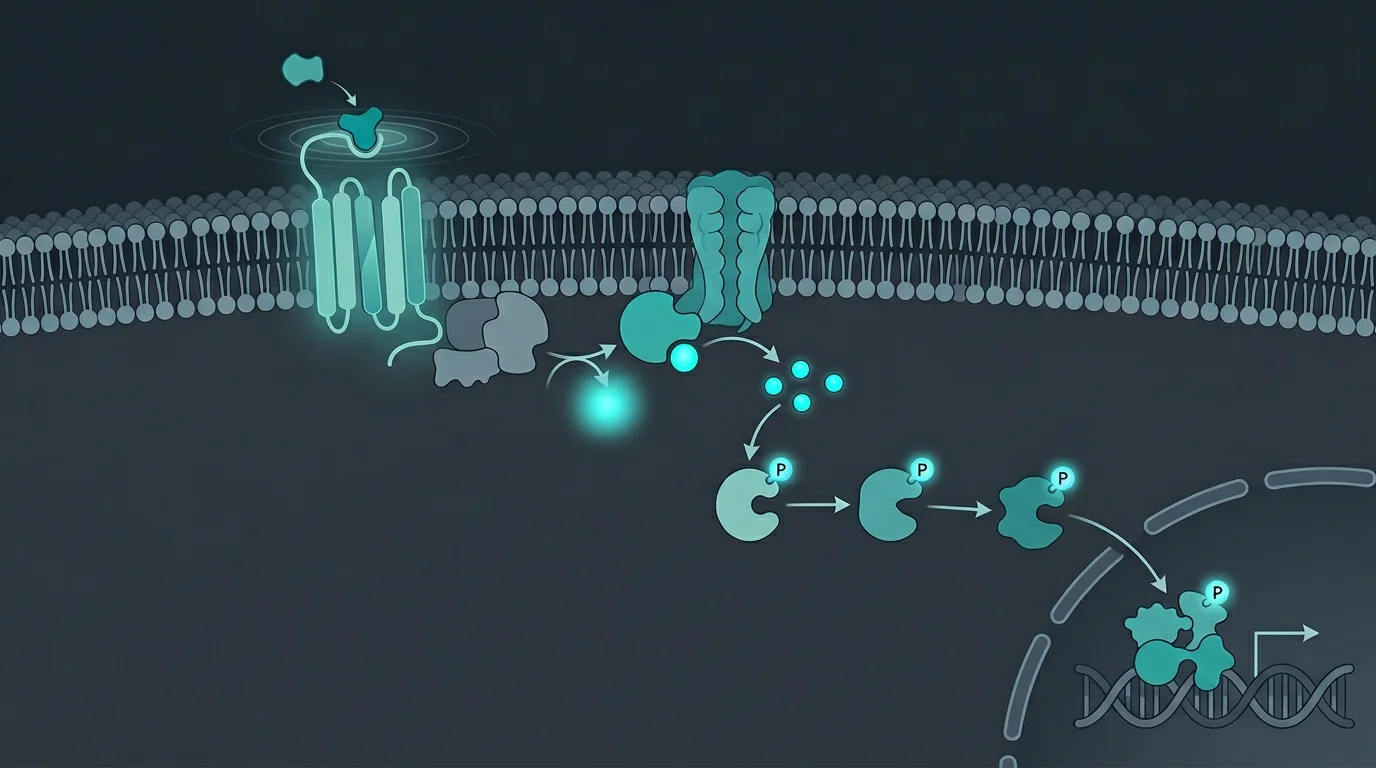
- Binds to KISS1R receptors on GnRH neurons in the hypothalamus
- Activates intracellular signaling cascades
- Triggers GnRH secretion into the hypothalamic-pituitary portal circulation
- Establishes the pulsatile pattern essential for proper downstream signaling
Without kisspeptin signaling, GnRH neurons do not fire properly, and the entire reproductive axis collapses.
2. LH and FSH Release
GnRH reaching the pituitary stimulates gonadotropin release:
- Luteinizing Hormone (LH): The direct signal to Leydig cells for testosterone production
- Follicle-Stimulating Hormone (FSH): Supports spermatogenesis and testicular function
The pulsatile pattern of GnRH translates to pulsatile LH release, which is essential for optimal Leydig cell function.
3. Leydig Cell Activation
LH reaching the testes activates testosterone synthesis:
- Binds to LH receptors on Leydig cells
- Activates StAR protein (rate-limiting step in steroidogenesis)
- Stimulates the cholesterol-to-testosterone conversion pathway
- Produces testosterone for both local and systemic use
4. Downstream Hormone Production
The testosterone produced then supports:
- DHT production via 5-alpha reductase
- Estradiol production (in moderation) via aromatase
- Neurosteroid effects in the brain
- Anabolic effects on muscle, bone, and metabolism
5. Pulsatile Pattern Maintenance
Kisspeptin helps maintain proper pulsatility:
- Works with dynorphin and neurokinin B in the "pulse generator"
- Ensures appropriate LH:FSH ratios
- Prevents the suppressive effects of continuous signaling
- Maintains fertility alongside testosterone production
What Real People Are Saying
Kisspeptin research occurs primarily in clinical settings, but experiences have been shared:
"Participated in a research study using kisspeptin for hypogonadism assessment. The LH response was impressive -- spiked within 30 minutes and testosterone followed. My peak testosterone was the highest I'd seen in years, achieved purely through endogenous production. It demonstrated that my testes can still produce when properly stimulated." -- u/clinical_trial_participant on r/Testosterone
"Used kisspeptin as part of a comprehensive axis restart after long-term TRT. The approach was to 'wake up' the system from the top down. Combined with HCG and eventually tapering off, my axis recovered more fully than previous attempts with just HCG/SERM. Natural testosterone production restored." -- u/axis_recovery on r/steroids
"The interesting thing about kisspeptin is it tests whether your system can still work. If kisspeptin gives you a good LH response, your pituitary works. If LH gives you testosterone, your testes work. It's diagnostic and potentially therapeutic." -- u/hpg_diagnostics on r/Peptides
These reports reflect kisspeptin's use in clinical and research contexts.
Monitoring Your Testosterone Health with FixMyT
Understanding where in the production cascade your testosterone issues originate is essential for effective optimization. FixMyT provides this comprehensive mapping.
The FixMyT symptoms quiz evaluates indicators across all levels:
- Level 1 symptoms (nutrition, energy production, mitochondrial function)
- Level 2 symptoms (gut health, liver function, thyroid)
- Level 3 symptoms (cortisol, estrogen, prolactin, serotonin interference)
- Level 4 symptoms (progesterone, DHT, testosterone expression)
The visual metabolic tree shows exactly how testosterone at the apex depends on everything upstream. If multiple upstream nodes are dysfunctional, simply stimulating production with kisspeptin may provide temporary improvement but not address root causes.
For those researching kisspeptin, FixMyT helps identify whether HPG axis activation is the right target or whether upstream metabolic issues need attention first.
Research and Considerations
Kisspeptin has extensive research backing its role in reproductive physiology and is being developed for clinical applications.
What the evidence supports:
- Kisspeptin is the most potent known stimulator of GnRH (well-established)
- Single doses trigger robust LH and testosterone increases in men
- Effective for triggering oocyte maturation in IVF with reduced OHSS risk
- Diagnostic utility for differentiating hypothalamic vs pituitary dysfunction
- Short half-life provides good safety margin
What needs more research:
- Long-term therapeutic protocols for testosterone optimization
- Optimal dosing and frequency for sustained effects
- Comparison with other axis stimulation approaches
- Effects in different populations (aging, obesity, metabolic syndrome)
Kisspeptin represents one of the most exciting developments in reproductive endocrinology, with regulatory approval for specific indications anticipated.
Disclaimer
This article is for educational and research purposes only. Kisspeptin-10 is an investigational compound used in clinical research settings and is not approved for routine clinical use. Nothing in this article constitutes medical advice or a recommendation to use any substance.
If you are experiencing symptoms of low testosterone, consult with a qualified healthcare provider for proper evaluation and treatment options.
Any decisions about health interventions remain your responsibility in consultation with appropriate medical professionals.
Learn More
- Full Kisspeptin-10 Profile on PepGuide - Complete technical details
- HCG for Direct Leydig Cell Support - Downstream approach
- FixMyT Metabolic Assessment - Understand your full metabolic picture
- Gonadorelin for GnRH Signaling - Related approach
References
-
de Roux N, et al. "Hypogonadotropic hypogonadism due to loss of function of the KiSS1-derived peptide receptor GPR54." Proceedings of the National Academy of Sciences. 2003;100(19):10972-10976.
-
Dhillo WS, et al. "Kisspeptin-54 stimulates the hypothalamic-pituitary gonadal axis in human males." Journal of Clinical Endocrinology & Metabolism. 2005;90(12):6609-6615.
-
George JT, et al. "Kisspeptin-10 is a potent stimulator of LH and increases pulse frequency in men." Journal of Clinical Endocrinology & Metabolism. 2011;96(8):E1228-E1236.
-
Abbara A, et al. "Efficacy of Kisspeptin-54 to Trigger Oocyte Maturation in Women at High Risk of Ovarian Hyperstimulation Syndrome." Journal of Clinical Endocrinology & Metabolism. 2015;100(9):3322-3331.
-
Skorupskaite K, George JT, Anderson RA. "The kisspeptin-GnRH pathway in human reproductive health and disease." Human Reproduction Update. 2014;20(4):485-500.