Introduction
When it comes to testosterone production, the testes are where the magic happens. Leydig cells -- specialized cells within the testes -- receive the signal from LH (Luteinizing Hormone) and respond by producing testosterone. But what happens when that LH signal is suppressed, as occurs during testosterone replacement therapy?
Human Chorionic Gonadotropin (hCG) provides an answer. This FDA-approved hormone mimics LH, directly stimulating Leydig cells to produce testosterone even when the body's own LH production is suppressed. For men on TRT, this means maintaining testicular function, preserving fertility, and continuing to produce testosterone and other important testicular hormones alongside exogenous replacement.
In this article, you will learn how hCG supports testosterone production at the testicular level, why this matters for comprehensive hormone optimization, and how FixMyT helps you understand your overall metabolic context.
Understanding Testosterone: The Expression of Your Metabolism
Testosterone sits at the apex of the FixMyT metabolic tree, representing the final output of Level 4: Androgen Expression. Its subtitle is "Expression" because testosterone reflects the health of everything upstream.
The FixMyT framework recognizes that testosterone depends on:
- Foundation (Level 1): Nutrition and mitochondrial function providing energy and raw materials
- Metabolic Organs (Level 2): Gut, liver, and thyroid processing hormones correctly
- Low Interference (Level 3): Cortisol, estrogen, prolactin, and serotonin not suppressing production
- Supportive Hormones (Level 4): Progesterone and DHT creating the right environment
When testosterone is low, the symptoms are pervasive: fatigue, low libido, muscle loss, fat accumulation, brain fog, depression, and diminished motivation. Many men turn to TRT to address these symptoms -- but TRT without testicular support creates its own problems.
This is where hCG becomes essential: it maintains the testicular contribution even when external testosterone suppresses natural LH.
What Is hCG?
Human Chorionic Gonadotropin is a hormone naturally produced during pregnancy that mimics Luteinizing Hormone at the receptor level. In males, it directly stimulates Leydig cells to produce testosterone.
Key characteristics of hCG:
- Classification: Gonadotropin hormone
- FDA status: Approved for fertility and specific hormonal conditions
- Mechanism: LH receptor agonist on Leydig cells
- Administration: Subcutaneous or intramuscular (250-500 IU, 2-3x weekly typical)
- Half-life: 24-36 hours
- Unique feature: Bypasses pituitary, directly activates testes
hCG has been used clinically for decades, providing one of the longest safety records of any hormonal intervention. It is considered the gold standard for maintaining testicular function during TRT.
For the complete technical profile, see the full hCG profile on PepGuide.
How hCG Supports Testosterone Function
hCG's support for testosterone is direct and mechanistically well-understood:
1. LH Receptor Activation
hCG binds to the same receptors as LH on Leydig cells:
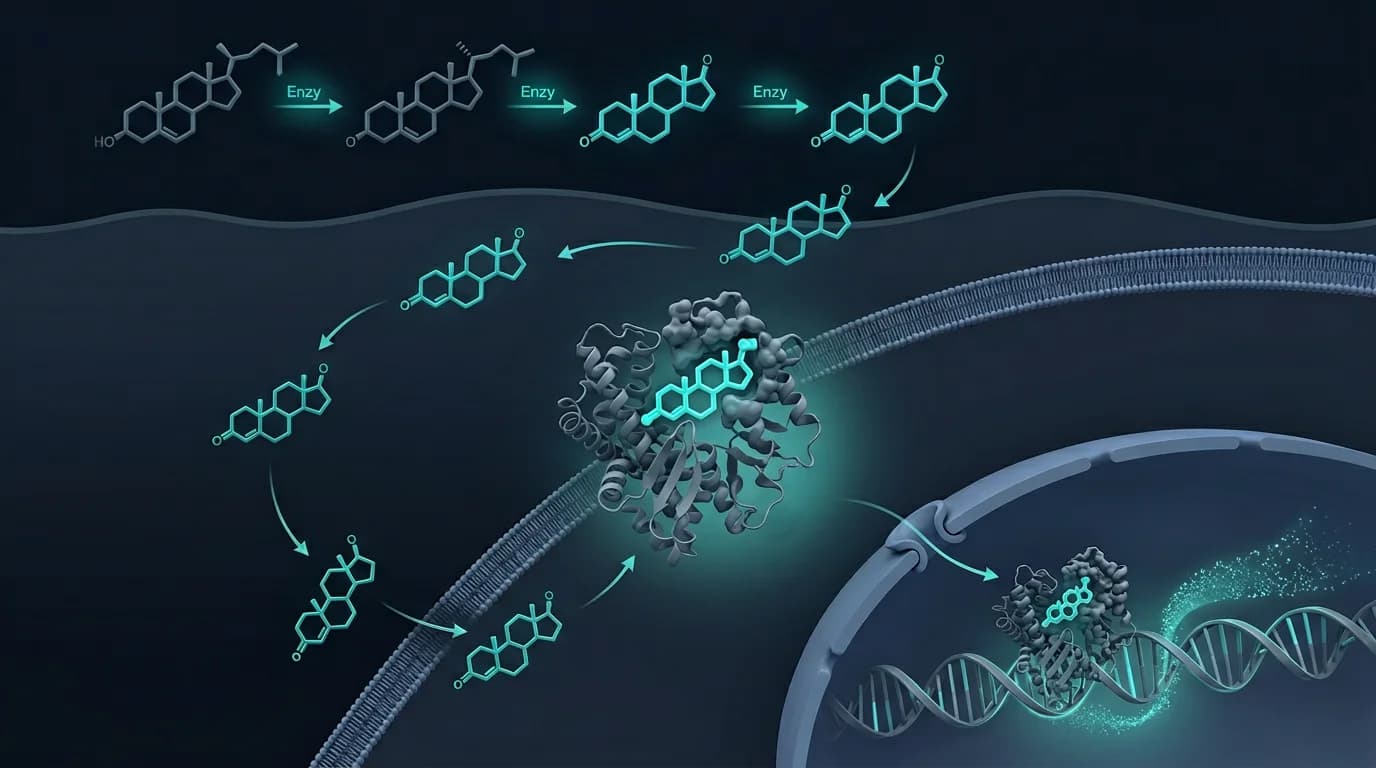
- Activates adenylyl cyclase and cAMP signaling
- Stimulates cholesterol transport via StAR protein
- Activates steroidogenic enzymes
- Triggers testosterone synthesis
This occurs regardless of the hypothalamic-pituitary status, making hCG valuable even when the HPG axis is suppressed.
2. Intratesticular Testosterone Maintenance
The testes require high local testosterone concentrations:
- Intratesticular testosterone (ITT) is 40-100x higher than serum levels
- This concentration supports Sertoli cell function
- Essential for spermatogenesis
- Critical for overall testicular health
Research demonstrates that hCG maintains ITT even during exogenous testosterone administration that suppresses LH.
3. Testicular Preservation
Without stimulation, testes atrophy during TRT:
- LH suppression leads to Leydig cell dormancy
- Testicular volume decreases (often significantly)
- May affect long-term testicular function
- Fertility is compromised
hCG prevents this atrophy by maintaining ongoing testicular activity.
4. Upstream Hormone Support
The testes produce more than testosterone:
- Pregnenolone: The "mother hormone" for all steroids
- DHEA: Important for energy, mood, and cognition
- Other neurosteroids: Supporting brain health
By maintaining testicular function, hCG preserves this broader hormonal contribution that exogenous testosterone alone cannot provide.
5. Fertility Preservation
For men who may want children:
- hCG maintains spermatogenesis
- Keeps the reproductive machinery active
- May preserve fertility during TRT
- Often combined with FSH (via hMG) for full fertility support
What Real People Are Saying
hCG is widely used in TRT protocols, with extensive community experience:
"Adding hCG 500 IU twice weekly to my TRT was a game-changer. My testes stopped shrinking immediately, libido improved beyond what testosterone alone provided, and I just feel more 'complete.' Labs show additional testosterone production on top of my injections." -- u/trt_complete_protocol on r/Testosterone
"Was on TRT for 2 years without hCG and my testes were tiny. Added hCG and within a few months they were back to normal size. The psychological effect of this alone was significant, but the hormonal benefits were real too -- better mood, better libido, better overall function." -- u/testicular_restoration on r/steroids
"The difference between TRT alone and TRT+hCG is notable. With hCG, my pregnenolone and DHEA levels stay healthy, I feel sharper mentally, and my sexual function is significantly better. The testes clearly contribute something beyond just testosterone." -- u/neurosteroid_supporter on r/Peptides
These experiences reflect hCG use in medically supervised TRT protocols.
Monitoring Your Testosterone Health with FixMyT
Understanding how testosterone fits into your overall metabolic picture is essential. FixMyT provides this comprehensive view.
The FixMyT symptoms quiz evaluates:
- Testosterone-specific symptoms (energy, libido, muscle, mood)
- Testicular function indicators
- Upstream metabolic factors (nutrition, mitochondria, organs)
- Interference patterns (cortisol, estrogen, prolactin)
The visual metabolic tree shows how testosterone at Level 4 depends on everything upstream. If you are on TRT and still experiencing symptoms, the issue may be upstream (thyroid, cortisol, estrogen) or in how the testosterone is being utilized. hCG addresses the testicular component but may not solve all symptoms if other nodes are dysfunctional.
For those optimizing TRT protocols, FixMyT helps identify whether testicular support is a priority and what else may need attention.
Research and Considerations
hCG has extensive clinical evidence supporting its use for testosterone support during TRT.
What the evidence supports:
- hCG maintains intratesticular testosterone during exogenous T administration (demonstrated)
- Preserves testicular volume during TRT (consistently shown)
- Maintains spermatogenesis in most men (established)
- Well-tolerated with decades of safety data
- Standard of care in many TRT protocols
What to monitor:
- Estrogen levels (hCG can increase aromatization)
- Optimal dosing for individual response
- Balance between testosterone and hCG contributions
- Long-term effects on Leydig cell sensitivity
The evidence strongly supports hCG for testicular function during TRT.
Disclaimer
This article is for educational purposes only. hCG is an FDA-approved prescription medication requiring medical supervision. Nothing in this article constitutes medical advice or a recommendation to use any substance.
hCG can increase estrogen through aromatization of the additional testosterone produced. Monitoring and estrogen management may be necessary. Consult with a qualified healthcare provider for proper protocol design.
Any decisions about health interventions remain your responsibility in consultation with appropriate medical professionals.
Learn More
- Full hCG Profile on PepGuide - Complete technical details
- Gonadorelin for GnRH Support - Alternative approach
- FixMyT Metabolic Assessment - Understand your metabolic context
- HMG for Fertility - Combined FSH/LH support
References
-
Coviello AD, et al. "Low-dose human chorionic gonadotropin maintains intratesticular testosterone in normal men with testosterone-induced gonadotropin suppression." Journal of Clinical Endocrinology & Metabolism. 2005;90(5):2595-2602.
-
Lee JA, Ramasamy R. "Indications for the use of human chorionic gonadotropic hormone for the management of infertility in hypogonadal men." Translational Andrology and Urology. 2018;7(Suppl 3):S348-S352.
-
Kohn TP, et al. "The Effect of Subcutaneous Human Chorionic Gonadotropin on Testosterone Levels." Fertility and Sterility. 2019;111(4):e26.
-
Hsieh TC, et al. "Concomitant intramuscular human chorionic gonadotropin preserves spermatogenesis in men undergoing testosterone replacement therapy." Journal of Urology. 2013;189(2):647-650.
-
Lipshultz LI, et al. "Management of male infertility." American Urological Association Education and Research. 2010.