Introduction
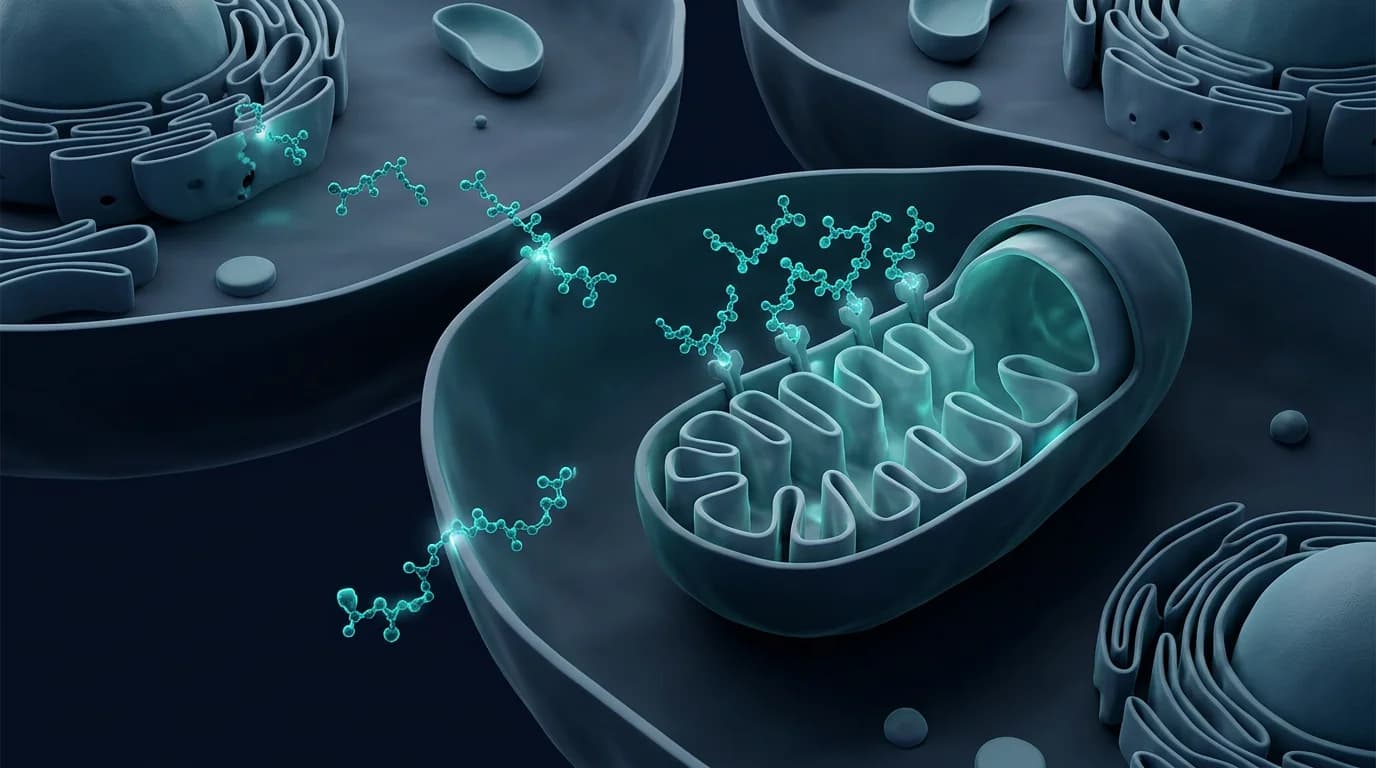
If mitochondria are the power plants of your cells, then NAD+ (nicotinamide adenine dinucleotide) is the essential ingredient they cannot function without. Every step of cellular energy production depends on this coenzyme. Without adequate NAD+, mitochondria cannot convert the food you eat into the ATP your cells need.
The challenge is that NAD+ levels decline with age -- by some estimates, by 50% or more between youth and middle age. This decline correlates with metabolic dysfunction, reduced energy, and accelerated aging. Restoring NAD+ levels has become a major focus of longevity research.
In this article, we will explore how NAD+ supports mitochondrial function, why levels decline with age, what the research shows about supplementation, and how this fits into the FixMyT metabolic framework.
Understanding Mitochondria: The Energy of Your Metabolism
The Mitochondria node in FixMyT is Level 1, directly downstream of Nutrition. It represents the conversion of dietary fuel into cellular energy -- the most fundamental metabolic process.
Key aspects of mitochondrial function:
- ATP production: The electron transport chain generates the vast majority of cellular ATP
- Efficient respiration: Healthy mitochondria produce energy with minimal waste
- Metabolic flexibility: Ability to switch between glucose and fat oxidation
- Heat generation: Mitochondria produce body heat as a byproduct of respiration
When the Mitochondria node is dysfunctional, you experience chronic fatigue, poor exercise recovery, cold intolerance, and difficulty maintaining metabolic rate. These symptoms cascade downstream -- affecting the liver's ability to detoxify, the thyroid's ability to regulate metabolism, and ultimately hormone production.
The FixMyT interventions for mitochondria specifically include B3 (niacinamide) for NAD+ support. This recognizes the central role NAD+ plays in mitochondrial function.
What Is NAD+?
NAD+ (nicotinamide adenine dinucleotide) is a coenzyme found in every cell of your body. It exists in two forms: NAD+ (oxidized) and NADH (reduced), and the balance between these forms drives many cellular processes.
Key characteristics of NAD+:
- Classification: Coenzyme (not technically a peptide)
- Function: Essential electron carrier in cellular metabolism
- Role in mitochondria: Required for Krebs cycle and electron transport chain
- Other roles: Sirtuin activation, DNA repair, cellular signaling
- Decline: Levels drop approximately 50% between ages 20-50
NAD+ is involved in hundreds of metabolic reactions. In the mitochondria specifically, it serves as the primary electron carrier that transfers energy from nutrients to the electron transport chain, where ATP is produced.
Forms of NAD+ supplementation:
- Direct NAD+ (intravenous or sublingual)
- NMN (nicotinamide mononucleotide) - precursor
- NR (nicotinamide riboside) - precursor
- Niacinamide (vitamin B3) - precursor
How NAD+ Supports Mitochondrial Function
NAD+ is not just involved in mitochondrial function -- it is absolutely essential:
1. Electron Transport in the Krebs Cycle
The Krebs cycle (citric acid cycle) is the central hub of cellular metabolism. NAD+ accepts electrons from metabolic intermediates, becoming NADH:
- Isocitrate + NAD+ -> alpha-ketoglutarate + NADH
- Alpha-ketoglutarate + NAD+ -> Succinyl-CoA + NADH
- Malate + NAD+ -> Oxaloacetate + NADH
Without adequate NAD+, the Krebs cycle stalls and ATP production collapses.
2. Electron Transport Chain Function
NADH delivers electrons to Complex I of the electron transport chain:
- NADH transfers electrons to Complex I
- Electrons flow through the chain to oxygen
- This flow generates the proton gradient that drives ATP synthase
- ATP is produced
The NAD+/NADH ratio directly affects how efficiently this process operates.
3. Sirtuin Activation
Beyond energy production, NAD+ activates sirtuins -- a family of proteins involved in:
- Mitochondrial biogenesis
- Stress resistance
- DNA repair
- Metabolic regulation
SIRT1 and SIRT3 specifically promote mitochondrial function and longevity pathways. Without NAD+, sirtuins cannot function.
4. PARP Competition
NAD+ is also consumed by PARPs (poly-ADP-ribose polymerases), which are involved in DNA repair:
- DNA damage activates PARPs
- PARPs consume NAD+ to function
- Excessive DNA damage depletes NAD+
- NAD+ depletion impairs mitochondrial function
This creates a competition: DNA repair vs. energy production. When NAD+ is limiting, both suffer.
Research on NAD+ Decline
Studies have documented that NAD+ levels decline significantly with age. A 2016 study in Cell Metabolism found that restoring NAD+ levels in aged mice improved mitochondrial function and oxidative metabolism to levels comparable to young animals.
What Real People Are Saying
NAD+ supplementation (through precursors like NMN and NR, or direct NAD+) is one of the most discussed longevity interventions:
"Started NMN at 500mg daily about 6 months ago. The most noticeable change is sustained energy throughout the day. Used to have a hard crash around 2-3pm, now I maintain steady levels until evening. Sleep quality also improved." — u/nad_research on r/NMN
"IV NAD+ was intense -- felt like electricity running through my body. Afterward, mental clarity was noticeably improved for about a week. Now doing sublingual maintenance doses. Energy is definitely better than before I started." — u/longevity_protocols on r/Nootropics
"Been cycling NR and niacinamide for about a year. Blood work showed NAD+ levels came up significantly. Subjectively, recovery from workouts is better and I feel more resilient to stress. Not a miracle but a noticeable improvement in baseline function." — u/mito_optimization on r/Peptides
Important note: NAD+ supplementation responses vary significantly. Some people report dramatic effects; others notice little. The optimal form, dose, and protocol remain active areas of research.
Monitoring Your Mitochondrial Health with FixMyT
NAD+ status is intimately connected to mitochondrial function. FixMyT provides a framework for assessing whether cellular energy production might be a factor in your metabolic picture.
The symptoms quiz evaluates key indicators:
- Chronic fatigue (suggests impaired ATP production)
- Poor exercise recovery (mitochondria cannot meet demand)
- Cold intolerance (insufficient metabolic heat)
- "Wired but tired" states (may indicate mitochondrial stress)
The FixMyT intervention list for the Mitochondria node specifically includes B3 (niacinamide) for NAD+ support. This reflects the recognition that NAD+ is foundational to mitochondrial function.
Understanding your Mitochondria node score provides context for whether NAD+ support is addressing a likely bottleneck in your metabolism.
Research and Considerations
NAD+ research has exploded in recent years:
What the evidence supports:
- NAD+ levels decline with age across species
- NAD+ is essential for mitochondrial function and sirtuin activity
- Precursor supplementation can raise NAD+ levels in humans
- Animal studies show improved mitochondrial function with NAD+ restoration
- Some human studies show improved markers of metabolic health
What remains uncertain:
- Optimal precursor (NMN vs. NR vs. niacinamide)
- Optimal dosing for different populations
- Whether raising NAD+ translates to meaningful lifespan extension in humans
- Long-term safety at high doses
- Which populations benefit most
Important considerations:
- Direct NAD+ is poorly absorbed orally (requires IV or sublingual)
- Precursors like NMN and NR are more practical for oral use
- Quality and purity vary significantly between products
- Some concerns about excessive NAD+ promoting tumor growth (theoretical)
- Cost can be significant for high-quality supplements
The field is moving rapidly. Major clinical trials are underway to determine whether NAD+ precursor supplementation can improve healthspan in humans.
Disclaimer
This article is for educational purposes only. NAD+ and its precursors are available as supplements in many jurisdictions but are not FDA-approved to treat any disease.
Nothing in this article constitutes medical advice or a recommendation to use any substance. The longevity research field is exciting but still young. Many claims about NAD+ are based on animal studies that may not translate directly to humans.
If you are interested in NAD+ supplementation, please consult with a qualified healthcare provider. Individual responses vary, and there may be specific situations where supplementation is not advisable.
Learn More
- SS-31 for ATP Production - Complementary mitochondrial membrane support
- MOTS-c for Exercise-Like Effects - Mitochondrial signaling and biogenesis
- Epitalon for Cellular Longevity - Telomerase and aging pathways
- FixMyT Metabolic Assessment - Understand your mitochondrial baseline
References
-
Verdin E. "NAD+ in aging, metabolism, and neurodegeneration." Science. 2015;350(6265):1208-1213. doi:10.1126/science.aac4854
-
Imai S, Guarente L. "NAD+ and sirtuins in aging and disease." Trends in Cell Biology. 2014;24(8):464-471. doi:10.1016/j.tcb.2014.04.002
-
Gomes AP, Price NL, Ling AJ, et al. "Declining NAD+ induces a pseudohypoxic state disrupting nuclear-mitochondrial communication during aging." Cell. 2013;155(7):1624-1638. doi:10.1016/j.cell.2013.11.037
-
Yoshino J, Baur JA, Imai SI. "NAD+ Intermediates: The Biology and Therapeutic Potential of NMN and NR." Cell Metabolism. 2018;27(3):513-528. doi:10.1016/j.cmet.2017.11.002
-
Martens CR, Denman BA, Mazzo MR, et al. "Chronic nicotinamide riboside supplementation is well-tolerated and elevates NAD+ in healthy middle-aged and older adults." Nature Communications. 2018;9:1286. doi:10.1038/s41467-018-03421-7