Introduction
What if you could capture some of the metabolic benefits of exercise in a peptide? That is the provocative question that MOTS-c research raises.
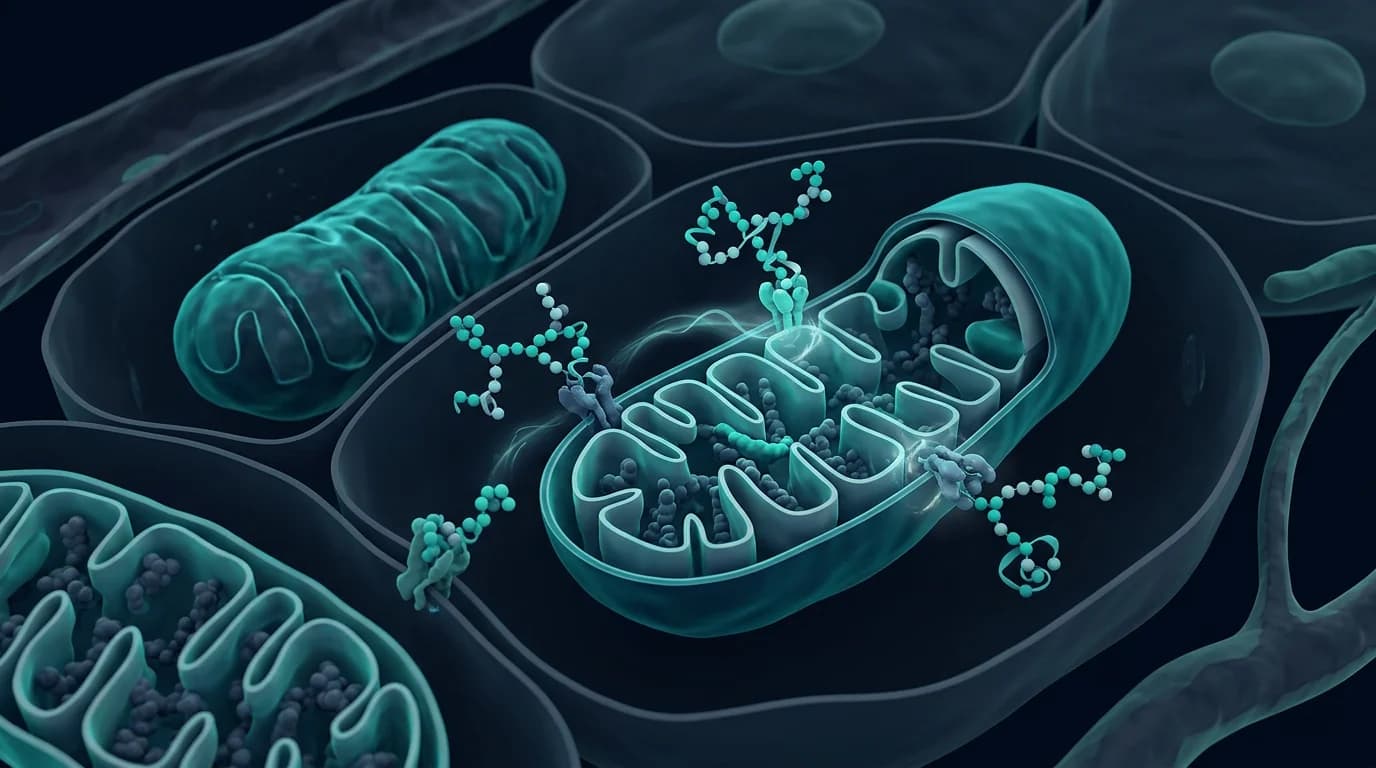
MOTS-c is a 16-amino-acid peptide encoded by mitochondrial DNA -- not nuclear DNA. This makes it one of only a handful of known mitochondrial-derived peptides (MDPs). Discovered in 2015, it has been dubbed an "exercise mimetic" because it activates many of the same metabolic pathways that physical exercise activates.
The connection to the Mitochondria node is direct: MOTS-c is literally made by mitochondria, secreted from them, and then signals back to enhance mitochondrial function throughout the body. It represents mitochondria not as passive power plants but as active signaling organs.
In this article, we will explore how MOTS-c works to enhance cellular energy, why AMPK activation matters for mitochondrial function, and how this fits into the FixMyT metabolic framework.
Understanding Mitochondria: The Energy of Your Metabolism
The Mitochondria node in FixMyT is Level 1, immediately downstream of Nutrition. This is where the fuel you eat gets converted into the energy your cells use. The equation is simple: better mitochondrial function equals more available ATP, which equals better function of everything else.
Key aspects of the Mitochondria node:
- Efficient respiration: Converting glucose and fat into ATP with minimal waste
- CO2 production: A marker of healthy oxidative metabolism
- Energy abundance: When ATP is plentiful, stress mediators decrease
- Foundational role: Mitochondria power the liver, gut, thyroid, and ultimately hormone production
Symptoms of mitochondrial dysfunction include chronic fatigue, poor exercise recovery, cold intolerance, and accelerated aging. These symptoms cascade downstream -- if your mitochondria cannot produce energy, your liver cannot detoxify, your thyroid cannot maintain metabolic rate, and your hormone production suffers.
The FixMyT interventions for mitochondria include B1 (thiamine) for pyruvate dehydrogenase, B3 (niacinamide) for NAD+, magnesium for ATP, and red light therapy. MOTS-c fits this picture by enhancing the signaling pathways that govern mitochondrial function and biogenesis.
What Is MOTS-c?
MOTS-c (Mitochondrial Open Reading Frame of the 12S rRNA Type-c) was discovered in 2015 by Dr. Changhan David Lee's laboratory at USC. It is encoded within the 12S rRNA gene of mitochondrial DNA, making it one of the first identified peptides encoded by the mitochondrial genome rather than nuclear DNA.
Key characteristics of MOTS-c:
- Sequence: Met-Arg-Trp-Gln-Glu-Met-Gly-Tyr-Ile-Phe-Tyr-Pro-Arg-Lys-Leu-Arg (16 amino acids)
- Molecular weight: 2174.45 g/mol
- Half-life: Estimated 4-8 hours
- Research status: Preclinical, with early human studies
- Administration: Subcutaneous injection (5-10 mg, 3-5x per week in research protocols)
- Origin: Endogenously produced by mitochondria; can be administered exogenously
MOTS-c is secreted from mitochondria into the cytoplasm and bloodstream, where it acts as a signaling molecule. This "mitokine" concept -- mitochondria communicating with other cells and organs through peptide messengers -- was largely unknown before MOTS-c's discovery.
For complete technical details, see the full MOTS-c profile on PepGuide.
How MOTS-c Supports Mitochondrial Function
The mechanism of MOTS-c centers on AMPK activation and its downstream effects on mitochondrial biology:
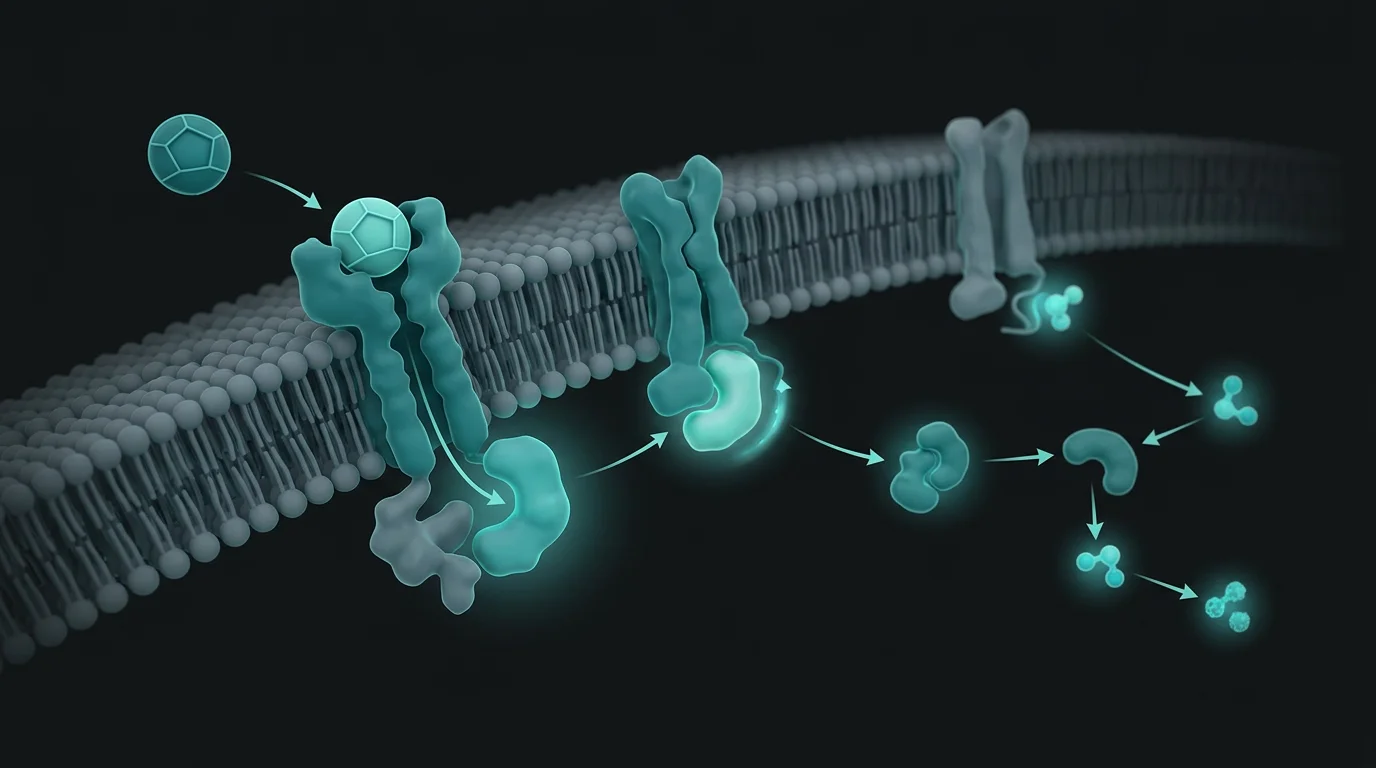
1. AMPK Pathway Activation
AMPK (AMP-activated protein kinase) is often called the "metabolic master switch." It is activated when cellular energy is low (high AMP/ATP ratio) and triggers responses that restore energy balance.
MOTS-c activates AMPK through an indirect mechanism:
- It inhibits the folate-methionine cycle
- This leads to accumulation of AICAR (5-aminoimidazole-4-carboxamide ribonucleotide)
- AICAR is an endogenous AMPK activator
- AMPK activation triggers metabolic adaptation
This pathway mirrors what happens during exercise, when energy expenditure creates the same signal.
2. Mitochondrial Biogenesis
Through AMPK activation, MOTS-c promotes PGC-1alpha signaling, which is the master regulator of mitochondrial biogenesis:
- Increased expression of mitochondrial genes
- Synthesis of new mitochondrial components
- Net increase in mitochondrial mass
- Enhanced oxidative capacity
This is one of the most important effects of exercise on cellular health -- and MOTS-c appears to activate the same pathway.
3. Nuclear Translocation and Gene Regulation
Under metabolic stress, MOTS-c translocates from the cytoplasm to the nucleus, where it directly regulates gene expression:
- Binds to antioxidant response elements (AREs)
- Upregulates genes for glutathione metabolism
- Enhances oxidative stress defense
- Represents direct mitochondria-to-nucleus communication
This is remarkable -- a peptide made by mitochondria that travels to the nucleus to change which genes are expressed.
4. Exercise-Like Metabolic Effects
The net effect of these mechanisms produces exercise-like metabolic adaptations:
- Enhanced fatty acid oxidation via AMPK-ACC signaling
- Increased glucose uptake through GLUT4 translocation
- Improved insulin sensitivity
- Better metabolic flexibility
Research published in Nature Communications (2021) described MOTS-c as "an exercise-induced mitochondrial-encoded regulator of age-dependent physical decline and muscle homeostasis."
What Real People Are Saying
MOTS-c has generated interest in the biohacking and longevity communities. Here are some perspectives:
"Running MOTS-c 5mg every other day alongside my training. Most noticeable effect is endurance -- I can push harder for longer without hitting the wall. Recovery between sessions also improved. Feels like the compound amplifies what I am already doing with exercise." — u/exercise_optimization on r/Peptides
"Interested in MOTS-c for the mitochondrial biogenesis angle more than the exercise mimetic marketing. After 6 weeks, overall energy levels are noticeably better, especially in the afternoon when I used to crash. Cold tolerance also seems improved." — u/mito_support on r/Nootropics
"Stacked MOTS-c with SS-31 for a comprehensive mitochondrial protocol. The combination makes sense mechanistically -- SS-31 for structure/protection, MOTS-c for signaling/biogenesis. Subjectively more resilient during intense training blocks." — u/advanced_protocols on r/MorePlatesMoreDates
Important caveat: These are anecdotal reports from individuals conducting personal research. MOTS-c is not FDA-approved, and individual responses vary significantly.
Monitoring Your Mitochondrial Health with FixMyT
Mitochondrial function is the energy foundation in the FixMyT framework. FixMyT helps you assess whether cellular energy production might be a factor in your overall metabolic picture.
The symptoms quiz evaluates key indicators:
- Chronic fatigue (suggests impaired ATP production)
- Poor exercise recovery (mitochondria cannot meet demand)
- Cold intolerance (insufficient metabolic heat)
- Brain fog (the brain is highly mitochondria-dependent)
The metabolic tree shows how Mitochondria connects upstream to Nutrition and downstream to Gut, Liver, and Thyroid. Understanding your score on the Mitochondria node provides context for whether interventions targeting cellular energy specifically are likely to address your root issues.
If your Nutrition node is optimized but your Mitochondria node scores poorly, the bottleneck may be in energy conversion rather than fuel supply. This is where compounds like MOTS-c that enhance mitochondrial function become relevant.
Research and Considerations
MOTS-c is a young field with exciting but still early evidence:
What the evidence supports:
- AMPK activation through folate-methionine cycle inhibition
- Prevention of diet-induced obesity in mice
- Improved glucose tolerance comparable to exercise
- Enhancement of physical performance in aged mice
- Correlation between endogenous MOTS-c levels and metabolic health
- Nuclear translocation and gene regulation under stress
What remains to be established:
- Optimal dosing in humans
- Long-term safety profile
- Whether benefits persist after discontinuation
- How it compares to actual exercise
- Effects in different populations (young vs. old, healthy vs. metabolically impaired)
Important considerations:
- Discovered in 2015 -- very young research area
- Limited human clinical data
- Not FDA-approved for any indication
- The "exercise mimetic" framing is exciting but may oversimplify
- Exercise involves hundreds of molecular changes; MOTS-c activates some of these pathways
The Japanese centenarian connection is intriguing: populations with certain mitochondrial DNA variants (producing functional MOTS-c) have higher rates of exceptional longevity. Causation is not proven, but the association is notable.
Disclaimer
This article is for educational and research purposes only. MOTS-c is not approved for human use by the FDA or other regulatory agencies. Nothing in this article constitutes medical advice or a recommendation to use any substance.
The "exercise mimetic" concept, while scientifically grounded, does not mean MOTS-c can replace physical exercise. Exercise provides benefits through many pathways beyond what MOTS-c activates. Any peptide research is supplementary to, not a substitute for, foundational health practices.
If you are interested in mitochondrial health interventions, please consult with a qualified healthcare provider. Individual responses vary significantly.
Learn More
- Full MOTS-c Profile on PepGuide - Complete technical details, dosing, and safety information
- SS-31 for ATP Production - Complementary structural mitochondrial support
- MOTS-c for Metabolic Nutrition - MOTS-c from the Nutrition node perspective
- FixMyT Metabolic Assessment - Understand your mitochondrial baseline
References
- Lee C, Zeng J, Drew BG, et al. "The mitochondrial-derived peptide MOTS-c promotes metabolic homeostasis and reduces obesity and insulin resistance." Cell Metabolism. 2015;21(3):443-454. doi:10.1016/j.cmet.2015.02.009

-
Kim KH, Son JM, Benayoun BA, Lee C. "The mitochondrial-encoded peptide MOTS-c translocates to the nucleus to regulate nuclear gene expression in response to metabolic stress." Cell Metabolism. 2018;28(3):516-524. doi:10.1016/j.cmet.2018.06.008
-
Reynolds JC, Lai RW, Woodhead JST, et al. "MOTS-c is an exercise-induced mitochondrial-encoded regulator of age-dependent physical decline and muscle homeostasis." Nature Communications. 2021;12:470. doi:10.1038/s41467-020-20790-0
-
Zempo H, Kim SJ, Fuku N, et al. "A pro-diabetogenic mtDNA polymorphism in the mitochondrial-derived peptide, MOTS-c." Aging. 2021;13(2):1692-1717. doi:10.18632/aging.202529
-
Kim SJ, Xiao J, Wan J, et al. "Mitochondrial-derived peptides as novel regulators of metabolism." Journal of Physiology. 2017;595(21):6613-6621. doi:10.1113/JP274472