Introduction
Your nutrition is the foundation of everything. It is the fuel that powers every cell, every thought, and every hormone in your body. But here is the thing most people miss: it is not just about what you eat. It is about how efficiently your body can actually use that fuel.
Enter MOTS-c, a fascinating mitochondrial-derived peptide that researchers are calling an "exercise mimetic" because it activates many of the same metabolic pathways that physical exercise does. Discovered in 2015 at USC, this 16-amino-acid peptide represents a paradigm shift in our understanding of cellular metabolism.
In this article, you will learn how MOTS-c interfaces with nutritional metabolism, why researchers are excited about its potential for blood sugar stability, and how tools like FixMyT can help you understand your own metabolic foundation. Whether you are trying to optimize your energy levels or simply understand the cutting-edge science of metabolic peptides, this is where we start.
Understanding Nutrition: The Fuel of Your Metabolism
In the FixMyT metabolic tree, Nutrition sits at the very foundation -- Level 1. It is upstream of everything else. Without proper nutritional fuel, your mitochondria cannot produce energy, your hormones cannot function, and your entire metabolic cascade suffers.
The Nutrition node is about more than just calories. It encompasses:
- Glucose vs. PUFA balance: Favoring glucose utilization over polyunsaturated fatty acid (PUFA) oxidation
- Blood sugar stability: Maintaining steady glucose without crashes
- Adequate protein: Supporting tissue repair and enzyme production
- Mineral balance: Calcium, magnesium, and other cofactors
When this node is dysfunctional, you might experience sugar cravings, energy crashes, brain fog after meals, or difficulty maintaining stable weight. These symptoms cascade downstream -- affecting your mitochondria, liver, thyroid, and eventually your hormone expression.
The downstream connection is direct: Nutrition feeds Mitochondria, and mitochondria power everything else. This is why researchers are so interested in peptides like MOTS-c that can enhance how your cells process nutritional fuel.
What Is MOTS-c?
MOTS-c (Mitochondrial Open Reading Frame of the 12S rRNA Type-c) is not your typical peptide. It is encoded by mitochondrial DNA rather than nuclear DNA -- making it one of only a handful of known mitochondrial-derived peptides (MDPs).
The discovery of MOTS-c by Dr. Changhan David Lee's team at USC in 2015 opened up an entirely new field of research. For decades, mitochondria were seen purely as cellular power plants. MOTS-c revealed that they are also signaling hubs, communicating with the rest of the cell -- and even the nucleus -- through peptide messengers.
Key characteristics of MOTS-c:
- Sequence: Met-Arg-Trp-Gln-Glu-Met-Gly-Tyr-Ile-Phe-Tyr-Pro-Arg-Lys-Leu-Arg (16 amino acids)
- Molecular weight: 2174.45 g/mol
- Research status: Preclinical, with a few early human studies
- Administration: Typically subcutaneous injection (5-10 mg, 3-5x per week in research protocols)
The peptide has an estimated half-life of 4-8 hours, though its downstream effects on AMPK signaling persist much longer. It is currently a research compound and is not FDA-approved for human use.
For the complete technical profile, see the full MOTS-c profile on PepGuide.
How MOTS-c Supports Nutritional Function
The connection between MOTS-c and nutrition comes down to one critical pathway: AMPK (AMP-activated protein kinase).
AMPK is often called the "metabolic master switch." When activated, it triggers a cascade of effects that improve how your body handles nutritional fuel:
1. Enhanced Glucose Uptake
MOTS-c increases skeletal muscle glucose uptake through GLUT4 translocation -- the same mechanism that exercise uses. This means glucose from your meals is more efficiently shuttled into muscle cells where it can be used for energy, rather than floating around in your bloodstream or being stored as fat.
Research published in Cell Metabolism (2015) demonstrated that MOTS-c prevented diet-induced obesity in mice fed a high-fat diet, with treated animals showing significantly improved glucose tolerance comparable to exercise-trained controls.
2. Improved Insulin Sensitivity
In preclinical studies, MOTS-c improved insulin sensitivity by 40-60% in high-fat diet mouse models. The mechanism appears to be independent of insulin receptor signaling itself -- meaning MOTS-c may work through parallel pathways that complement rather than replace normal insulin function.
A first-in-human study showed MOTS-c improved glucose disposal during hyperinsulinemic-euglycemic clamp testing in obese men, suggesting these mechanisms translate to humans.
3. Fat Oxidation Enhancement
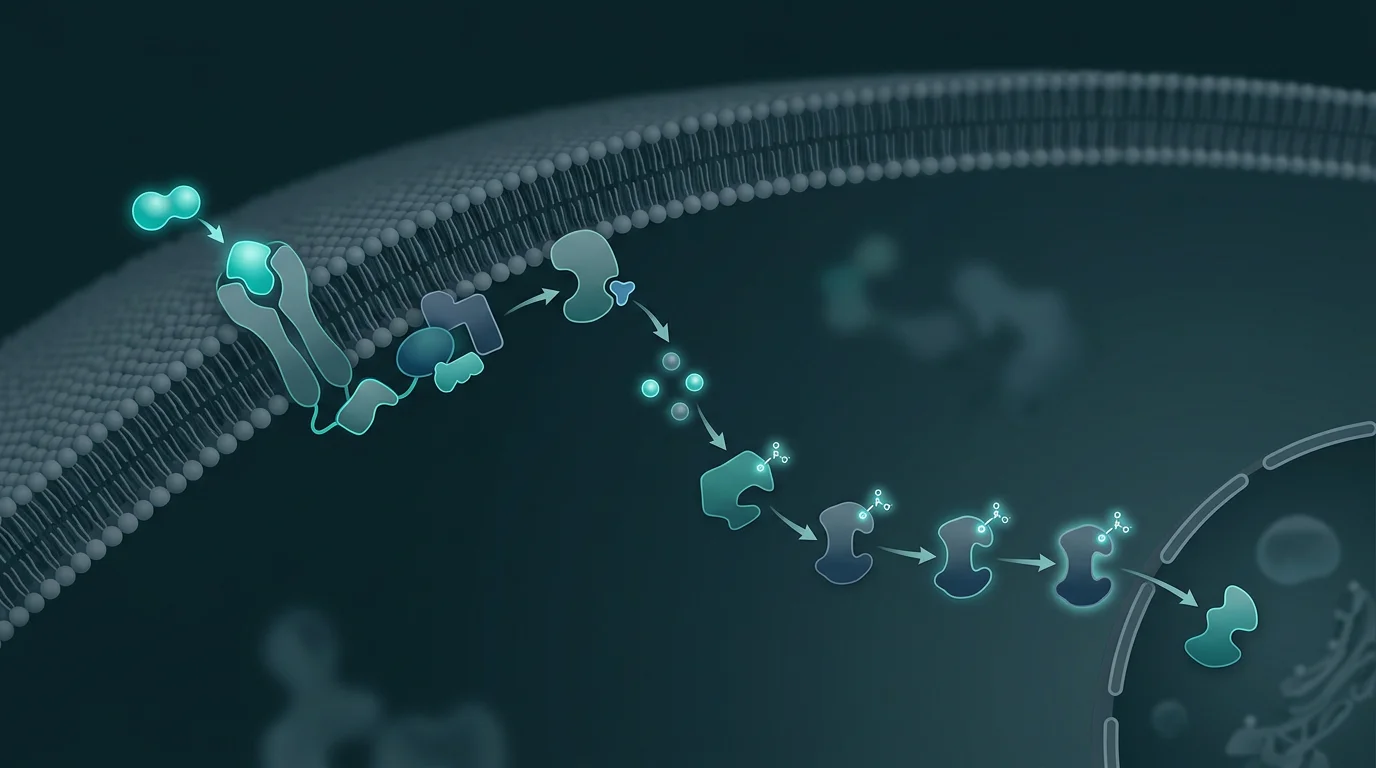
Through AMPK-ACC (acetyl-CoA carboxylase) signaling, MOTS-c enhances beta-oxidation of fatty acids. This is relevant for nutrition because it means your body can more efficiently switch between fuel sources -- using dietary fat when appropriate while preserving glucose handling.
4. Blood Sugar Stability
The net effect of these mechanisms is improved metabolic flexibility and blood sugar stability. For the Nutrition node in the FixMyT framework, this addresses one of the core interventions: maintaining stable blood sugar without the crashes that signal metabolic dysfunction.
What Real People Are Saying
While MOTS-c research is still early, some individuals in the biohacking and peptide research communities have shared their experiences:
"Been running MOTS-c for about 6 weeks now at 5mg 3x/week. The most noticeable thing is my post-meal energy is way more stable. I used to get that 2pm crash every day after lunch, and now it's basically gone. CGM data shows much flatter glucose curves." — u/metabolic_optimization on r/Peptides
"Stacked with fasted cardio and noticing significant improvement in how I feel during workouts. Energy levels more consistent throughout the day, less dependent on meal timing. Still early but promising." — u/biohacker_research on r/Nootropics
"The exercise mimetic thing is real. My glucose tolerance test numbers improved without changing my workout routine. Not a replacement for actual exercise, but seems to amplify the metabolic benefits." — u/peptide_researcher on r/MorePlatesMoreDates
It is important to note that these are anecdotal reports from individuals conducting personal research. Individual responses vary significantly, and these experiences cannot be generalized.
Monitoring Your Nutritional Health with FixMyT
Understanding your metabolic foundation requires more than just subjective feelings. FixMyT offers a systematic approach to assessing the Nutrition node and its downstream effects.
The FixMyT symptoms quiz evaluates key indicators of nutritional dysfunction:
- Energy crashes after meals (suggests poor glucose handling)
- Sugar cravings (may indicate blood sugar instability)
- Brain fog (often connected to metabolic fuel issues)
The visual metabolic tree shows exactly how Nutrition connects to Mitochondria downstream, and ultimately to your hormone expression. By understanding your personal score on the Nutrition node, you can identify whether this foundational level needs attention before exploring interventions higher up the tree.
If you are curious about peptides like MOTS-c, understanding your baseline metabolic state is essential. FixMyT provides that context -- showing you where in the metabolic cascade your challenges actually originate.
Research and Considerations
The research on MOTS-c is compelling but still early. Here is what we know and what remains uncertain:
What the evidence supports:
- AMPK activation and enhanced glucose uptake (well-established in preclinical models)
- Improved metabolic markers in aging and obese animal models
- Early human data suggesting glucose handling benefits
- Correlation between higher endogenous MOTS-c levels and better metabolic health
What needs more research:
- Long-term safety in humans
- Optimal dosing protocols for different populations
- Whether exogenous MOTS-c provides benefits beyond what exercise achieves
- Effects on different metabolic conditions (Type 2 diabetes, metabolic syndrome)
The "exercise mimetic" framing is exciting, but it is important not to oversimplify. MOTS-c appears to activate some of the same pathways as exercise, but exercise involves hundreds of molecular changes. Researchers are still working to understand exactly where MOTS-c fits in this picture.
Disclaimer
This article is for educational and research purposes only. MOTS-c is not approved for human use by the FDA or other regulatory agencies. Nothing in this article constitutes medical advice or a recommendation to use any substance.
If you are interested in peptide research, please consult with a qualified healthcare provider. Individual responses to any compound vary significantly, and what works for one person may not work for another.
Any decisions about health interventions remain your responsibility in consultation with appropriate medical professionals. The information here reflects current research as of the publication date and may evolve as new studies emerge.
Learn More
- Full MOTS-c Profile on PepGuide - Complete technical details, dosing protocols, and safety information
- SS-31 for Mitochondrial Support - Complementary mitochondrial peptide
- FixMyT Metabolic Assessment - Understand your nutritional and metabolic baseline
- AOD-9604 and Metabolic Efficiency - Another peptide supporting metabolic function
References
- Lee C, Zeng J, Drew BG, et al. "The mitochondrial-derived peptide MOTS-c promotes metabolic homeostasis and reduces obesity and insulin resistance." Cell Metabolism. 2015;21(3):443-454. doi:10.1016/j.cmet.2015.02.009
-
Kim KH, Son JM, Benayoun BA, Lee C. "The mitochondrial-encoded peptide MOTS-c translocates to the nucleus to regulate nuclear gene expression in response to metabolic stress." Cell Metabolism. 2018;28(3):516-524. doi:10.1016/j.cmet.2018.06.008
-
Reynolds JC, Lai RW, Woodhead JST, et al. "MOTS-c is an exercise-induced mitochondrial-encoded regulator of age-dependent physical decline and muscle homeostasis." Nature Communications. 2021;12:470. doi:10.1038/s41467-020-20790-0
-
Zempo H, Kim SJ, Fuku N, et al. "A pro-diabetogenic mtDNA polymorphism in the mitochondrial-derived peptide, MOTS-c." Aging. 2021;13(2):1692-1717. doi:10.18632/aging.202529
-
Yi HS, Chang JY, Shong M. "The mitochondrial unfolded protein response and mitohormesis: a perspective on metabolic diseases." Journal of Molecular Endocrinology. 2018;61(3):R107-R121. doi:10.1530/JME-18-0005