Introduction
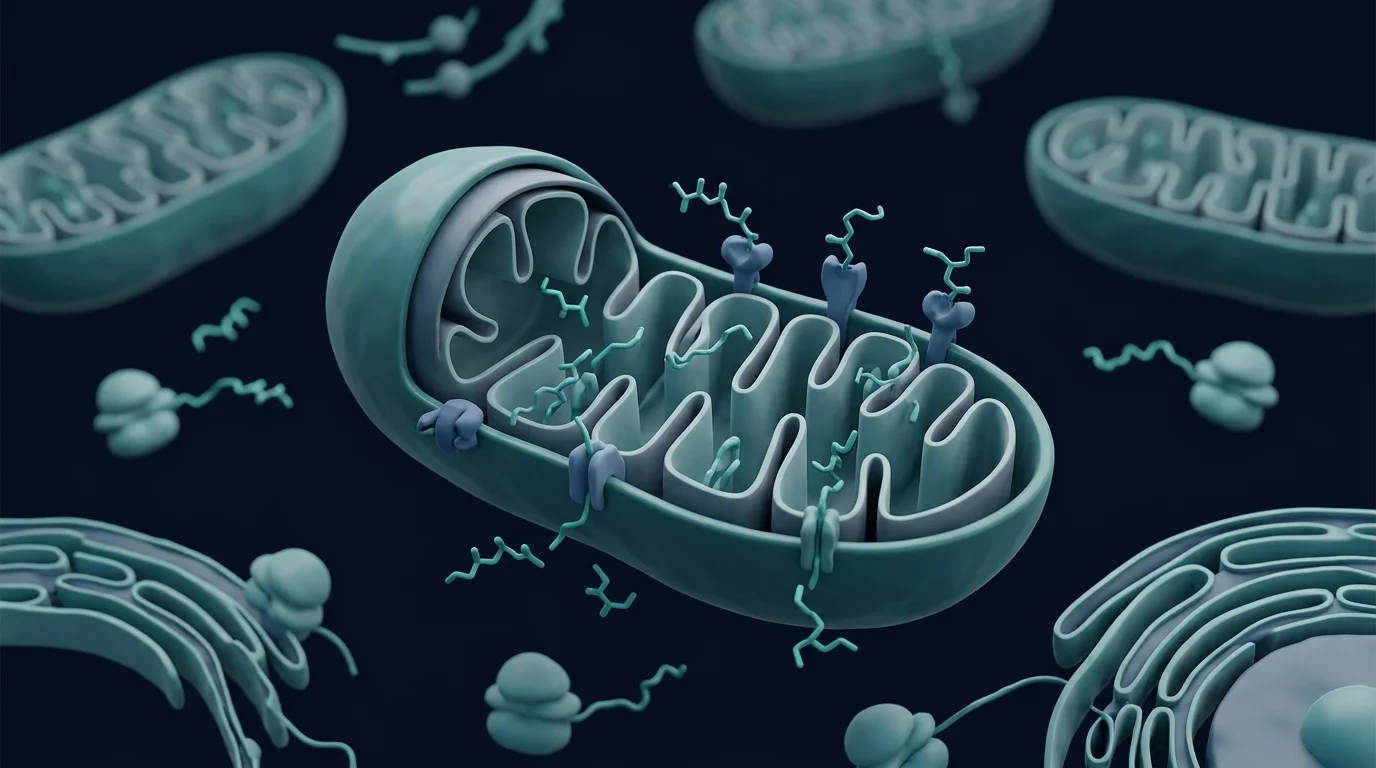
Mitochondria are the most vulnerable organelles in your cells. They are constantly exposed to the reactive oxygen species (ROS) they generate during energy production. Without protection, this oxidative stress damages mitochondrial DNA, proteins, and membranes -- leading to declining function and accelerated aging.
Glutathione is the primary defense system. This tripeptide (glutamate-cysteine-glycine) is the most abundant intracellular antioxidant, and mitochondria maintain their own glutathione pool specifically for protection. When mitochondrial glutathione is depleted, mitochondrial dysfunction follows.
In this article, we will explore how glutathione protects mitochondria, why levels decline with age and stress, and how this fits into the FixMyT metabolic framework for optimizing cellular energy.
Understanding Mitochondria: The Energy of Your Metabolism
The Mitochondria node in FixMyT is Level 1, directly downstream of Nutrition and upstream of everything else. Mitochondria convert the fuel you eat into ATP -- the energy currency that powers every cellular process.
Key aspects of mitochondrial function:
- ATP production: Via the electron transport chain
- Oxidative metabolism: Using oxygen to generate energy
- ROS generation: An unavoidable byproduct of energy production
- Antioxidant defense: Protection against the ROS they produce
The challenge is inherent to mitochondrial function. The electron transport chain "leaks" electrons that react with oxygen to form superoxide and other reactive species. Mitochondria need energy production, but energy production creates oxidative stress. The solution is robust antioxidant defense.
When mitochondrial function declines, you experience chronic fatigue, poor exercise recovery, cold intolerance, and accelerated aging. The Mitochondria node is foundational -- if it fails, everything downstream (gut, liver, thyroid, hormones) suffers.
What Is Glutathione?
Glutathione (GSH) is a tripeptide composed of three amino acids: glutamate, cysteine, and glycine. It is synthesized inside cells and is the most abundant low-molecular-weight thiol in mammalian cells.
Key characteristics of glutathione:
- Structure: Gamma-glutamyl-cysteinyl-glycine
- Molecular weight: 307.32 g/mol
- Forms: Reduced (GSH) and oxidized (GSSG)
- Location: Cytoplasm, mitochondria, nucleus, endoplasmic reticulum
- Function: Antioxidant, detoxification, cellular signaling
- Decline: Levels drop with age, stress, toxin exposure
Mitochondria cannot synthesize glutathione -- they import it from the cytoplasm. The mitochondrial glutathione pool is maintained separately and is critical for mitochondrial protection.
Routes of supplementation:
- Oral glutathione (liposomal forms may improve absorption)
- IV glutathione (bypasses absorption issues)
- Precursors: N-acetyl cysteine (NAC), glycine, glutamine
- S-acetyl glutathione (more stable oral form)
How Glutathione Protects Mitochondria
Glutathione's role in mitochondrial protection is multifaceted:
1. ROS Neutralization
The primary antioxidant function:
- Glutathione peroxidase enzymes use GSH to neutralize hydrogen peroxide
- GSH directly scavenges various reactive oxygen species
- The reaction converts GSH to oxidized GSSG
- GSSG is recycled back to GSH by glutathione reductase (requires NADPH)
This cycle -- GSH oxidation followed by GSSG reduction -- is the core mitochondrial antioxidant mechanism.
2. Mitochondrial DNA Protection
Mitochondria have their own DNA (mtDNA), which is particularly vulnerable to oxidative damage:
- mtDNA is located near the electron transport chain (source of ROS)
- mtDNA lacks the histone protection of nuclear DNA
- mtDNA has limited repair mechanisms
- Damaged mtDNA leads to dysfunctional mitochondrial proteins
Glutathione protects mtDNA from oxidative damage, preserving the genetic integrity needed for proper mitochondrial function.
3. Electron Transport Chain Maintenance
ETC components are susceptible to oxidative damage:
- Cardiolipin (the lipid SS-31 targets) can be oxidized
- ETC protein complexes can be damaged
- Oxidative damage reduces ATP production efficiency
By neutralizing ROS before they damage ETC components, glutathione maintains the efficiency of energy production.
4. Mitochondrial Membrane Integrity
Oxidative stress damages mitochondrial membranes:
- Lipid peroxidation impairs membrane function
- Damaged membranes leak protons (reducing ATP yield)
- Severe damage triggers mitochondrial permeability transition
Glutathione protects membrane lipids from peroxidation, maintaining the membrane integrity required for ATP production.
5. Apoptosis Regulation
Mitochondrial glutathione depletion is a trigger for cell death:
- GSH depletion sensitizes cells to apoptotic signals
- Oxidative stress can trigger mitochondrial cytochrome c release
- Maintaining GSH prevents inappropriate cell death
This function is critical for tissue maintenance and longevity.
Research published in Free Radical Biology and Medicine has shown that mitochondrial GSH depletion precedes and may cause mitochondrial dysfunction in multiple disease states.
What Real People Are Saying
Glutathione supplementation is widely used for antioxidant support:
"Started liposomal glutathione 500mg daily about 3 months ago. Energy levels are noticeably more stable, especially in the afternoon when I used to crash. Skin also seems brighter, which was unexpected. Blood work showed improved liver enzymes." — u/antioxidant_research on r/Supplements
"IV glutathione was a game-changer for post-viral fatigue. After a few sessions, energy started coming back. Now doing maintenance with oral liposomal and NAC. The combination seems to keep me at a much better baseline." — u/recovery_protocol on r/Nootropics
"Combined glutathione with mitochondrial support (CoQ10, PQQ, B vitamins). The stack together produces more noticeable effects than any single component. Exercise recovery improved significantly, and I feel more resilient to stress." — u/mito_stack on r/Peptides
Important note: Glutathione absorption from oral supplements has historically been questioned, though liposomal and S-acetyl forms may address this. IV administration bypasses absorption issues but requires clinical settings.
Monitoring Your Mitochondrial Health with FixMyT
Glutathione status directly affects mitochondrial function. FixMyT helps you assess whether cellular energy production might be a factor in your metabolic picture.
The symptoms quiz evaluates:
- Chronic fatigue (suggests impaired ATP production)
- Poor exercise recovery (mitochondria cannot meet demand)
- Poor detoxification signs (glutathione is also critical for liver function)
- Slow healing (may indicate cellular stress)
The FixMyT framework shows how Mitochondria connects to both Nutrition (upstream) and Liver (downstream). Glutathione is relevant at both levels -- supporting mitochondrial energy production and liver detoxification function.
Understanding your Mitochondria and Liver node scores provides context for whether antioxidant support is addressing real bottlenecks in your metabolism.
Research and Considerations
Glutathione is well-established in biochemistry:
What the evidence clearly shows:
- Central role in cellular antioxidant defense
- Specific importance in mitochondrial protection
- Decline with age, stress, and toxin exposure
- Depletion precedes mitochondrial dysfunction in many conditions
- Essential for Phase II liver detoxification
What remains debated:
- Oral bioavailability (liposomal and S-acetyl forms may help)
- Whether direct glutathione or precursors (NAC) are more effective
- Optimal dosing for different populations
- Whether supplementation meaningfully raises intracellular levels
Important considerations:
- Oral glutathione has historically had poor absorption
- Liposomal formulations may improve bioavailability
- IV glutathione is effective but requires clinical setting
- Precursors (NAC, glycine) may support natural synthesis
- Quality varies significantly between products
The precursor approach (especially NAC) has strong evidence for raising glutathione levels. For direct glutathione supplementation, liposomal or S-acetyl forms are generally preferred over standard oral glutathione.
Disclaimer
This article is for educational purposes only. Glutathione is available as a supplement in many forms and is generally recognized as safe.
Nothing in this article constitutes medical advice or a recommendation to use any supplement. While glutathione is well-established biochemically, the clinical evidence for supplementation benefits is variable depending on the condition and route of administration.
If you are interested in antioxidant or mitochondrial support, please consult with a qualified healthcare provider. Individual needs vary, and there may be more effective approaches depending on your specific situation.
Learn More
- SS-31 for Mitochondrial Membrane Protection - Complementary cardiolipin stabilization
- NAD+ and Mitochondrial Function - Energy coenzyme support
- Glutathione for Liver Detoxification - Glutathione from the Liver node perspective
- FixMyT Metabolic Assessment - Understand your mitochondrial and liver baseline
References
-
Mari M, Morales A, Colell A, et al. "Mitochondrial glutathione, a key survival antioxidant." Antioxidants & Redox Signaling. 2009;11(11):2685-2700. doi:10.1089/ars.2009.2695
-
Marí M, de Gregorio E, de Dios C, et al. "Mitochondrial Glutathione: Recent Insights and Role in Disease." Antioxidants. 2020;9(10):909. doi:10.3390/antiox9100909
-
Ribas V, García-Ruiz C, Fernández-Checa JC. "Glutathione and mitochondria." Frontiers in Pharmacology. 2014;5:151. doi:10.3389/fphar.2014.00151
-
Pizzorno J. "Glutathione!" Integrative Medicine. 2014;13(1):8-12.
-
Sinha R, Sinha I, Calcagnotto A, et al. "Oral supplementation with liposomal glutathione elevates body stores of glutathione and markers of immune function." European Journal of Clinical Nutrition. 2018;72(1):105-111. doi:10.1038/ejcn.2017.132