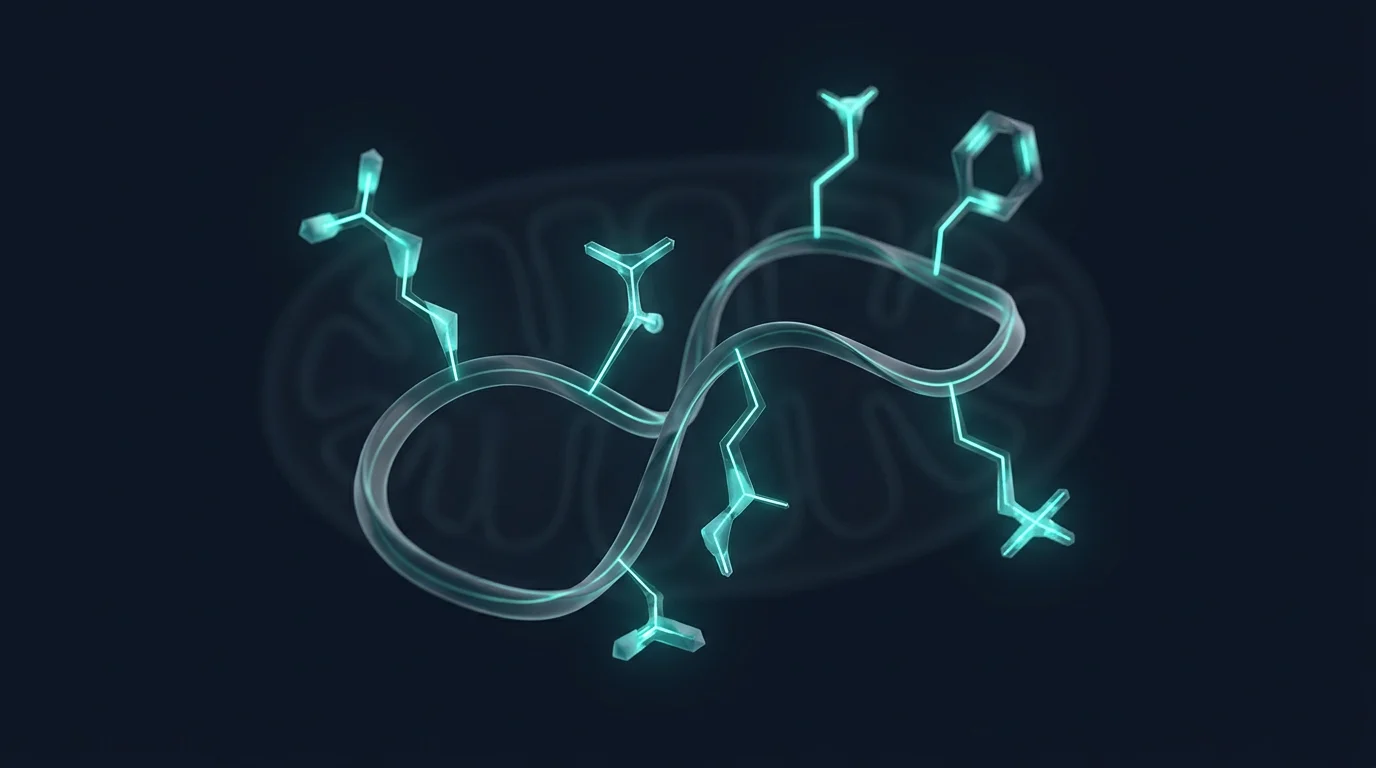
SS-31
Also known as: Elamipretide, Bendavia, MTP-131, Szeto-Schiller peptide 31
SS-31 (Elamipretide/Bendavia) is a mitochondria-targeted tetrapeptide that selectively binds cardiolipin in the inner mitochondrial membrane, stabilizing electron transport chain complexes and reducing oxidative stress. It is in Phase 3 trials for Barth syndrome and mitochondrial myopathy.
▶ SS-31 in 30 Seconds
Research overview only. Not medical advice.
Half-Life
4 hours
Typical Dose
10-40 mg
Frequency
1x daily
Routes
Subcutaneous
Half-Life Visualization
Half-Life Decay Curve
Concentration over time assuming initial dose = 100%
Use arrow keys to navigate: Left/Right for time, Up/Down for peptides
Shaded areas represent reported half-life variability from published studies.
| Peptide | Half-Life | 50% at | 25% at | 12.5% at | Redose Window |
|---|---|---|---|---|---|
SS-31 | 4h | 4h | 8h | 12h | 4h - 8h |
MOTS-c | 6h | 6h | 12h | 18h | 6h - 12h |
BPC-157 | 4h | 4h | 8h | 12h | 4h - 8h |
Comparing SS-31 with MOTS-c and BPC-157
Open Full Comparison ToolOverview
SS-31, also known as Elamipretide (formerly MTP-131 and Bendavia), is a synthetic mitochondria-targeted tetrapeptide developed by Hazel H. Szeto and Peter W. Schiller, from whom it derives its "SS" designation. First described in 2004, SS-31 represents one of the most clinically advanced mitochondria-targeted therapeutics, having progressed through Phase 1 and Phase 2 trials and currently in Phase 3 clinical development for Barth syndrome, a rare X-linked mitochondrial disorder.
The sequence of SS-31 is: D-Arg-Dmt-Lys-Phe-NH2 (where Dmt is 2',6'-dimethyltyrosine)
SS-31 is uniquely designed to concentrate within the inner mitochondrial membrane (IMM), where it selectively binds to cardiolipin, a phospholipid critical for the structural organization and function of the electron transport chain (ETC). By stabilizing cardiolipin interactions with ETC complexes, SS-31 improves mitochondrial efficiency, reduces electron leak, and decreases the production of harmful reactive oxygen species (ROS) at their primary source.
Key Characteristics
- Origin: Rational drug design by Szeto and Schiller (2004)
- Classification: Mitochondria-targeted tetrapeptide
- Molecular Weight: 640.77 g/mol
- Clinical Stage: Phase 3 (Barth syndrome); Phase 2 (primary mitochondrial myopathy, heart failure)
- FDA Designations: Fast Track, Orphan Drug, Rare Pediatric Disease
- Unique Feature: Concentrates 1000-5000x in mitochondria relative to cytoplasm
Mechanism
SS-31 operates through a highly targeted mechanism centered on the inner mitochondrial membrane and its essential lipid component, cardiolipin.
Primary Mechanisms
1. Cardiolipin Binding and Stabilization
The central mechanism of SS-31 involves direct interaction with cardiolipin:
- Selective Accumulation: SS-31's alternating aromatic-cationic motif (positive charge, aromatic ring, positive charge, aromatic ring) enables it to concentrate within the IMM at 1000-5000x cytoplasmic concentrations
- Cardiolipin Interaction: Binds directly to cardiolipin through electrostatic and hydrophobic interactions
- ETC Complex Stabilization: Cardiolipin is required for the proper assembly and function of ETC Complexes I, III, IV, and V (ATP synthase). SS-31 stabilizes these cardiolipin-complex interactions
- Cristae Remodeling: Promotes proper cristae morphology, the folds of the IMM where ETC complexes reside
2. Electron Transport Chain Optimization
Through cardiolipin stabilization, SS-31 improves ETC function:
- Reduces electron leak at Complexes I and III (primary sites of superoxide generation)
- Improves coupling efficiency between electron transport and ATP synthesis
- Restores normal membrane potential in dysfunctional mitochondria
- Enhances overall ATP production capacity
3. ROS Reduction at Source
Unlike conventional antioxidants that scavenge ROS after formation:
- SS-31 prevents excessive ROS generation at the ETC by reducing electron leak
- Does not eliminate all ROS (which are needed for cellular signaling)
- Normalizes rather than eliminates oxidative stress
- This "source-targeted" approach distinguishes SS-31 from general antioxidants
Cellular Effects
At the cellular level, SS-31 has been shown to:
- Improve mitochondrial membrane potential in damaged cells
- Restore ATP production in mitochondrially compromised tissues
- Reduce mitochondrial swelling and cytochrome c release (anti-apoptotic)
- Protect cardiolipin from oxidative damage and remodeling
- Preserve cristae ultrastructure under stress conditions
- Enhance cellular oxygen consumption efficiency
Research
Research Note: SS-31 has one of the most robust evidence bases of any research peptide, with over 100 animal studies and multiple completed Phase 1 and Phase 2 human trials. Phase 3 trials are ongoing for Barth syndrome (TAZPOWER trial). The FDA has granted Fast Track, Orphan Drug, and Rare Pediatric Disease designations, reflecting its clinical promise.
Barth Syndrome
Human Studies (TAZPOWER Trial)
The primary clinical development indication:
- Barth syndrome is caused by mutations in the tafazzin gene, leading to defective cardiolipin remodeling
- Phase 2 TAZPOWER trial showed improvements in 6-minute walk test distance
- Cardiac function measures (stroke volume, cardiac output) showed improvement trends
- Subjective quality of life and fatigue scores improved
- Phase 3 trial (TAZPOWER-3) is enrolling for confirmatory data
- FDA granted Rare Pediatric Disease designation
Cardiac Ischemia-Reperfusion Injury
Animal Studies
Extensive preclinical cardiac research:
- Reduced myocardial infarct size by 40-60% in rodent ischemia-reperfusion models
- Preserved left ventricular function after acute coronary occlusion
- Reduced cardiac fibrosis and remodeling in chronic models
- Protected cardiac mitochondria from ischemic damage
Human Studies
- Phase 2a trial in patients undergoing percutaneous coronary intervention showed trends toward reduced cardiac biomarker release
- EMBRACE STEMI trial in ST-elevation myocardial infarction showed a non-significant trend toward reduced infarct size
- Ongoing investigation for heart failure with reduced ejection fraction
Primary Mitochondrial Myopathy
Clinical Data
- Phase 2 trial showed improvements in 6-minute walk test distance in patients with primary mitochondrial myopathy
- Exercise tolerance and fatigue measures showed improvement
- Muscle biopsy markers of mitochondrial function improved in some subjects
Age-Related Mitochondrial Decline
Animal Studies
Research on aging models:
- SS-31 improved cardiac function in aged mice to levels comparable to young adults
- Skeletal muscle mitochondrial function improved in aged animals
- Reduced age-related increase in mitochondrial ROS production
- Improved exercise capacity in aged mice
- Kidney function preservation in aging models

Kidney Injury
Preclinical Data
- Protected against ischemia-reperfusion kidney injury in multiple animal models
- Reduced acute kidney injury severity in cisplatin-induced nephrotoxicity
- Preserved renal mitochondrial function and tubular cell viability
Dosing
Disclaimer: All dosing information is for research reference only. SS-31 is not approved for human use by the FDA or other regulatory agencies, though it is in active clinical development. Consult a healthcare provider before considering any peptide use.
Research Protocols
Based on available research literature and clinical trial data:
Administration Notes
Subcutaneous Injection
- Primary route in clinical trials for chronic administration
- Clinical trial dose: 40 mg subcutaneous daily
- Rotate injection sites (abdomen, thigh, upper arm)
- Consistent daily timing recommended
Intravenous
- Used in acute settings (cardiac surgery, kidney injury trials)
- Weight-based dosing: 0.05 mg/kg/hr infusion in some protocols
- Requires medical supervision
Reconstitution
When using lyophilized SS-31:
- Use bacteriostatic water or sterile water for reconstitution
- Store reconstituted peptide refrigerated (2-8C)
- Relatively stable peptide; use within 28 days
- SS-31 is more chemically stable than many peptides due to D-amino acid and amidated C-terminus
Pharmacokinetics
Absorption
- Subcutaneous: Near-complete absorption (~100% bioavailability)
- Intravenous: Complete immediate bioavailability
- Tmax: Approximately 30 minutes subcutaneously
- Absorption is rapid and consistent across injection sites
Distribution
- Concentrates 1000-5000x within mitochondria relative to cytoplasm
- The alternating cationic-aromatic structure drives IMM accumulation
- Achieves therapeutic concentrations in cardiac, skeletal muscle, renal, and neural tissue
- Does not require a carrier or targeting moiety -- structure is inherently mitochondria-seeking
Metabolism
- Partially metabolized by tissue peptidases
- The D-Arg residue at the N-terminus confers resistance to aminopeptidases
- C-terminal amidation provides additional protease resistance
- Both modifications contribute to the relatively long half-life for a tetrapeptide
Elimination
- Half-life: Approximately 4 hours (plasma)
- Partial renal clearance of intact peptide
- Mitochondrial residence time likely exceeds plasma half-life
- Steady state achieved within 2-3 days of daily dosing
- No significant accumulation at recommended doses
Synergy & Stacking
SS-31 is commonly considered alongside other mitochondrial-targeting compounds and general health peptides.
Common Combinations
SS-31 + MOTS-c
Comprehensive mitochondrial support:
- SS-31 provides structural support (cardiolipin stabilization, ETC optimization)
- MOTS-c provides functional signaling (AMPK activation, mitochondrial biogenesis)
- Together they address both the integrity of existing mitochondria and the production of new ones
- No known antagonistic interactions
SS-31 + CoQ10
Complementary ETC support:
- CoQ10 functions as an electron carrier between Complexes I-II and Complex III
- SS-31 stabilizes the protein complexes themselves via cardiolipin
- Different points of intervention in ETC function
- CoQ10 is well-established and widely available
SS-31 + NAD+ Precursors (NMN/NR)
Aging-focused combination:
- NAD+ precursors support sirtuin activity and mitochondrial gene expression
- SS-31 optimizes existing mitochondrial function
- Complementary approaches to mitochondrial aging
Timing Considerations
- Daily administration at a consistent time
- No significant food interaction known
- Can be administered at any time of day
- When combining with exercise, pre-exercise dosing may provide acute mitochondrial protection
Safety
Known Side Effects
SS-31's safety profile is relatively well-characterized from clinical trials:
Common (mild)
- Injection site reactions (erythema, pain, induration)
- Headache
- Nausea (generally mild and transient)
Uncommon
- Dizziness
- Fatigue (paradoxically, in some subjects)
- Mild renal function changes at high doses
Not Observed at Standard Doses
- No cardiac arrhythmias
- No significant hepatotoxicity
- No immunosuppression
- No hormonal disruption
Contraindications
Avoid or use with extreme caution if:
- Severe renal impairment (eGFR < 30 mL/min)
- Known hypersensitivity to SS-31 or modified amino acids
- Pregnant or breastfeeding
- Under 18 years of age outside of clinical trial settings
Important: While SS-31 has a favorable safety profile in clinical trials, it remains an unapproved investigational drug. The Phase 3 TAZPOWER trial experienced setbacks, and regulatory approval is not guaranteed. Research-grade SS-31 may not meet the purity and quality standards of the pharmaceutical-grade drug used in clinical trials. Use should be considered experimental.
Drug Interactions
Based on clinical trial and preclinical data:
- Nephrotoxic drugs (may impair SS-31 clearance)
- No significant CYP450 interactions expected
- May be protective when co-administered with mitochondria-damaging drugs (doxorubicin, cisplatin)
- No known interactions with common cardiac medications
Monitoring
Baseline Assessments
Before starting any SS-31 protocol:
- Renal function (creatinine, BUN, eGFR)
- Liver function tests
- Complete blood count
- Cardiac biomarkers if indicated (BNP, troponin)
- 6-minute walk test or other functional capacity measure
- Echocardiogram if cardiac indication is the focus
During Use
- Renal function at 2 and 4 weeks, then monthly
- Monitor for injection site reactions
- Track functional capacity (exercise tolerance, fatigue scores)
- Cardiac monitoring if used for cardiac indications
- Subjective quality of life assessment
Post-Protocol
- Repeat renal function tests
- Reassess functional capacity
- Cardiac imaging if relevant
- Document response trajectory for future protocol planning
- Note any decline in function after discontinuation

Regulatory
Current Status
| Region | Status |
|---|---|
| United States | Investigational; FDA Fast Track, Orphan Drug designations |
| European Union | Investigational; Orphan Drug designation (EMA) |
| Australia | Not approved; research compound |
| Canada | Not approved; investigational |
| WADA | Not currently prohibited |
Legal Considerations
- Under active clinical development by Stealth BioTherapeutics (now Larimar Therapeutics)
- Available from research chemical suppliers, but quality may differ from pharmaceutical grade
- Not a controlled substance
- Not currently prohibited in sports
- FDA and EMA have both granted orphan designations, reflecting recognized therapeutic potential
Future Outlook
- Phase 3 trials for Barth syndrome ongoing
- Potential additional indications: primary mitochondrial myopathy, heart failure, acute kidney injury, age-related decline
- If approved for Barth syndrome, it would be the first cardiolipin-targeted therapy
- Broader mitochondrial disease applications may follow approval for initial indication
- The "source-targeted antioxidant" concept may inspire next-generation compounds
References
Compare SS-31 Prices
2 vendors| Vendor | Quantity | Price | $/mg | |
|---|---|---|---|---|
Orbitrex PeptidesPartnerBest Value | 10mg | $59.99 | $6.00/mg | View Deal |
For research purposes only. We may earn a commission.
See all vendors →Community Insights
Aggregated from 30 self-reported experiences collected from public forums.
Overall Sentiment
Reported Benefits
- increased energy3x
- mitochondrial function2x
- improved mitochondrial function2x
- physical clarity1x
- incredibly helpful1x
- great results1x
Reported Side Effects
- increased fatigue2x
- initial fatigue day 41x
- severe anxiety1x
- insomnia1x
- heart palpitations1x
- inability to function1x
Common Doses Reported
- microdose2 reports
- 10mg/day loading → 5mg/day1 report
- 100-500mcg daily1 report
- 6 mg daily1 report
- 4mg daily1 report
Administration Routes
- subcutaneous5 reports
This data reflects self-reported user experiences collected from public forums. It is not medical advice. Individual results vary. Always consult a qualified healthcare professional before using any research compound.
Get Our Free Peptide Research Guide
100 essential tips for safe peptide research, delivered as a free PDF.
Where to Buy SS-31
Compare prices from 2 vendors • Best value: $6.00/mg
10
$59.99
$6.00/mg
50
$175.00
$3.50/mg
Disclaimer: These products are sold for research purposes only. Prices and availability may change. Prices as of 4/19/2026.
Need Research Supplies?
Syringes, bacteriostatic water, vials, alcohol swabs, and more. Everything you need for peptide research.
Browse Supplies