Introduction
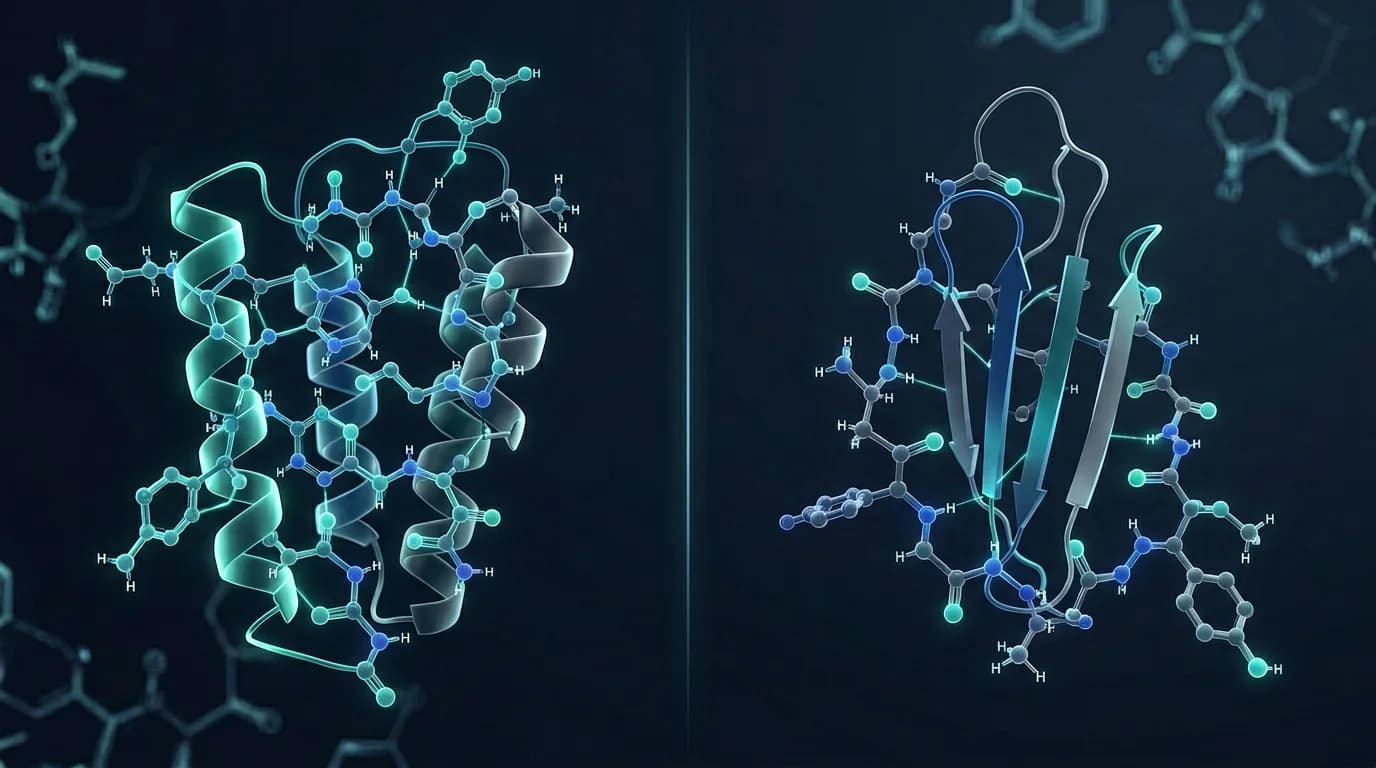
BPC-157 and TB-500 are the two most widely discussed healing peptides in the research community. Both promote tissue repair and recovery, but they work through fundamentally different mechanisms and have distinct pharmacokinetic profiles. Understanding these differences is essential for researchers evaluating which peptide -- or combination of both -- may be most relevant to their work.
This article provides a thorough side-by-side comparison of BPC-157 and TB-500, covering their origins, mechanisms, research evidence, dosing protocols, safety profiles, and the rationale for combining them.
Disclaimer: This article is for educational purposes only. Neither BPC-157 nor TB-500 is approved for human use by the FDA or other major regulatory agencies. All information presented is based on published research literature. Always consult a qualified healthcare provider before considering any peptide protocol.
At a Glance: Side-by-Side Comparison
| Feature | BPC-157 | TB-500 |
|---|---|---|
| Full Name | Body Protection Compound 157 | Thymosin Beta-4 (synthetic fragment) |
| Origin | Derived from human gastric juice | Derived from thymus gland protein |
| Amino Acids | 15 | 43 |
| Molecular Weight | 1,419 Da | 4,963 Da |
| Half-Life | 4-6 hours | 24-48 hours |
| Dosing Range | 250-500 mcg/day | 2-10 mg/week |
| Frequency | 1-2x daily | 2-3x weekly |
| Admin Routes | SubQ, IM, Oral | SubQ, IM |
| Safety Rating | High | Moderate |
| Primary Action | Local repair, angiogenesis | Systemic healing, cell migration |
| Oral Bioavailability | Yes (unique among peptides) | No |
| WADA Status | Not prohibited | Prohibited (S2) |
| Human Studies | ~2 | 0 |
| Animal Studies | ~150+ | ~80 |
| Research Status | Preclinical | Preclinical |
Origin and Structure
BPC-157
BPC-157 (Body Protection Compound 157) is a synthetic pentadecapeptide consisting of 15 amino acids. Its sequence (Gly-Glu-Pro-Pro-Pro-Gly-Lys-Pro-Ala-Asp-Asp-Ala-Gly-Leu-Val) was derived from a protein found in human gastric juice. The "body protection" name reflects its broad cytoprotective properties observed in research.
Key structural features:
- Small, compact peptide (1,419 Da molecular weight)
- Remarkably stable in gastric acid -- unlike most peptides, it survives the digestive system
- No known degradation products with toxic effects
- Can be synthesized easily and at relatively low cost
TB-500
TB-500 is a synthetic version of Thymosin Beta-4 (TB4), a 43-amino acid protein naturally produced by the thymus gland. Thymosin Beta-4 is found in virtually all human cells and is released at sites of tissue injury. The active region is the peptide sequence LKKTETQ.
Key structural features:
- Larger peptide (4,963 Da molecular weight)
- Based on a naturally occurring, highly conserved human protein
- The LKKTETQ sequence is the primary region responsible for actin binding and cell migration
- Widely distributed throughout the body
Mechanism of Action
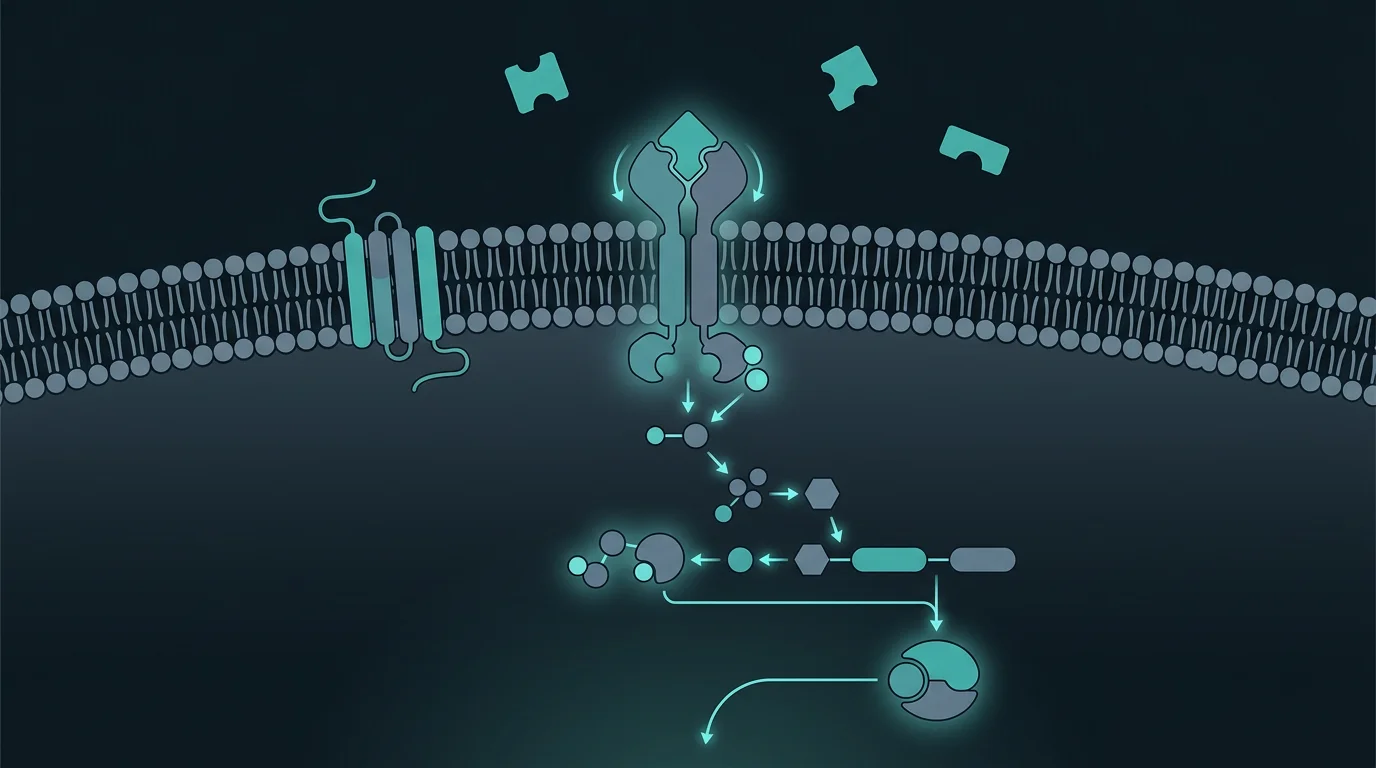
This is where the two peptides differ most significantly. While both promote healing, they do so through fundamentally different pathways.
BPC-157 Mechanisms
BPC-157 operates through several interconnected mechanisms:
1. Angiogenesis (Blood Vessel Formation) BPC-157 promotes the formation of new blood vessels at the site of injury. This is critical because healing tissues require increased blood supply to deliver oxygen and nutrients. BPC-157 upregulates vascular endothelial growth factor (VEGF) and other angiogenic factors.
2. Nitric Oxide (NO) System Modulation BPC-157 interacts with the nitric oxide system in a unique way -- it appears to restore NO balance rather than simply increasing or decreasing it. This modulation affects blood flow, inflammation, and cellular signaling.
3. Growth Factor Receptor Upregulation BPC-157 increases the expression of receptors for various growth factors, including:
- Epidermal Growth Factor (EGF) receptor
- Hepatocyte Growth Factor (HGF) receptor
- Fibroblast Growth Factor (FGF) receptor
By upregulating these receptors, BPC-157 makes tissues more responsive to the body's own healing signals.
4. Anti-Inflammatory Action BPC-157 reduces inflammatory cytokines at the injury site while supporting the transition from the inflammatory phase to the proliferative (rebuilding) phase of healing.
5. Gastrointestinal Protection Uniquely among healing peptides, BPC-157 has potent gastroprotective effects. It can counteract the damage caused by NSAIDs, alcohol, and other GI irritants, and it supports healing of ulcers, inflammatory bowel conditions, and intestinal anastomoses in animal models.
TB-500 Mechanisms
TB-500 operates through a distinct set of mechanisms:
1. Actin Regulation and Cell Migration TB-500's primary mechanism involves sequestering G-actin (monomeric actin). By binding to G-actin, TB-500 promotes the formation of new actin filaments that cells need for migration. This is critical because wound healing requires cells to physically move to the injury site.
2. Anti-Inflammatory Effects TB-500 downregulates inflammatory cytokines and chemokines. It reduces inflammation through a pathway different from BPC-157, involving modulation of NF-kB signaling.
3. Tissue Remodeling TB-500 promotes tissue remodeling by:
- Upregulating matrix metalloproteinases (MMPs) that break down damaged tissue
- Supporting the formation of organized collagen (rather than scar tissue)
- Facilitating angiogenesis (through a different pathway than BPC-157)
4. Stem Cell Recruitment TB-500 promotes the differentiation and migration of stem cells and progenitor cells to sites of injury. This supports regenerative healing rather than simple scar formation.
5. Cardiac and Vascular Effects TB-500 has demonstrated particular affinity for cardiac tissue repair in animal models, including after myocardial infarction (heart attack). It promotes cardiac cell survival and new blood vessel formation in the heart.
Mechanism Summary
| Mechanism | BPC-157 | TB-500 |
|---|---|---|
| Angiogenesis | Strong (VEGF pathway) | Moderate (different pathway) |
| Cell migration | Indirect (via growth factors) | Primary mechanism (actin regulation) |
| Anti-inflammatory | Yes (cytokine modulation) | Yes (NF-kB pathway) |
| Growth factor signaling | Upregulates receptors | Less pronounced |
| NO system modulation | Primary mechanism | Not primary |
| Tissue remodeling | Moderate | Strong (MMP regulation) |
| GI protection | Strong (unique to BPC-157) | Not observed |
| Stem cell activation | Not primary | Notable effect |
| Cardiac specificity | Some evidence | Strong evidence |
Research Evidence Comparison
BPC-157 Research
BPC-157 has an extensive preclinical research base, primarily from the laboratory of Professor Predrag Sikiric at the University of Zagreb, Croatia.
Strengths of the evidence:
- Over 150 animal studies published in peer-reviewed journals
- Remarkably consistent positive results across diverse injury models
- Studies span multiple tissue types: muscle, tendon, ligament, bone, nerve, GI tract, brain
- Multiple administration routes studied (injection, oral, topical)
- Very few studies report negative or null results
Limitations of the evidence:
- The vast majority of studies come from a single research group
- Only ~2 human studies (limited sample sizes)
- No large-scale randomized controlled trials
- Potential publication bias (positive results more likely to be published)
- Limited independent replication
Research Context: While BPC-157 has an impressive volume of preclinical research, the concentration of studies from a single laboratory is a notable limitation. Independent replication by other research groups would significantly strengthen the evidence base. This is a common challenge in peptide research.
TB-500 Research
TB-500 / Thymosin Beta-4 research comes from a broader range of laboratories, though the total volume is smaller than BPC-157.
Strengths of the evidence:
- Research from multiple independent laboratories worldwide
- Strong mechanistic understanding (actin biology is well-established)
- Notable cardiac repair studies (post-myocardial infarction in animal models)
- Thymosin Beta-4 is a well-characterized human protein
- Some clinical development for wound healing (RegeneRx Biopharmaceuticals)
Limitations of the evidence:
- Zero published human studies for the specific applications discussed in the research community
- Clinical development focused on ophthalmic wound healing, not systemic use
- Animal studies use various forms and doses, making comparison difficult
- Less total published research than BPC-157
Evidence Comparison Table
| Evidence Category | BPC-157 | TB-500 |
|---|---|---|
| Total animal studies | ~150+ | ~80 |
| Human studies | ~2 | 0 (for systemic use) |
| Research diversity (labs) | Primarily one group | Multiple groups |
| Clinical trials | None registered | Some (ophthalmic focus) |
| Tissue types studied | Many (GI, muscle, tendon, nerve, brain) | Several (cardiac, skin, muscle, tendon) |
| Mechanism understanding | Partially characterized | Well-characterized (actin biology) |
| Independent replication | Limited | More diverse |
Administration Differences
BPC-157 Administration
BPC-157 offers the most administration route flexibility of any healing peptide:
Subcutaneous injection (most common):
- Can be injected near the site of injury for targeted effects
- Rapid absorption (Tmax ~15 minutes)
- Simple technique with insulin syringes
Oral administration (unique advantage):
- BPC-157 survives gastric acid due to its gastric juice origin
- Effective orally for GI-related issues
- Some evidence of systemic effects via oral route
- More convenient than injection
Intramuscular injection:
- Used for deeper tissue injuries
- Slightly different absorption profile than SubQ
TB-500 Administration
TB-500 is typically administered by injection only:
Subcutaneous injection (standard):
- Usually injected in the abdominal area
- Provides systemic distribution (not targeted to specific sites)
- Longer half-life means less frequent dosing
Intramuscular injection:
- Some protocols use IM injection near injury site
- TB-500's systemic distribution means injection site is less critical than for BPC-157
Dosing Comparison
Key Administration Differences
| Factor | BPC-157 | TB-500 |
|---|---|---|
| Can inject near injury site? | Yes (targeted effect) | Less important (systemic) |
| Oral option? | Yes (unique advantage) | No |
| Injection frequency | 1-2x daily | 2-3x weekly |
| Dose per injection | Low (mcg range) | Higher (mg range) |
| Total protocol cost | Generally lower | Generally higher |
| Reconstituted stability | 14-28 days | 8-10 days |
Safety Profile Comparison
BPC-157 Safety
BPC-157 has a notably clean safety profile in research:
Common observations (generally mild):
- Injection site redness or minor irritation
- Mild nausea (more common with oral administration)
- Temporary fatigue in some reports
Rare/theoretical concerns:
- Angiogenesis promotion could theoretically support tumor growth in individuals with existing cancer
- Very few adverse events reported across 150+ studies
- No reported organ toxicity at research doses
Safety rating: High
TB-500 Safety
TB-500 has a slightly more complex safety profile:
Common observations (generally mild):
- Injection site reactions (redness, swelling)
- Temporary headaches
- Lethargy/tiredness
- Nausea
Rare/theoretical concerns:
- Angiogenesis and cell proliferation effects raise theoretical cancer concerns (same as BPC-157)
- May promote tumor growth in individuals with existing cancer
- Some reports of temporary hair growth changes
- Less extensive safety data than BPC-157
Safety rating: Moderate
Contraindications Comparison
| Contraindication | BPC-157 | TB-500 |
|---|---|---|
| Active cancer or malignancy | Contraindicated | Contraindicated |
| Pregnancy/breastfeeding | Avoid (no data) | Avoid (no data) |
| Children | No data | No data |
| WADA-tested athletes | Allowed | Prohibited (S2) |
| Anticoagulant use | Use caution | Use caution |
| Active infection | Generally acceptable | Generally acceptable |
Critical Safety Note: Both BPC-157 and TB-500 promote angiogenesis (new blood vessel formation) and cellular proliferation. These properties are desirable for healing but raise theoretical concerns for individuals with active cancer, as tumors depend on angiogenesis for growth. Both peptides should be avoided by anyone with known or suspected malignancy.
When to Choose One vs the Other
Choose BPC-157 When:
- The issue is gastrointestinal -- BPC-157 has unique GI-protective and healing properties. It is the clear choice for gut-related concerns (ulcers, IBS symptoms, NSAID-induced GI damage, leaky gut)
- Oral administration is preferred -- BPC-157 is one of the few peptides that works orally, making it accessible without injection
- The injury is localized -- BPC-157 can be injected near a specific injury site for targeted effects
- Budget is a concern -- BPC-157 is dosed in micrograms (cheaper per protocol) and has longer reconstituted stability
- The research subject is a WADA-tested athlete -- BPC-157 is not currently on the WADA prohibited list (TB-500 is)
- A broader safety evidence base is desired -- BPC-157 has more published safety data
Choose TB-500 When:
- The issue is systemic or diffuse -- TB-500 distributes systemically and may benefit multiple injury sites simultaneously
- Tissue remodeling is the priority -- TB-500's actin regulation and MMP modulation are specifically suited for scar reduction and tissue reorganization
- The injury involves tendons or ligaments -- TB-500's cell migration properties are particularly relevant for these slow-healing tissues
- Cardiac protection is relevant -- TB-500 has stronger evidence for cardiac tissue repair
- Less frequent dosing is preferred -- TB-500's longer half-life (24-48 hours) allows 2-3x weekly dosing vs. daily for BPC-157
- Flexibility and mobility are primary goals -- TB-500's systemic anti-inflammatory and tissue remodeling effects may support overall joint health
Choose Both When:
- Comprehensive healing is the goal -- The combination addresses repair through complementary mechanisms
- The injury is significant -- Serious injuries benefit from multi-pathway healing support
- Recovery time is critical -- The synergistic effects may accelerate healing beyond what either peptide achieves alone
- Budget and logistics allow -- Running both peptides requires more planning and expense
Stack Recommendation: For researchers interested in the BPC-157 + TB-500 combination, see our detailed article on Common Peptide Stacks Explained which covers the healing stack protocol in depth, including loading and maintenance phases.
Combining BPC-157 and TB-500
The BPC-157 + TB-500 combination is the most popular healing stack in the peptide research community. Here is why and how it is typically structured:
Why Combine Them?
The combination addresses tissue repair from multiple angles:
| Healing Phase | BPC-157 Contribution | TB-500 Contribution |
|---|---|---|
| Inflammation | Modulates inflammatory response | Reduces NF-kB inflammation |
| Blood Supply | Creates new blood vessels (VEGF) | Supports vascular remodeling |
| Cell Recruitment | Upregulates growth factor receptors | Promotes cell migration (actin) |
| Tissue Repair | Supports local tissue rebuilding | Enhances tissue remodeling (MMPs) |
| Scar Prevention | Moderate effect | Strong anti-scarring properties |
Combined Protocol
Practical Combination Tips
- Different vials: BPC-157 and TB-500 should be reconstituted in separate vials (different storage stability)
- Same syringe OK: Both can be drawn into the same syringe for a single injection if desired
- BPC-157 near site, TB-500 anywhere: For localized injuries, inject BPC-157 close to the affected area and TB-500 in the abdomen (or anywhere convenient)
- Start BPC-157 first: If introducing one at a time, start BPC-157 for 1-2 weeks to establish baseline, then add TB-500
- Monitor and adjust: Track recovery progress to determine when to transition from loading to maintenance
Cost and Practicality
| Factor | BPC-157 | TB-500 |
|---|---|---|
| Cost per dose | Lower (mcg dosing) | Higher (mg dosing) |
| Cost per protocol (8 weeks) | $$ | $$$ |
| Injection frequency | Higher (daily) | Lower (2-3x weekly) |
| Reconstituted shelf life | 14-28 days | 8-10 days |
| Storage requirements | Standard refrigeration | Standard refrigeration |
| Reconstitution complexity | Standard | Standard |
| Oral option available? | Yes | No |
Key Takeaways
- BPC-157 and TB-500 are complementary, not interchangeable -- they heal through fundamentally different mechanisms
- BPC-157 excels at local repair and has unique GI-protective properties with oral bioavailability
- TB-500 excels at systemic healing and tissue remodeling through actin regulation and cell migration
- The combination is greater than the sum -- addressing healing from multiple pathways simultaneously
- BPC-157 has more published research but primarily from one laboratory; TB-500 has research from diverse groups but less total volume
- Both are contraindicated in cancer due to their angiogenesis and cell proliferation effects
- For localized injuries, BPC-157 may be sufficient alone; for systemic or complex injuries, the combination adds value
- WADA-tested athletes should note that TB-500 is prohibited while BPC-157 is not
Related Resources
- BPC-157 Full Profile - Complete BPC-157 information
- TB-500 Full Profile - Complete TB-500 information
- Common Peptide Stacks Explained - More combination protocols
- Peptide Storage Best Practices - Maintain peptide effectiveness
- Complete Guide to Peptide Reconstitution - Preparation guide
- Peptide Safety: What the Research Says - Comprehensive safety information
- Compare Peptides - Use our comparison tool for any peptide pair