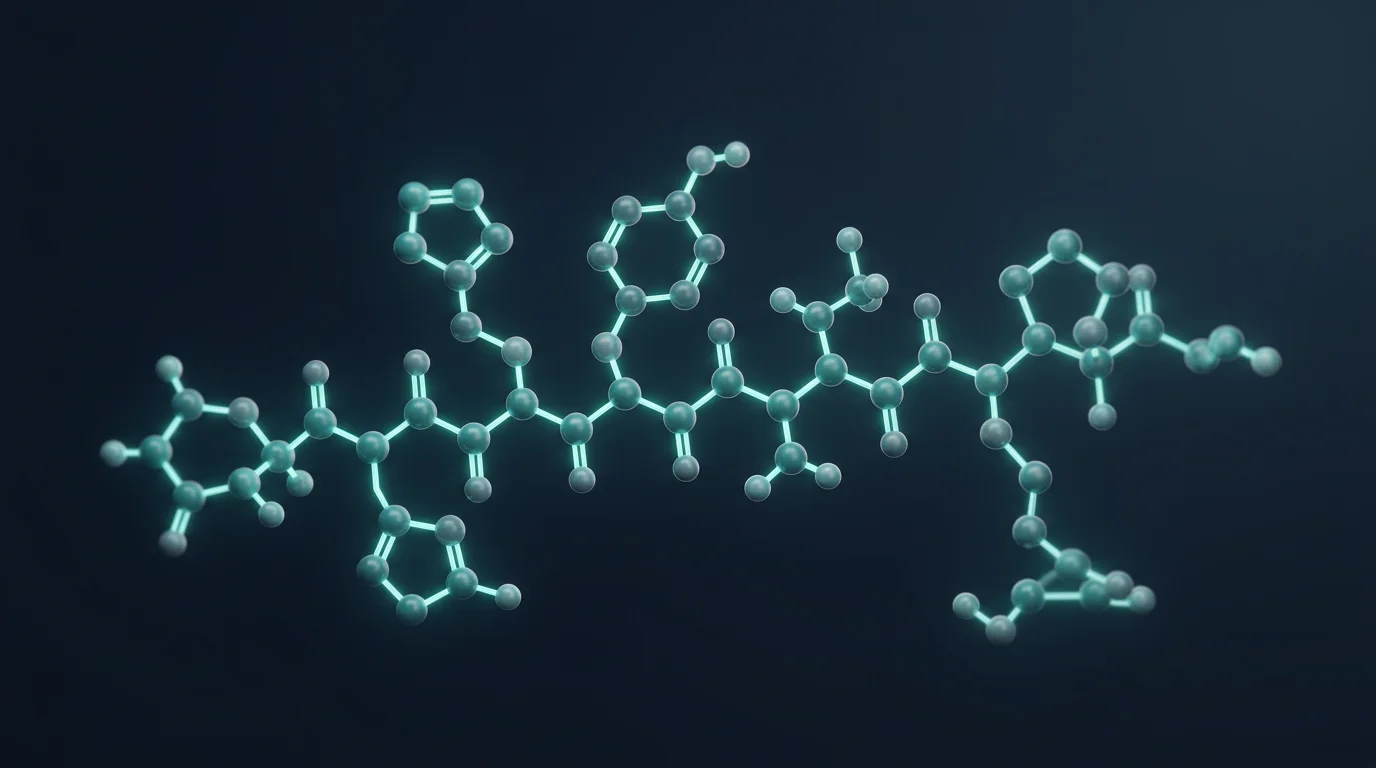
Gonadorelin
Also known as: GnRH, LHRH, Gonadotropin-Releasing Hormone, Luteinizing Hormone-Releasing Hormone, Factrel, Lutrepulse
A synthetic form of gonadotropin-releasing hormone (GnRH) used to stimulate the release of FSH and LH from the pituitary, supporting natural testosterone production and fertility in both men and women.
▶ Gonadorelin in 30 Seconds
Research overview only. Not medical advice.
Half-Life
2-4 minutes
Typical Dose
50-200 mcg
Frequency
1-3x daily or pulsatile
Routes
Subcutaneous
Half-Life Visualization
Half-Life Decay Curve
Concentration over time assuming initial dose = 100%
Use arrow keys to navigate: Left/Right for time, Up/Down for peptides
Shaded areas represent reported half-life variability from published studies.
| Peptide | Half-Life | 50% at | 25% at | 12.5% at | Redose Window |
|---|---|---|---|---|---|
Gonadorelin | 0.05h | 0.05h | 0.1h | 0.15000000000000002h | 0.05h - 0.1h |
Showing Gonadorelin decay curve
Open Full Comparison ToolMechanism of Action
Gonadorelin is a synthetic decapeptide identical to endogenous gonadotropin-releasing hormone (GnRH), also known as luteinizing hormone-releasing hormone (LHRH). It is the master regulator of the hypothalamic-pituitary-gonadal (HPG) axis.
Primary Mechanism
Pituitary Stimulation
When administered in pulsatile fashion:
- Binds to GnRH receptors on pituitary gonadotroph cells
- Triggers release of Luteinizing Hormone (LH)
- Triggers release of Follicle-Stimulating Hormone (FSH)
- Maintains natural feedback mechanisms
Downstream Effects
In males:
- LH stimulates Leydig cells to produce testosterone
- FSH supports spermatogenesis via Sertoli cells
- Preserves testicular function and fertility
In females:
- LH triggers ovulation and corpus luteum formation
- FSH stimulates follicular development
- Supports natural menstrual cycle regulation
Pulsatile vs Continuous Administration
Critical distinction:
- Pulsatile: Mimics natural hypothalamic secretion; stimulates gonadotropin release
- Continuous: Causes receptor downregulation and desensitization; eventually suppresses axis
This is why timing and dosing pattern are essential for desired outcomes.
Comparison to GnRH Agonists
| Feature | Gonadorelin | Long-Acting GnRH Agonists |
|---|---|---|
| Half-life | Minutes | Days to months (depot) |
| Initial effect | Stimulation | Flare then suppression |
| Long-term effect | Maintains axis | Suppresses axis |
| Use in TRT | Preserve fertility | Prostate cancer |
Research & Evidence
Evidence Level: Gonadorelin has extensive clinical research and FDA approval for diagnostic and therapeutic use. It is one of the most well-studied reproductive peptides.
Fertility Treatment
Hypogonadotropic Hypogonadism
Pulsatile gonadorelin therapy:
- Restores normal pulsatile LH/FSH secretion
- Induces spermatogenesis in men
- Induces ovulation in women
- More physiological than gonadotropin injections
Male Fertility Preservation
During testosterone replacement:
- Maintains intratesticular testosterone
- Preserves spermatogenesis
- Alternative to HCG for testicular support
- May maintain testicular volume
Testosterone Restoration
Post-Cycle Recovery
After anabolic steroid use:
- Helps restart natural testosterone production
- Part of comprehensive PCT protocols
- Used alongside SERMs and HCG
- Supports HPT axis recovery
Age-Related Decline
Research explores:
- Stimulating endogenous testosterone
- Alternative to TRT in mild hypogonadism
- Preserving natural axis function
Diagnostic Use
FDA-approved indications:
- Evaluating pituitary function
- Distinguishing hypothalamic vs pituitary hypogonadism
- Assessing gonadotropin reserve
- Timing of puberty onset
Female Applications
Fertility medicine uses:
- Ovulation induction in hypothalamic amenorrhea
- Support for IVF protocols
- Treatment of PCOS-related infertility
- More physiological than gonadotropin injections
Dosing
Disclaimer: Gonadorelin is a prescription medication. Use should be supervised by a qualified healthcare provider. Dosing information is for educational reference.
Research Protocols
Administration Methods
Subcutaneous (Most Common)
- Standard route for clinical use
- Rapid absorption
- Can be self-administered
- Preferred for regular dosing
Pulsatile Pump Delivery
- Mimics natural hypothalamic secretion
- Delivers pulses every 60-120 minutes
- Most physiological approach
- Used in fertility clinics
Timing Considerations
- Space doses throughout the day
- Avoid continuous infusion (causes suppression)
- Morning and evening dosing commonly used
- Can be combined with other fertility agents
Reconstitution
When using lyophilized powder:
- Reconstitute with bacteriostatic water or saline
- Typical concentration varies by protocol
- Refrigerate after reconstitution
- Use within 7-14 days
Pharmacokinetics
Absorption
- IV: Immediate, 100% bioavailable
- SC/IM: Rapid, peak within minutes
- Very short duration of action
- Requires frequent dosing for therapeutic effect
Distribution
- Rapid distribution to target tissues
- Reaches pituitary quickly
- Short circulation time
- Minimal tissue accumulation
Metabolism
- Rapidly degraded by peptidases
- Half-life of only 2-4 minutes
- Metabolized in blood, liver, and kidneys
- No active metabolites
Elimination
- Half-life: 2-4 minutes (very short)
- Rapid clearance requires pulsatile delivery
- Eliminated primarily via enzymatic degradation
- No accumulation with pulsatile dosing
Synergy & Stacking
Gonadorelin + HCG
Dual stimulation approach:
- Gonadorelin: Pituitary LH stimulation
- HCG: Direct testicular LH-receptor activation
- Provides redundant signaling pathways
- May be used alternating or in sequence
Gonadorelin + Kisspeptin-10
Upstream and direct stimulation:
- Kisspeptin stimulates endogenous GnRH release
- Gonadorelin provides direct GnRH receptor activation
- Amplified pituitary response
- Research protocol combination
Gonadorelin + SERM (Clomiphene/Enclomiphene)
Fertility optimization:
- SERM blocks estrogen negative feedback
- Gonadorelin provides pulsatile stimulation
- Synergistic increase in LH/FSH
- Common in male fertility protocols
PCT Stack
Post-cycle recovery:
- Gonadorelin for axis stimulation
- HCG for testicular support
- SERM for estrogen modulation
- Comprehensive recovery approach
Safety & Side Effects
Known Side Effects
Common
- Headache
- Flushing
- Nausea
- Injection site reactions
Uncommon
- Dizziness
- Abdominal discomfort
- Light-headedness
In Fertility Treatment
- Ovarian hyperstimulation syndrome (women)
- Multiple pregnancy risk
- Mood changes
Serious Risks
Tumor Considerations
- Initial hormone surge may stimulate hormone-sensitive tumors
- Pituitary apoplexy risk with pituitary adenomas
- Requires proper medical evaluation before use
Warning: Gonadorelin should not be used in pregnancy. It can cause fetal harm. Reliable contraception required during treatment cycles.
Long-term Considerations
- No significant long-term adverse effects documented with proper use
- Pulsatile administration maintains axis function
- Continuous administration causes desensitization
- Regular monitoring recommended
Monitoring
Baseline Testing
Before starting treatment:
- Testosterone levels (total and free)
- LH and FSH levels
- Estradiol
- Semen analysis (fertility cases)
- Pituitary function evaluation
- Rule out contraindications
During Treatment
Regular monitoring of:
- Hormone levels (LH, FSH, testosterone)
- Response to stimulation
- Side effects
- Testicular examination (males)
- Ovarian response (females)
Follow-up
- Periodic hormone panels
- Fertility parameters as appropriate
- Adjust dosing based on response
- Evaluate need for continued treatment
Regulatory Status
Current Status
| Region | Status |
|---|---|
| United States | FDA-approved (Rx only) |
| Canada | Prescription medication |
| European Union | Approved prescription |
| United Kingdom | Prescription only |
| Australia | Schedule 4 (Rx) |
| WADA | Prohibited in sport |
Approved Uses
FDA-approved indications:
- Diagnostic testing of pituitary function
- Treatment of hypogonadotropic hypogonadism
- Infertility treatment
- Research applications
Legal Considerations
- Prescription required in most jurisdictions
- Prohibited in competitive sports (WADA banned)
- Used off-label in TRT and PCT settings
- Legitimate medical uses are well-established
References
Compare Gonadorelin Prices
1 vendor| Vendor | Quantity | Price | $/mg | |
|---|---|---|---|---|
Core PeptidesBest Value | 10mg | $90.00 | $9.00/mg | View Deal |
For research purposes only. We may earn a commission.
See all vendors →Community Insights
Limited DataAggregated from 14 self-reported experiences collected from public forums.
Overall Sentiment
Reported Benefits
- felt the best i've ever felt in my adult life1x
- healthy markers1x
- helped achieve weight loss goals1x
Reported Side Effects
- mental state crashes1x
- energy depletion1x
- tiredness1x
- anxiety1x
- depression1x
- difficulty focusing1x
Common Doses Reported
- 0.1mg 2x/week1 report
- 1mg1 report
- 50mg twice per week1 report
- 500mcg1 report
- 2 times a week1 report
Administration Routes
- oral1 report
- sublingual1 report
- subcutaneous1 report
- intramuscular1 report
This data reflects self-reported user experiences collected from public forums. It is not medical advice. Individual results vary. Always consult a qualified healthcare professional before using any research compound.
Get Our Free Peptide Research Guide
100 essential tips for safe peptide research, delivered as a free PDF.
Where to Buy Gonadorelin
Compare prices from 1 vendor • Best value: $9.00/mg
10
$90.00
$9.00/mg
Disclaimer: These products are sold for research purposes only. Prices and availability may change. Prices as of 4/19/2026.
Need Research Supplies?
Syringes, bacteriostatic water, vials, alcohol swabs, and more. Everything you need for peptide research.
Browse SuppliesRelated Tips for Gonadorelin
Understanding Research Evidence Hierarchy
Navigate from preclinical studies to approved therapies in peptide research.
Understanding Peptide Half-Life Determinants
Learn what factors control how long peptides remain active in biological systems.
Understanding Evidence Levels: From Preclinical to Approved
Learn how to evaluate peptide research strength using evidence hierarchy.
GPCR Mechanisms: How Most Peptides Work
Understand G-protein coupled receptors and peptide signaling pathways.