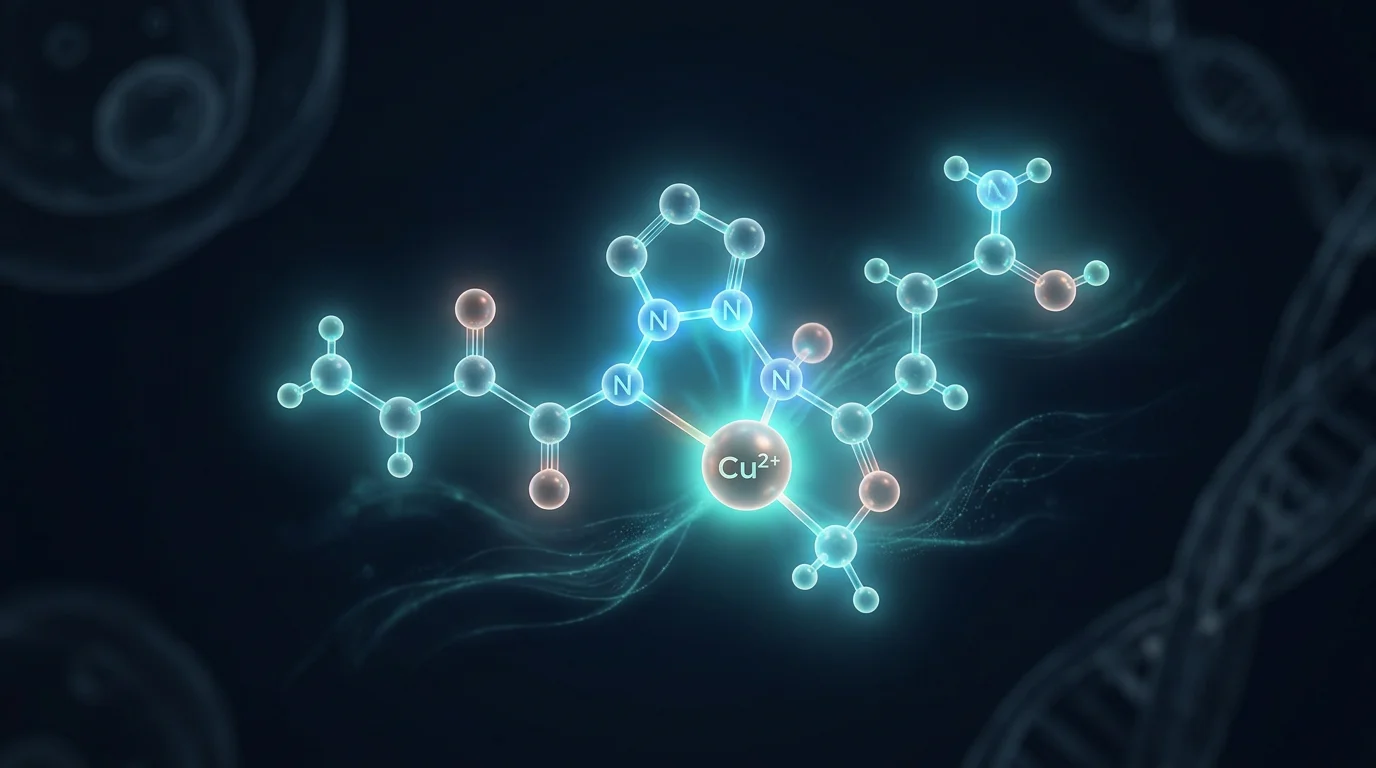
GHK-Cu
Also known as: Copper Peptide GHK-Cu, Glycyl-L-Histidyl-L-Lysine:Copper, GHK Copper Complex
A naturally occurring copper peptide with remarkable wound healing, anti-aging, and tissue remodeling properties. Found naturally in human plasma and saliva.
▶ GHK-Cu in 30 Seconds
Research overview only. Not medical advice.
Half-Life
Short (hours)
Typical Dose
1-4 mg
Frequency
Once daily
Routes
Subcutaneous
Overview
GHK-Cu (Glycyl-L-Histidyl-L-Lysine:Copper) is a naturally occurring tripeptide-copper complex found in human plasma, saliva, and urine. It was first identified by Dr. Loren Pickart in the early 1970s while studying factors that made young blood capable of stimulating old liver cells to synthesize proteins.
The peptide naturally declines with age:
- Age 20: ~200 ng/ml in plasma
- Age 60: ~80 ng/ml in plasma
This decline correlates with reduced regenerative capacity, leading to significant research interest in supplementation.
Key Characteristics
- Origin: Naturally occurring in human body
- Classification: Copper-binding tripeptide
- Molecular Weight: 403.9 g/mol (peptide), 467.5 g/mol (with copper)
- Copper Ratio: 1:1 GHK to Cu(II)
- Unique Feature: Natural human peptide, minimal foreign body response
Mechanism
GHK-Cu operates through multiple sophisticated mechanisms, affecting over 4,000 human genes.
Primary Mechanisms
1. Gene Expression Modulation
GHK-Cu has been shown to modulate expression of:
- Upregulated (59%): Tissue remodeling, antioxidant genes, DNA repair
- Downregulated (41%): Pro-inflammatory, pro-fibrotic genes
- Net effect: Promotes regenerative over degenerative processes
2. Copper Delivery System
The tripeptide acts as a smart copper delivery system:
- Copper is essential for many enzymes
- Lysyl oxidase (collagen crosslinking)
- Superoxide dismutase (antioxidant)
- Cytochrome c oxidase (energy production)
- GHK safely delivers copper where needed
3. Collagen & Extracellular Matrix
Effects on connective tissue:
- Stimulates collagen synthesis (I, III)
- Promotes elastin production
- Increases glycosaminoglycan synthesis
- Enhances decorin production (anti-scarring)
- Supports proper ECM remodeling
4. Growth Factor Modulation
GHK-Cu influences multiple growth factors:
- Increases VEGF (angiogenesis)
- Modulates TGF-beta (reduces scarring)
- Affects NGF (nerve regeneration)
- Influences FGF (tissue repair)
5. Anti-Inflammatory Effects
Potent inflammation modulation:
- Reduces TNF-alpha
- Decreases IL-6
- Modulates TGF-beta signaling
- Attracts immune cells for repair, not destruction
Research
Research Note: GHK-Cu is one of the best-studied peptides with over 100 published studies on its biological effects.
Wound Healing
Clinical Evidence
Multiple studies demonstrate:
- 30% faster wound closure
- Increased blood vessel formation
- Reduced scar tissue formation
- Enhanced tensile strength of healed tissue
Mechanism
- Attracts fibroblasts to wound site
- Stimulates stem cell migration
- Promotes organized collagen deposition
- Modulates inflammatory phase optimally
Skin Anti-Aging
Clinical Trials
Studies on facial aging show:
- Increased skin density and thickness
- Improved skin elasticity
- Reduced fine lines and wrinkles
- Enhanced skin clarity
Comparative Studies
GHK-Cu performed comparably or superiorly to:
- Vitamin C
- Retinoic acid
- Melatonin
Hair Growth
Mechanism
- Increases hair follicle size
- Extends anagen (growth) phase
- Improves scalp blood flow
- May inhibit DHT effects
2025 Research
Recent studies show promise for:
- Androgenetic alopecia
- Telogen effluvium
- Enhancing hair transplant results
Neuroprotection
Emerging research indicates:
- Potential cognitive benefits
- Nerve regeneration support
- Anti-anxiety effects in animal models
- May help with brain inflammation
Systemic Effects (Injectable)
When administered systemically:
- Systemic anti-inflammatory effects
- Enhanced tissue repair throughout body
- Potential longevity benefits
- Immune system modulation
Dosing
Disclaimer: All dosing information is for research reference only. GHK-Cu is not approved for human use by the FDA. Consult a healthcare provider before considering any peptide use.
Injectable Protocols
Topical Use
Concentrations
- Creams/Serums: 0.1% - 3% GHK-Cu
- Higher concentrations for targeted use
- Can be compounded into various bases
Application
- Apply to clean skin
- Can be used morning and/or evening
- Allow to absorb before other products
- Use sunscreen during daytime use
Administration Notes
Injectable
- Subcutaneous preferred for systemic effects
- Can inject locally for targeted healing
- Mesotherapy/microneedling for skin/scalp
- Reconstitute with bacteriostatic water
Topical
- Most common form of use
- Excellent skin penetration
- Stable in proper formulations
- Blue color normal (copper complex)
Reconstitution
- Lyophilized powder typically light blue
- Use bacteriostatic water
- Store reconstituted solution refrigerated
- Stable for 3-4 weeks refrigerated
Pharmacokinetics
Absorption
- Subcutaneous: Rapid absorption, widely distributed
- Topical: Penetrates skin effectively due to small size
- Intradermal: Highest local concentration
Distribution
- Concentrates at sites of injury
- Crosses into skin layers effectively
- Systemic distribution with injectable
Metabolism
- Metabolized by peptidases
- Copper released for enzyme incorporation
- Natural compound - no foreign metabolites
Elimination
- Relatively rapid clearance
- Daily dosing maintains effect
- No accumulation observed
Synergy & Stacking
Common Combinations
GHK-Cu + BPC-157 (Healing Stack)
Complementary mechanisms:
- GHK-Cu: ECM remodeling, copper delivery
- BPC-157: Growth factor modulation, angiogenesis
- Enhanced tissue repair
- Popular for injury recovery
GHK-Cu + TB-500 (Tissue Repair)
For comprehensive healing:
- TB-500: Cell migration, systemic healing
- GHK-Cu: Matrix remodeling, anti-scarring
- Addresses multiple phases of repair
GHK-Cu + Retinoic Acid (Topical Anti-Aging)
Powerful skin combination:
- Retinoid: Increases cell turnover
- GHK-Cu: Rebuilds collagen, repairs damage
- Use retinoid at night, GHK-Cu morning
GHK-Cu + Vitamin C (Collagen Support)
For collagen synthesis:
- Vitamin C: Collagen cofactor
- GHK-Cu: Stimulates collagen genes
- Synergistic for skin health
Timing Considerations
- Injectable: Any time of day
- Topical: Morning or evening (or both)
- Allow absorption before other products
- Can be combined in same injection with compatible peptides
Safety
Known Side Effects
Injectable (Rare)
- Injection site reactions
- Mild irritation
- Temporary redness
Topical (Uncommon)
- Initial skin irritation (usually adapts)
- Redness if used with strong actives
- Blue staining on light fabrics
Contraindications
Avoid or use with caution if:
- Copper sensitivity/Wilson's disease
- Active cancer (theoretical concern with growth factors)
- Pregnancy or breastfeeding
- Open wounds (for certain topical formulations)
Safety Note: GHK-Cu has an excellent safety profile due to being a naturally occurring human peptide. Most studies report minimal to no adverse effects.
Drug Interactions
- No known significant drug interactions
- May enhance effects of other healing peptides
- Caution with topical retinoids initially (start separately)
Monitoring
For Cosmetic Use
- Photographic documentation
- Skin elasticity measurements
- Self-reported satisfaction
For Healing Applications
- Wound measurements and photos
- Healing timeline tracking
- Pain and comfort levels
For Systemic Use
- Consider inflammatory markers (CRP)
- General wellness tracking
- No specific required labs
Regulatory
Current Status
| Region | Status |
|---|---|
| United States | Not FDA-approved for injection; cosmetic use permitted |
| WADA | Not prohibited |
| Cosmetics | Widely used ingredient |
| Research | Extensive publication history |
Legal Considerations
- Available as cosmetic ingredient worldwide
- Injectable forms as research chemicals
- Not scheduled or controlled
- Athletes: Not banned
Clinical Outlook
GHK-Cu represents a unique opportunity:
- Natural human compound with strong safety profile
- Extensive research backing
- Multiple applications (topical and systemic)
- Growing interest in anti-aging medicine
- Potential future pharmaceutical development
References
Compare GHK-Cu Prices
11 vendors| Vendor | Quantity | Price | $/mg | |
|---|---|---|---|---|
Swiss ChemsPartnerBest Value | 50mg | $68.95 | $1.38/mg | View Deal |
Swiss ChemsPartner | 100mg | $246.95 | $2.47/mg | View Deal |
Orbitrex PeptidesPartner | $59.99 | N/A | View Deal |
For research purposes only. We may earn a commission.
See all vendors →Community Insights
Aggregated from 149 self-reported experiences collected from public forums.
Overall Sentiment
Reported Benefits
- improved skin4x
- improved skin appearance3x
- hair growth2x
- accelerated healing2x
- improved eyebrow growth2x
- reduced pain2x
Reported Side Effects
- itching3x
- injection site redness3x
- bruising3x
- injection site reaction3x
- injection site pain3x
- sleep disruption2x
Common Doses Reported
- 2mg3 reports
- 50mg2 reports
- 3%2 reports
- 1mg per day2 reports
- 2mg daily2 reports
Administration Routes
- subcutaneous68 reports
- topical15 reports
- intramuscular5 reports
- sublingual1 report
- subcutaneous, topical1 report
Vendor Mentions
This data reflects self-reported user experiences collected from public forums. It is not medical advice. Individual results vary. Always consult a qualified healthcare professional before using any research compound.
Get Our Free Peptide Research Guide
100 essential tips for safe peptide research, delivered as a free PDF.
Where to Buy GHK-Cu
Compare prices from 11 vendors • Best value: $1.38/mg
50
$68.95
$1.38/mg
100
$246.95
$2.47/mg
$59.99
1000
$55.00
$0.055/mg
100
$49.99
$0.500/mg
100
$75.00
$0.750/mg
Disclaimer: These products are sold for research purposes only. Prices and availability may change. Prices as of 4/19/2026.
Need Research Supplies?
Syringes, bacteriostatic water, vials, alcohol swabs, and more. Everything you need for peptide research.
Browse SuppliesRelated Tips for GHK-Cu
Proper Injection Site Rotation for Long-Term Research
Prevent tissue irritation and maintain absorption consistency with systematic rotation.
Choosing Optimal Peptide Administration Routes
Match administration method to peptide properties for maximum effectiveness.
Use Gentle Mixing to Preserve Peptide Structure
Gentle swirling prevents peptide degradation during reconstitution.
Maintain Room Temperature During Reconstitution
Temperature control prevents peptide degradation during reconstitution.
Protect Peptides from Light Exposure
Light degradation destroys peptide structure and biological activity.
Start Single Before Stacking
Establish individual peptide baselines before combining multiple compounds.