Introduction
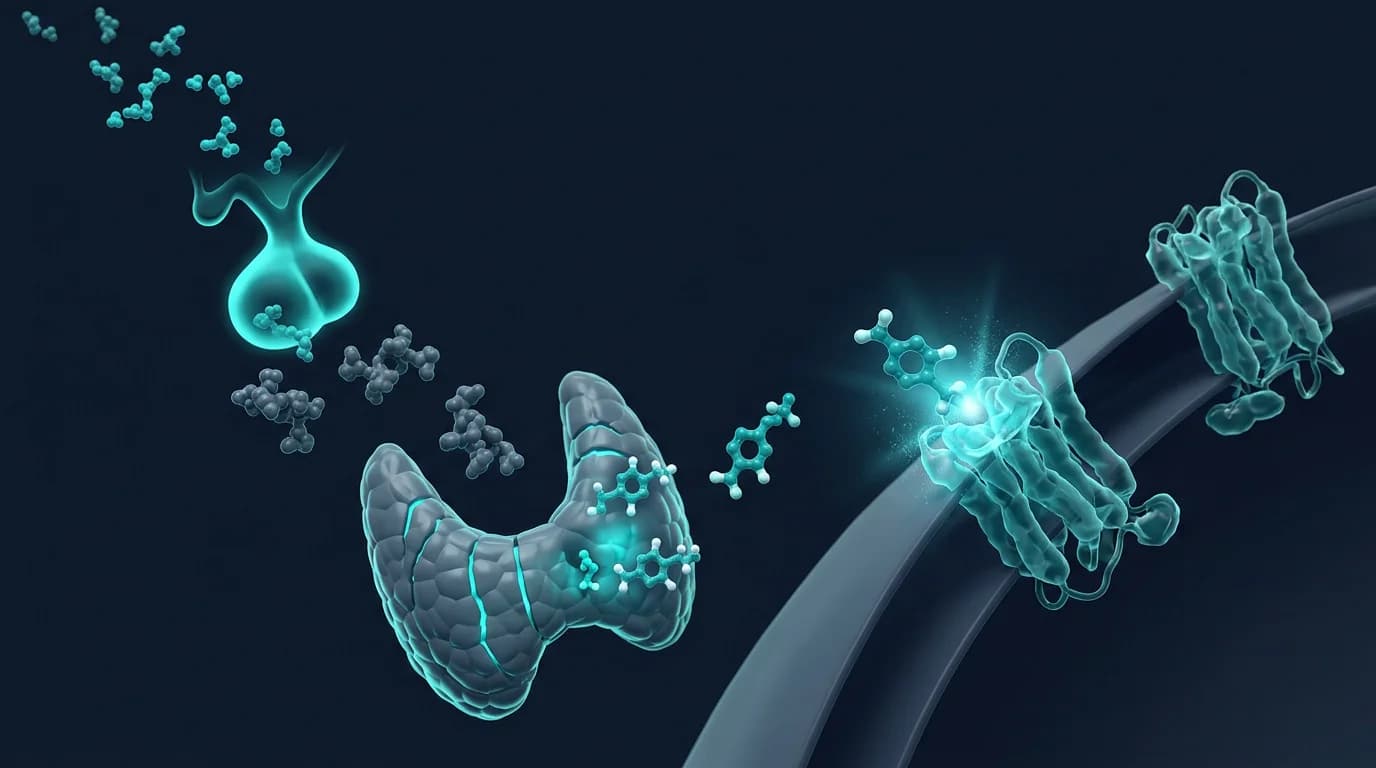
The thyroid gland is tissue -- a physical organ that can be damaged, inflamed, or compromised like any other tissue in your body. Autoimmune thyroiditis, environmental toxins, and various insults can damage the thyroid gland itself, impairing its ability to produce hormones regardless of other metabolic factors.
BPC-157, the gastric pentadecapeptide known for its remarkable tissue healing properties, has shown protective and regenerative effects across multiple organ systems. While direct thyroid research is limited, the mechanisms through which BPC-157 protects tissue may be relevant for thyroid gland health.
In this article, you will explore how BPC-157's tissue-protective properties may interface with thyroid health, what we know about its effects on endocrine tissue, and how FixMyT can help you understand your thyroid function within the metabolic context.
Understanding the Thyroid: The Rate of Your Metabolism
The Thyroid node in the FixMyT metabolic tree occupies Level 2, downstream from Mitochondria and the Liver, and upstream of Cortisol and Progesterone. Its subtitle "Rate" captures its function: the thyroid sets the speed of your entire metabolism.
The Thyroid node encompasses:
- Metabolic rate: How fast you burn fuel
- Warmth: Body heat generation through thermogenesis
- Pulse: Supporting healthy heart rate
- Digestion support: Facilitating gut motility
When this node is dysfunctional, symptoms include cold hands/feet, low body temperature, slow pulse, constipation, and hair loss. These can result from:
- Insufficient thyroid hormone production (hypothyroidism)
- Poor T4 to T3 conversion (liver function issues)
- Cellular insensitivity to thyroid hormone (mitochondrial issues)
- Damage to the thyroid gland itself (tissue health)
BPC-157's potential role relates to the last category -- supporting the physical health of the thyroid gland as an organ.
What Is BPC-157?
BPC-157 (Body Protection Compound-157) is a synthetic pentadecapeptide of 15 amino acids derived from a naturally occurring protein in human gastric juice. It has been extensively studied for its tissue-protective and regenerative properties across multiple organ systems.
Key characteristics:
- Sequence: Gly-Glu-Pro-Pro-Pro-Gly-Lys-Pro-Ala-Asp-Asp-Ala-Gly-Leu-Val
- Molecular weight: 1419.53 g/mol
- Half-life: 4-6 hours
- Administration: Subcutaneous, intramuscular, or oral (250-500 mcg, 1-2x daily)
- Research status: 150+ animal studies, limited human trials
BPC-157 works through multiple mechanisms including growth factor modulation (VEGF, EGF, FGF), nitric oxide system effects, and dopamine system interactions. It is not FDA-approved and remains a research compound.
For complete technical details, see the full BPC-157 profile on PepGuide.
How BPC-157 May Support Thyroid Function
While direct thyroid research is limited, BPC-157's known mechanisms have potential relevance for thyroid tissue health.
1. Tissue Protection and Repair
BPC-157 has demonstrated protective effects across multiple organ systems including:
- Gastrointestinal tract (stomach, intestines)
- Liver
- Pancreas
- Muscle and tendon
- Nervous system
These effects are mediated through growth factor upregulation and enhanced tissue repair. The thyroid gland, as glandular tissue, may potentially benefit from similar protective mechanisms.
2. Anti-Inflammatory Effects
Many thyroid conditions involve inflammation:
- Hashimoto's thyroiditis (autoimmune inflammation)
- Subacute thyroiditis (post-viral inflammation)
- Environmental thyroid damage
BPC-157 has demonstrated anti-inflammatory properties through cytokine modulation. Reducing inflammation in thyroid tissue could theoretically support thyroid function and slow disease progression.
3. Angiogenesis and Blood Supply
BPC-157 promotes angiogenesis (new blood vessel formation) through VEGF upregulation. Adequate blood supply is essential for:
- Delivery of iodine and other nutrients to the thyroid
- Transport of thyroid hormones to circulation
- Removal of metabolic waste
Enhanced blood supply to the thyroid could support hormone production and gland health.
4. Gut-Thyroid Connection
BPC-157 is well-established for gut healing, and there is a significant gut-thyroid connection:
- Leaky gut can trigger autoimmune thyroid disease
- Gut inflammation affects nutrient absorption (including iodine, selenium)
- Gut health affects T4 to T3 conversion
- The gut microbiome influences thyroid function
By supporting gut health, BPC-157 may indirectly support thyroid function through this axis.
5. Dopamine System Effects
BPC-157 interacts with the dopamine system, protecting against dopamine neurotoxicity and modulating dopaminergic signaling. Dopamine is relevant to thyroid function because:
- Dopamine inhibits TSH release
- Dopamine affects hypothalamic-pituitary-thyroid axis
- Dopamine system dysfunction can affect thyroid regulation
What Real People Are Saying
BPC-157 is primarily discussed for gut and injury healing, with some observations about systemic effects:
"Using BPC-157 for gut healing after Hashimoto's diagnosis. My theory is the leaky gut was contributing to the autoimmune attack on my thyroid. After 12 weeks, antibody levels decreased and thyroid function improved. Hard to attribute specifically to BPC, but the gut-thyroid connection is real." — u/hashimotos_gut on r/Hashimotos
"Started BPC-157 for an injury, but noticed my thyroid symptoms improved. Cold hands warmed up, energy improved. Whether this is direct thyroid effect, gut effect, or just overall tissue health, something is working." — u/systemic_bpc on r/Peptides
"The tissue healing properties of BPC-157 are well-documented. For autoimmune conditions affecting specific organs -- thyroid, pancreas, etc. -- supporting tissue repair while addressing the autoimmune trigger makes sense." — u/autoimmune_approach on r/Nootropics
These are individual observations. Direct evidence for BPC-157 effects on thyroid tissue is limited.
Monitoring Your Thyroid Health with FixMyT
Understanding thyroid function requires looking at the whole metabolic picture. FixMyT provides a systematic framework for this assessment.
The FixMyT symptoms quiz identifies thyroid-related markers:
- Cold hands/feet (metabolic rate)
- Low body temperature (direct rate indicator)
- Slow pulse (thyroid affects heart rate)
- Constipation (gut motility)
- Hair loss (metabolic and hormonal)
The visual metabolic tree shows how the Thyroid connects to the Gut (through the liver and mitochondria upstream) and affects Cortisol and Progesterone downstream. Thyroid tissue health affects this entire cascade.
If you are considering BPC-157 for thyroid support, understanding your baseline is essential. FixMyT helps you see where thyroid function fits in your overall metabolic state.
Research and Considerations
BPC-157's thyroid-specific evidence is limited:
What is established:
- Tissue protection across multiple organ systems
- Anti-inflammatory effects
- Angiogenesis promotion
- Gut healing (indirect thyroid relevance)
What needs research:
- Direct effects on thyroid tissue
- Impact on thyroid hormone levels
- Effects in thyroid disease models
- Human studies for thyroid conditions
Important considerations:
- BPC-157 upregulates growth factors, which requires careful consideration in any malignancy
- Autoimmune thyroid conditions are complex and may require immunomodulation rather than tissue repair alone
- Thyroid conditions require proper medical diagnosis and monitoring
Disclaimer
This article is for educational and research purposes only. BPC-157 is not approved for human use by the FDA or other regulatory agencies. Nothing in this article constitutes medical advice or a recommendation to use any substance.
Thyroid conditions require proper medical evaluation. If you are experiencing symptoms of thyroid dysfunction, consult with an endocrinologist for appropriate testing and treatment. Autoimmune thyroid conditions require specific medical management.
Individual responses vary significantly. The information here reflects current research as of the publication date.
Learn More
- Full BPC-157 Profile on PepGuide - Complete technical details
- MOTS-c for Thyroid-Mitochondria Connection - Mitochondrial approach
- Ipamorelin and Clean GH for Metabolism - GH secretagogue
- FixMyT Metabolic Assessment - Understand your thyroid and metabolic baseline
References
-
Sikiric P, et al. "Pentadecapeptide BPC 157 and its effects on a NSAID toxicity model: diclofenac-induced gastrointestinal, liver, and encephalopathy lesions." Life Sciences. 2011;88(11-12):535-542.
-
Seiwerth S, et al. "BPC 157 and Standard Angiogenic Growth Factors. Gastrointestinal Tract Healing, Lessons from Tendon, Ligament, Muscle and Bone Healing." Current Pharmaceutical Design. 2018;24(18):1972-1989.
-
Sikiric P, et al. "Brain-gut Axis and Pentadecapeptide BPC 157: Theoretical and Practical Implications." Current Neuropharmacology. 2016;14(8):857-865.
-
Liontiris MI, Mazokopakis EE. "A concise review of Hashimoto thyroiditis (HT) and the importance of iodine, selenium, vitamin D and gluten on the autoimmunity and dietary management of HT patients." Hell J Nucl Med. 2017;20(1):51-56.
-
Knezevic J, et al. "Thyroid-Gut-Axis: How Does the Microbiota Influence Thyroid Function?" Nutrients. 2020;12(6):1769.