Introduction
You can eat the most perfect diet in the world, but if your gut cannot absorb those nutrients effectively, you are not getting the full benefit. Nutrient absorption is the critical link between what goes in your mouth and what your cells actually receive.
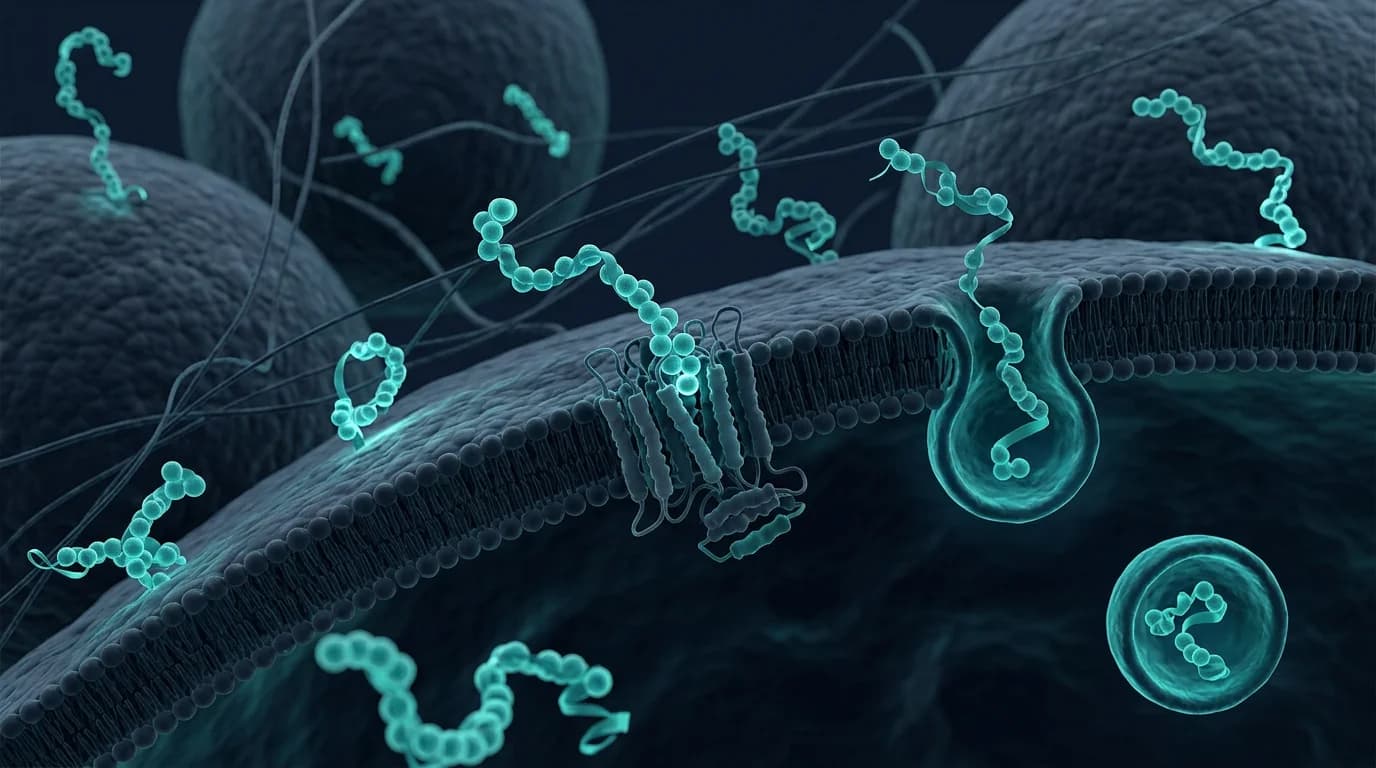
BPC-157 (Body Protection Compound-157) has generated significant interest in the peptide research community for its apparent effects on gut tissue healing and protection. Originally derived from human gastric juice, this 15-amino-acid peptide has been studied extensively in preclinical models for its remarkable tissue-protective and regenerative properties.
In this article, we will explore how BPC-157 relates to the Nutrition node in the FixMyT metabolic framework, what the research shows about gut healing and absorption, and how understanding your gut function fits into the broader picture of metabolic health.
Understanding Nutrition: The Fuel of Your Metabolism
The Nutrition node is Level 1 of the FixMyT metabolic tree. It is the foundation upon which everything else is built. But here is the critical insight: nutrition is not just about what you eat -- it is about what you absorb.
The gut is where the rubber meets the road for nutrition. The intestinal lining is responsible for:
- Nutrient absorption: Amino acids, fatty acids, glucose, vitamins, minerals
- Barrier function: Keeping food particles and bacteria out of the bloodstream
- Signal generation: The gut produces hormones and neurotransmitters
- Immune regulation: 70% of the immune system is gut-associated
When gut function is compromised, even optimal food choices may not translate to optimal cellular nutrition. Poor absorption leads to deficiencies. Barrier dysfunction leads to inflammation. And inflammation cascades downstream through the entire metabolic tree.
Symptoms of Nutrition node dysfunction include sugar cravings, energy crashes, brain fog after meals, and digestive discomfort. But the root cause often lies not in food choices but in the gut's ability to process and absorb those foods.
What Is BPC-157?
BPC-157 is a synthetic pentadecapeptide (15 amino acids) derived from a naturally occurring protein found in human gastric juice. First characterized in the early 1990s by Croatian researchers, it has become one of the most extensively studied peptides for tissue healing and protection.
Key characteristics of BPC-157:
- Sequence: Gly-Glu-Pro-Pro-Pro-Gly-Lys-Pro-Ala-Asp-Asp-Ala-Gly-Leu-Val
- Molecular weight: 1419.53 g/mol
- Half-life: Approximately 4-6 hours
- Research status: Preclinical (extensive animal studies, limited human data)
- Administration: Subcutaneous injection (250-500 mcg, 1-2x daily) or oral
Unlike many peptides, BPC-157 is stable in human gastric acid. It does not require a carrier or protection from stomach acid to remain active, which is relevant for its potential oral use and its natural origin in gastric juice.
For complete technical details, see the full BPC-157 profile on PepGuide.
How BPC-157 Supports Nutritional Function
BPC-157's connection to the Nutrition node centers on its effects on gut tissue integrity and healing:
1. Mucosal Repair and Protection
The primary mechanism of BPC-157 involves accelerating the healing of damaged mucosal tissue. In preclinical studies, it has demonstrated the ability to:
- Accelerate healing of gastric ulcers
- Protect against NSAID-induced gut damage
- Repair damage to intestinal epithelium
- Support tight junction integrity
For nutrient absorption, epithelial integrity is essential. Damaged gut lining means compromised absorption of amino acids, fatty acids, vitamins, and minerals. By supporting mucosal repair, BPC-157 may help restore optimal absorptive capacity.
2. Growth Factor Modulation
BPC-157 upregulates several growth factors critical for tissue repair:
- VEGF (Vascular Endothelial Growth Factor): Promotes blood vessel formation, essential for tissue healing and nutrient delivery
- EGF (Epidermal Growth Factor): Stimulates cell growth and differentiation in epithelial tissues
- FGF (Fibroblast Growth Factor): Essential for wound healing and tissue repair
These growth factors accelerate the natural repair processes that restore absorptive function.
3. Nitric Oxide System Interaction
BPC-157 interacts with the nitric oxide (NO) system in complex ways:
- Protects against NO-synthase blockers
- Modulates NO release in damaged tissues
- Helps maintain vascular tone and blood flow
Adequate blood flow to the intestinal mucosa is essential for both repair and absorption. The NO system plays a key role in regulating this.
4. Gut-Brain Axis Effects
Emerging research suggests BPC-157 has effects on the gut-brain axis through its interactions with the dopamine system. The implications for nutrition are indirect but significant: gut function and brain function are intimately connected, and supporting one often benefits the other.
Studies published in Current Pharmaceutical Design (2018) describe BPC-157's interaction with multiple growth factors and its effects on gastrointestinal healing as "cytoprotective" across multiple organ systems.
What Real People Are Saying
BPC-157 is one of the most discussed peptides in the research community. Here are some perspectives from people who have explored it:
"Had chronic gut issues for years -- bloating, food sensitivities, constant discomfort. Ran BPC-157 at 250mcg 2x daily for 6 weeks, and something definitely shifted. Foods that used to bother me became tolerable. Energy after meals improved. Still not perfect but significant improvement." — u/gut_healing_journey on r/Peptides
"Stacked BPC-157 with a gut healing protocol (bone broth, L-glutamine, zinc carnosine). Hard to separate what did what, but the combination worked better than anything else I had tried. Digestion is smoother, absorption seems better based on how I respond to supplements now." — u/biohack_gut on r/Nootropics
"Started oral BPC-157 specifically for stomach issues. Within 2 weeks the acid reflux that had plagued me for years was noticeably reduced. Still dealing with some issues but marked improvement in how I tolerate food." — u/peptide_research_2025 on r/MorePlatesMoreDates
Important caveat: These are anecdotal reports from individuals conducting personal research. BPC-157 is not FDA-approved, and individual responses vary significantly. These experiences cannot be generalized.
Monitoring Your Nutritional Health with FixMyT
The connection between gut health and the Nutrition node is direct. FixMyT provides a systematic way to assess whether nutritional absorption might be a factor in your metabolic picture.
The symptoms quiz evaluates indicators that relate to both nutrition and gut function:
- Energy crashes after meals (suggests absorption or glucose handling issues)
- Bloating or digestive discomfort (direct gut dysfunction indicators)
- Food sensitivities (may indicate barrier dysfunction)
- Brain fog (often connected to gut-brain axis)
The metabolic tree shows how Nutrition connects downstream to Mitochondria, and how the Gut node (Level 2) feeds back into the system. Understanding your scores on these related nodes can reveal whether gut-focused interventions might address foundational issues.
If your Nutrition and Gut nodes are scoring poorly, addressing absorption and gut health may need to happen before interventions targeting hormones directly can work effectively.
Research and Considerations
The research on BPC-157 for gut healing is extensive in preclinical models but limited in humans:
What the evidence supports:
- Accelerated healing of gastric ulcers in animal models
- Protection against NSAID-induced gut damage
- Enhanced tissue repair across multiple organ systems
- Favorable safety profile in animal studies
What remains uncertain:
- Optimal dosing for different conditions in humans
- Long-term safety with extended use
- Whether oral vs. injectable administration differs in effects
- Specific mechanisms of action in humans
Important considerations:
- BPC-157 is not FDA-approved for any indication
- Quality and purity of research sources varies significantly
- Growth factor upregulation raises theoretical concerns about tumor promotion
- Those with active cancer or cancer history may want to exercise caution
The stability in gastric acid is both a feature and an area of ongoing research -- oral BPC-157 may work differently than injectable forms, particularly for gut-specific effects.
Disclaimer
This article is for educational and research purposes only. BPC-157 is not approved for human use by the FDA or other regulatory agencies. Nothing in this article constitutes medical advice or a recommendation to use any substance.
The theoretical concern about growth factor modulation and tumor biology is worth noting: BPC-157 upregulates growth factors that are beneficial for healing but are also utilized by cancer cells. Individuals with personal or family history of cancer may want to avoid this peptide until more safety data is available.
If you are interested in peptide research, please consult with a qualified healthcare provider. Individual responses to any compound vary significantly.
Learn More
- Full BPC-157 Profile on PepGuide - Complete technical details, dosing, and safety information
- KPV for Gut Inflammation - Complementary gut-healing peptide
- TB-500 for Tissue Repair - Systemic healing peptide often stacked with BPC-157
- FixMyT Metabolic Assessment - Understand your nutritional and gut health baseline
References
- Sikiric P, et al. "Pentadecapeptide BPC 157 and its effects on a NSAID toxicity model: diclofenac-induced gastrointestinal, liver, and encephalopathy lesions." Life Sciences. 2011;88(11-12):535-542. doi:10.1016/j.lfs.2011.01.015
-
Seiwerth S, et al. "BPC 157 and Standard Angiogenic Growth Factors. Gastrointestinal Tract Healing, Lessons from Tendon, Ligament, Muscle and Bone Healing." Current Pharmaceutical Design. 2018;24(18):1972-1989. doi:10.2174/1381612824666180712110447
-
Sikiric P, et al. "Brain-gut Axis and Pentadecapeptide BPC 157: Theoretical and Practical Implications." Current Neuropharmacology. 2016;14(8):857-865. doi:10.2174/1570159X13666160105111147
-
Vukojevic J, et al. "Pentadecapeptide BPC 157 and the central nervous system." Neural Regeneration Research. 2022;17(3):482-487. doi:10.4103/1673-5374.335148
-
Chang CH, et al. "The promoting effect of pentadecapeptide BPC 157 on tendon healing involves tendon outgrowth, cell survival, and cell migration." Journal of Applied Physiology. 2011;110(3):774-780. doi:10.1152/japplphysiol.00945.2010