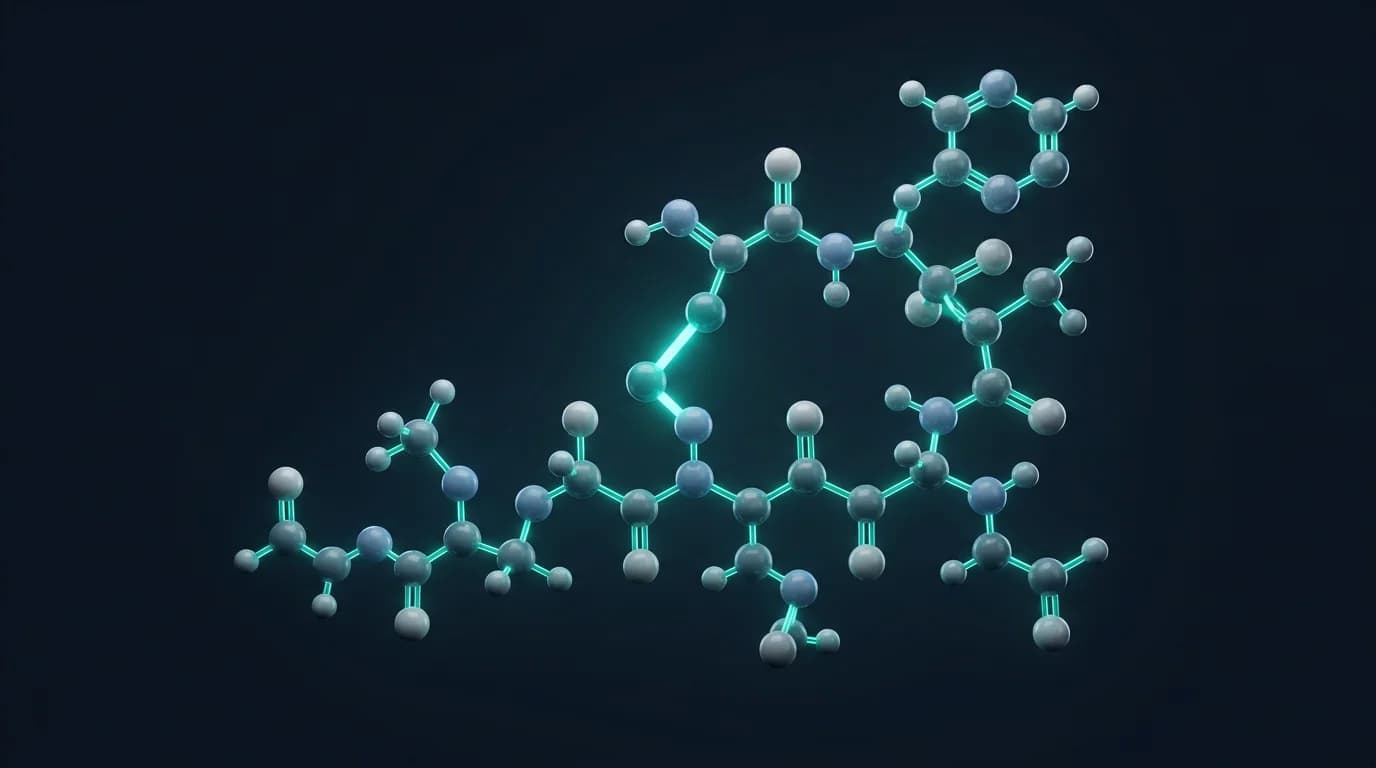
Oxytocin
Also known as: OT, Pitocin, Syntocinon, Love Hormone, Bonding Hormone, Cuddle Chemical
The 'bonding hormone' - a naturally occurring neuropeptide involved in social behavior, trust, anxiety reduction, and emotional processing. Research explores its potential for autism, social anxiety, and PTSD.
▶ Oxytocin in 30 Seconds
Research overview only. Not medical advice.
Half-Life
3-5 minutes (plasma)
Typical Dose
20-40 IU
Frequency
1-2x daily
Routes
Intranasal
Half-Life Visualization
Half-Life Decay Curve
Concentration over time assuming initial dose = 100%
Use arrow keys to navigate: Left/Right for time, Up/Down for peptides
Shaded areas represent reported half-life variability from published studies.
| Peptide | Half-Life | 50% at | 25% at | 12.5% at | Redose Window |
|---|---|---|---|---|---|
Oxytocin | 0.05h | 0.05h | 0.1h | 0.15000000000000002h | 0.05h - 0.1h |
N-Acetyl Selank Amidate | 3h | 3h | 6h | 9h | 3h - 6h |
DSIP | 0.33h | 0.33h | 0.66h | 0.99h | 0.33h - 0.66h |
Comparing Oxytocin with N-Acetyl Selank Amidate and DSIP
Open Full Comparison ToolMechanism of Action
Oxytocin is a naturally occurring nonapeptide hormone and neurotransmitter produced in the hypothalamus and released by the posterior pituitary. It has profound effects on social behavior, emotional processing, and physiological functions.
Primary Mechanisms
Oxytocin Receptor Activation
Oxytocin exerts effects by binding to specific G-protein coupled receptors:
- Widely distributed in brain (amygdala, hippocampus, brainstem)
- Present in peripheral tissues (uterus, breast, heart)
- Triggers intracellular signaling cascades
- Modulates neuronal activity and neurotransmitter release
Amygdala Modulation
Central to anxiolytic and social effects:
- Reduces amygdala reactivity to threatening stimuli
- Decreases fear and anxiety responses
- Enhances processing of positive social cues
- Facilitates approach behavior
Social Cognition Enhancement
- Improves recognition of emotional expressions
- Enhances theory of mind capabilities
- Increases eye contact and social attention
- Promotes trust and prosocial behavior
Stress Axis Regulation
- Attenuates HPA axis activity
- Reduces cortisol response to stress
- Promotes calm and relaxation
- Supports stress resilience
Peripheral vs Central Effects
| Effect | Peripheral | Central (CNS) |
|---|---|---|
| Primary action | Uterine contraction, milk letdown | Social behavior, anxiety reduction |
| Route | IV/IM | Intranasal |
| Dosing | 10-40 IU (obstetric) | 20-40 IU (research) |
| Clinical use | Labor, breastfeeding | Social/psychiatric research |
Research & Evidence
Evidence Level: Oxytocin has extensive research in both obstetric and psychiatric applications. While FDA-approved for labor induction, intranasal use for social/psychiatric conditions remains investigational.
Autism Spectrum Disorder
Research shows promising effects:
- Improved social cognition and emotion recognition
- Enhanced eye contact and social attention
- Better understanding of social cues
- Variable individual responses
Clinical Trials
- Multiple RCTs with mixed but encouraging results
- Some improvement in social responsiveness
- Effects may depend on baseline oxytocin levels
- Ongoing research to identify responders
Social Anxiety Disorder
Studies demonstrate:
- Reduced anxiety in social situations
- Improved comfort in social interactions
- Enhanced positive social memories
- Facilitation of exposure therapy
Post-Traumatic Stress Disorder
Emerging research indicates:
- Reduced fear responses
- Enhanced fear extinction
- Improved therapeutic processing
- Potential adjunct to psychotherapy
Trust and Prosocial Behavior
Classic research findings:
- Increased trust in economic games
- Enhanced generosity and cooperation
- Improved in-group bonding
- Context-dependent effects
Depression and Mood
Preliminary findings:
- May have antidepressant-like effects
- Improves social withdrawal symptoms
- Enhances emotional regulation
- Being studied as adjunct treatment
Bonding and Attachment
Fundamental oxytocin effects:
- Parent-infant bonding
- Romantic attachment
- Social memory formation
- Group cohesion
Dosing
Disclaimer: Intranasal oxytocin for psychiatric/social indications is investigational. IV/IM use for obstetric purposes requires medical supervision. All dosing information is for educational reference.
Research Protocols
Administration Notes
Intranasal (Research Use)
- Most common route for CNS effects
- Delivers peptide toward brain via olfactory pathway
- Use calibrated spray device
- Typically 1-2 sprays per nostril
IV/IM (Medical Use)
- Reserved for obstetric indications
- Requires medical supervision
- Continuous monitoring necessary
Timing Considerations
- Effects typically begin within 30-45 minutes (intranasal)
- Duration of psychological effects: 60-90 minutes
- May dose before social situations
- Morning or daytime use preferred
Storage
- Refrigerate intranasal preparations
- Room temperature acceptable for short periods
- Protect from light
- Use within manufacturer recommendations
Pharmacokinetics
Absorption
- Intranasal: Low systemic bioavailability but effective CNS delivery
- Direct nose-to-brain transport proposed
- Peak effects at 30-60 minutes
- Bypasses blood-brain barrier partially
Distribution
- Crosses blood-brain barrier poorly via systemic route
- Intranasal route achieves brain penetration
- Widely distributed in CNS
- Present in cerebrospinal fluid after intranasal dosing
Metabolism
- Rapidly degraded by oxytocinase (aminopeptidase)
- Half-life in plasma: 3-5 minutes
- Metabolized in liver and kidneys
- No active metabolites identified
Elimination
- Plasma half-life: 3-5 minutes (very short)
- Central effects last longer than plasma levels suggest
- Eliminated via enzymatic degradation
- No accumulation with intranasal dosing
Synergy & Stacking
Oxytocin + Selank/NA-Selank-Amidate
Social anxiety support:
- Oxytocin enhances social connection and reduces social fear
- Selank provides general anxiolytic effects
- Complementary mechanisms for social comfort
- Can be used same day
Oxytocin + Psychotherapy
Research paradigm:
- Oxytocin administered before therapy sessions
- Enhances therapeutic alliance
- Facilitates emotional processing
- May accelerate treatment response
Oxytocin + Mindfulness/Meditation
Wellness approach:
- Oxytocin enhances compassion practices
- Supports loving-kindness meditation
- May deepen social/emotional exercises
- Promotes prosocial states
Timing Recommendations
- Administer 30-45 minutes before desired effect
- Can be used acutely or as regular protocol
- Consider context (social vs non-social situations)
- Effects are context-dependent
Safety & Side Effects
Known Side Effects
Common (intranasal)
- Nasal irritation or dripping
- Headache
- Nausea (mild)
- Dizziness
Uncommon
- Increased anxiety (paradoxical, rare)
- Drowsiness
- Flushing
With IV administration (medical)
- Hypotension
- Tachycardia
- Water retention/hyponatremia
- Uterine hyperstimulation
Important Considerations
Context Dependency
Oxytocin effects depend on context:
- Enhances in-group favoritism
- May increase out-group distrust in some contexts
- Social environment influences response
- Not universally prosocial
Note: Oxytocin is not a simple "love drug." Its effects are complex and context-dependent. It generally amplifies social salience, which can enhance positive OR negative social experiences depending on the situation.
Pregnancy Warning
Warning: Oxytocin causes uterine contractions. Never use during pregnancy except under medical supervision for labor induction. Can cause premature labor and fetal distress.
Long-term Safety
- Limited data on chronic intranasal use
- No serious long-term effects identified in research studies
- Theoretical concern about receptor desensitization
- More research needed on extended use
Monitoring
Subjective Assessment
- Social comfort and anxiety levels
- Quality of social interactions
- Emotional well-being
- Any adverse effects
Research Measures
- Social cognition assessments
- Anxiety scales
- Eye-tracking studies
- Physiological measures (cortisol, heart rate)
Medical Monitoring
For medical use:
- Blood pressure
- Fluid balance
- Uterine activity (obstetric)
- Fetal monitoring (obstetric)
Regulatory Status
Current Status
| Region | Status |
|---|---|
| United States | FDA-approved (obstetric); intranasal research use |
| Canada | Approved prescription |
| European Union | Approved prescription |
| United Kingdom | Prescription only |
| Australia | Schedule 4 |
| WADA | Not prohibited |
Approved vs Research Uses
FDA-Approved:
- Labor induction and augmentation
- Postpartum hemorrhage control
- Milk letdown stimulation
Investigational:
- Autism spectrum disorder
- Social anxiety disorder
- PTSD
- Depression
- Schizophrenia (social symptoms)
Legal Considerations
- Prescription required for pharmaceutical preparations
- Intranasal research formulations available
- Not a controlled substance
- Quality varies between sources
References
Compare Oxytocin Prices
3 vendors| Vendor | Quantity | Price | $/mg | |
|---|---|---|---|---|
Orbitrex PeptidesPartnerBest Value | 2mg | $42.99 | $21.50/mg | View Deal |
Verified Peptides | 10mg | $35.00 | $3.50/mg | View Deal |
Core Peptides | 10mg | $52.00 | $5.20/mg | View Deal |
For research purposes only. We may earn a commission.
See all vendors →Community Insights
Limited DataAggregated from 8 self-reported experiences collected from public forums.
Overall Sentiment
Reported Benefits
- increased muscularity1x
- increased muscle mass1x
- calmness1x
- warmth sensation1x
- reduced sexual arousal1x
- reduced loneliness1x
Reported Side Effects
- dizziness1x
- nasal heat sensation1x
- tearing1x
- heart palpitations1x
- pro-anxiety effects1x
- numbness1x
Common Doses Reported
- 0.33 mg daily1 report
- 2 sprays1 report
- 24 iu daily (2 sprays, 3 times daily, ~4 iu per spray)1 report
- 100mcg, 150mcg, 200mcg, 300mcg1 report
- 100mcg1 report
Administration Routes
- subcutaneous2 reports
- nasal2 reports
- intramuscular1 report
This data reflects self-reported user experiences collected from public forums. It is not medical advice. Individual results vary. Always consult a qualified healthcare professional before using any research compound.
Get Our Free Peptide Research Guide
100 essential tips for safe peptide research, delivered as a free PDF.
Where to Buy Oxytocin
Compare prices from 3 vendors • Best value: $21.50/mg
2
$42.99
$21.50/mg
10
$35.00
$3.50/mg
10
$52.00
$5.20/mg
Disclaimer: These products are sold for research purposes only. Prices and availability may change. Prices as of 4/19/2026.
Need Research Supplies?
Syringes, bacteriostatic water, vials, alcohol swabs, and more. Everything you need for peptide research.
Browse SuppliesRelated Tips for Oxytocin
Understanding FDA Peptide Status Categories
Learn the key FDA classifications that determine peptide availability and legality.
Understanding FDA Status of Research Peptides
Know your peptide's regulatory status before starting research.
International Peptide Import Regulations
Peptide import laws vary significantly between countries.