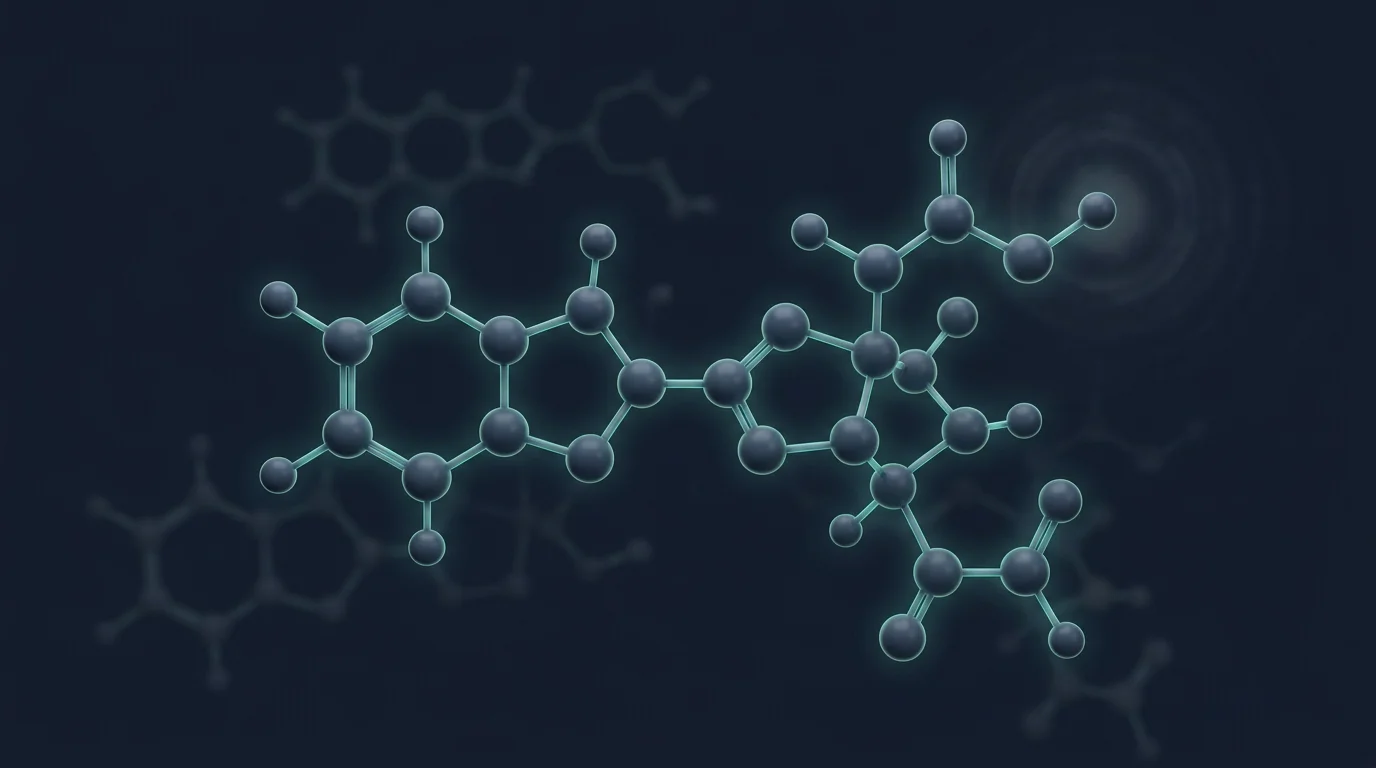
Orforglipron
Also known as: LY3502970, OWL833, Oral GLP-1 Agonist, Non-Peptide GLP-1
The first oral non-peptide GLP-1 receptor agonist, developed by Eli Lilly. A small molecule pill that mimics injectable GLP-1 agonists for obesity and type 2 diabetes treatment without requiring injections.
▶ Orforglipron in 30 Seconds
Research overview only. Not medical advice.
Half-Life
29-49 hours
Typical Dose
12-45 mg
Frequency
1x daily oral
Routes
Oral
Half-Life Visualization
Half-Life Decay Curve
Concentration over time assuming initial dose = 100%
Use arrow keys to navigate: Left/Right for time, Up/Down for peptides
Shaded areas represent reported half-life variability from published studies.
| Peptide | Half-Life | 50% at | 25% at | 12.5% at | Redose Window |
|---|---|---|---|---|---|
Orforglipron | 1d 15h | 1d 15h | 3d 6h | 4d 21h | 1d 15h - 3d 6h |
Semaglutide | 7d | 7d | 14d | 21d | 7d - 14d |
Survodutide | 7d | 7d | 14d | 21d | 7d - 14d |
Comparing Orforglipron with Semaglutide and Survodutide
Open Full Comparison ToolOverview
Orforglipron (LY3502970) is a groundbreaking oral small molecule GLP-1 receptor agonist developed by Eli Lilly. Unlike all currently approved GLP-1 receptor agonists, which are injectable peptides requiring subcutaneous administration, orforglipron is a non-peptide compound that can be taken as a simple daily pill. This represents a fundamental shift in the treatment landscape for obesity and type 2 diabetes.
The significance of orforglipron extends beyond convenience. Current injectable GLP-1 agonists face manufacturing constraints, cold chain storage requirements, and needle-related barriers to patient adherence. Oral semaglutide (Rybelsus) exists but has very low oral bioavailability (~1%) requiring specific fasting conditions and dosing restrictions. Orforglipron overcomes these limitations as a true small molecule with substantially higher oral bioavailability, no food timing restrictions, and no cold chain storage needs.
Key Characteristics
- Origin: Rationally designed small molecule (not a peptide)
- Classification: Non-peptide GLP-1 receptor agonist
- Developer: Eli Lilly (acquired from Chugai Pharmaceutical)
- Molecular Type: Small organic molecule (~500 Da) vs. peptide agonists (~4,000+ Da)
- Unique Feature: First oral non-peptide GLP-1 agonist in late-stage development
- Administration: Once-daily oral tablet with no fasting requirement
Why Orforglipron Matters
| Feature | Injectable GLP-1s | Oral Semaglutide | Orforglipron |
|---|---|---|---|
| Route | Injection | Oral (restricted) | Oral (flexible) |
| Fasting needed | No | Yes (30 min) | No |
| Cold storage | Yes | No | No |
| Bioavailability | 80-95% | ~1% | ~30-40% |
| Manufacturing | Complex biologics | Complex biologics | Small molecule |
| Cost potential | High | High | Lower |
Mechanism
Orforglipron acts as a full agonist at the GLP-1 receptor, producing the same downstream signaling as endogenous GLP-1 and peptide-based GLP-1 agonists, but through a distinct binding mechanism.
Primary Mechanisms
1. GLP-1 Receptor Activation
Orforglipron binds to the GLP-1 receptor through a unique allosteric and orthosteric mechanism:
- Engages the GLP-1 receptor transmembrane domain (unlike peptide agonists which bind the extracellular domain)
- Produces full agonist activity with similar maximal efficacy to native GLP-1
- Activates Gs-protein coupling and cAMP production
- Triggers downstream signaling cascades identical to peptide GLP-1 agonists
- Demonstrates biased agonism profile that may influence efficacy/tolerability
2. Appetite and Food Intake Regulation
Central nervous system effects mirror injectable GLP-1 agonists:
- Activates GLP-1 receptors in the hypothalamic arcuate nucleus and paraventricular nucleus
- Enhances satiety signaling through brainstem nucleus tractus solitarius (NTS)
- Reduces hunger and food cravings through mesolimbic reward circuit modulation
- Decreases caloric intake by 20-30% in clinical studies
- Sustained appetite suppression throughout the dosing interval
3. Glucose Homeostasis
Metabolic effects on glucose regulation:
- Enhances glucose-dependent insulin secretion from pancreatic beta cells
- Suppresses inappropriate glucagon release from alpha cells
- Improves beta-cell function and insulin sensitivity
- Effects are glucose-dependent, minimizing hypoglycemia risk
- Maintains glycemic control through multiple complementary pathways
4. Gastric Motility
GI effects contributing to weight loss:
- Slows gastric emptying, prolonging satiety after meals
- Reduces postprandial glucose excursions
- Contributes to early satiation during meals
- Effect magnitude similar to injectable GLP-1 agonists
Pharmacological Distinction
Unlike peptide GLP-1 agonists:
- Orforglipron binds at a distinct site on the GLP-1 receptor
- Not degraded by DPP-4 enzyme (which rapidly degrades native GLP-1)
- Metabolized by CYP3A4 hepatic enzymes (peptide agonists are degraded by proteolysis)
- This creates a unique drug interaction profile compared to peptide agonists
Research
Research Note: Orforglipron has completed Phase II trials with impressive results and is currently in a comprehensive Phase III program (ACHIEVE). Pivotal data is expected to support regulatory submission.
Phase II Obesity Trial (2023)
The landmark Phase II trial established orforglipron's efficacy in obesity:
- 272 adults with BMI 30+ (or 27+ with comorbidity), without diabetes
- 36-week treatment period with dose escalation
- Weight loss results at 36 weeks:
- 36 mg dose: 9.4% body weight reduction
- 45 mg dose: 14.7% body weight reduction
- Placebo: 2.0% body weight reduction
- More than 45% of participants in the 45 mg group lost at least 15% of body weight
- Published in the New England Journal of Medicine (2023)
Phase II Type 2 Diabetes Trial (2023)
Concurrent diabetes trial demonstrated glycemic efficacy:
- 383 adults with type 2 diabetes, on metformin baseline
- 26-week treatment period
- Results at 26 weeks:
- HbA1c reduction: Up to -2.1% from baseline (45 mg group)
- Weight loss: Up to -10.1% body weight (45 mg group)
- Fasting glucose: Significant reductions across dose groups
- Efficacy comparable to injectable GLP-1 agonists
- Published in the New England Journal of Medicine (2023)
Comparison to Existing Therapies
Based on cross-trial comparisons (not head-to-head):
| Metric | Orforglipron 45mg | Semaglutide 2.4mg | Tirzepatide 15mg |
|---|---|---|---|
| Duration | 36 weeks | 68 weeks | 72 weeks |
| Weight loss | ~14.7% | ~16.9% | ~22.5% |
| Route | Oral daily | SubQ weekly | SubQ weekly |

Note: Different trial durations make direct comparison imprecise. Longer treatment durations generally yield greater weight loss. Phase III results over 52-72 weeks will enable better comparisons.
Phase III Program (ACHIEVE)
The comprehensive Phase III program includes:
- ACHIEVE-1: Obesity without diabetes
- ACHIEVE-2: Type 2 diabetes
- ACHIEVE-3: Obesity with weight-related comorbidities
- ACHIEVE-4: Cardiovascular outcomes (CVOT)
- Enrollment of thousands of patients across multiple countries
- Results anticipated 2025-2026
Manufacturing and Access Advantages
A critical aspect of orforglipron research is the manufacturing story:
- Small molecule manufacturing is well-established and scalable
- No cold chain storage required (room temperature stability)
- Dramatically lower manufacturing costs vs. peptide biologics
- Potential to address the global supply constraints seen with semaglutide/tirzepatide
- Could significantly improve global access to GLP-1 therapy
Dosing
Disclaimer: Orforglipron is an investigational medication not yet approved for any indication. All dosing information is from published clinical trial protocols and should not be used for self-medication.
Clinical Trial Protocols
Administration Notes
Oral Administration
- Take once daily, at approximately the same time each day
- No specific fasting requirement (major advantage over oral semaglutide)
- Can be taken with or without food
- Swallow tablet whole with water
- No food or water restrictions after dosing
Dose Escalation
- Gradual escalation over 8-16 weeks to target dose
- Critical for minimizing GI side effects (nausea, vomiting)
- Each dose level maintained for at least 2-4 weeks
- If GI tolerability is poor, maintain current dose longer before escalating
- Dose reduction to previously tolerated level if side effects are unacceptable
Important Considerations
- Do not crush, chew, or split tablets
- No cold chain storage needed -- store at room temperature
- No need for needle disposal or injection training
- Compatible with standard pharmacy distribution
- CYP3A4 interaction potential (review concomitant medications)
Pharmacokinetics
Absorption
- Oral: Well-absorbed from the gastrointestinal tract
- Tmax: Approximately 4 hours after oral administration
- Bioavailability: Estimated 30-40% (dramatically higher than oral semaglutide's ~1%)
- Food effect: Minimal impact on absorption (no fasting required)
- Absorption is reliable and consistent across fed/fasted states
Distribution
- Moderate plasma protein binding
- Distributes to CNS (crosses blood-brain barrier for appetite suppression effects)
- Volume of distribution consistent with moderate tissue distribution
- Reaches target GLP-1 receptors in hypothalamus, pancreas, and GI tract
Metabolism
- Primary: Hepatic metabolism via CYP3A4
- Secondary: Minor contributions from other CYP enzymes
- This creates a drug interaction profile distinct from peptide GLP-1 agonists
- CYP3A4 inhibitors may increase exposure (dose adjustment may be needed)
- CYP3A4 inducers may decrease efficacy
Elimination
- Half-life: 29-49 hours (supports once-daily dosing)
- Steady state reached in approximately 5-7 days
- Elimination via hepatic metabolism and biliary/renal excretion
- Metabolites cleared renally
- No dose adjustment needed for mild-moderate renal impairment (based on available data)
Synergy & Stacking
As an investigational therapy, orforglipron's combination use is defined by clinical trial design and rational pharmacology.
Evidence-Based Combinations
Orforglipron + Metformin
The standard combination studied in diabetes trials:
- Metformin reduces hepatic glucose output via AMPK
- Orforglipron adds appetite suppression, incretin effects, beta-cell support
- No pharmacokinetic interaction
- Complementary glucose-lowering mechanisms
Orforglipron + SGLT2 Inhibitors
Rational combination for cardiometabolic disease:
- SGLT2 inhibitors (empagliflozin, dapagliflozin) provide cardiovascular and renal protection
- Orforglipron provides weight loss and metabolic improvement
- Independent mechanisms of action
- Both have cardiovascular benefit signals
Orforglipron + Lifestyle Intervention
All clinical trials include:
- Reduced-calorie diet
- Regular physical activity
- Behavioral counseling
- Combination produces greater results than either alone
NOT to be Combined With
- Other GLP-1 receptor agonists (injectable or oral semaglutide, tirzepatide, etc.)
- Redundant mechanism with additive side effects
- No additional benefit expected
Timing Considerations
- Take at the same time each day for consistency
- No specific relationship to meals required
- Separate from CYP3A4 inhibitors if possible
- Oral contraceptives may need timing adjustment (gastric emptying effects)
Safety
Known Side Effects
From Phase II trials, the adverse event profile is consistent with GLP-1 receptor agonism:
Common (>10%)
- Nausea (most frequent, especially during escalation)
- Vomiting
- Diarrhea
- Decreased appetite (therapeutic effect)
- Constipation
Uncommon (1-10%)
- Abdominal pain or discomfort
- Dyspepsia / heartburn
- Dizziness
- Headache
- Fatigue
- Mild increase in heart rate (2-4 bpm)
Rare but Important
- Pancreatitis (class effect; rare in trials)
- Gallbladder events (associated with rapid weight loss)
- Hypoglycemia (primarily with concurrent insulin/sulfonylurea)
Discontinuation Rates
Phase II trials showed:
- GI-related discontinuation rates of 10-17% at highest doses
- Lower discontinuation rates with slower dose escalation
- Most GI events were mild-moderate and transient
- Comparable tolerability to injectable GLP-1 agonists

Contraindications
Absolute contraindications:
- Personal/family history of medullary thyroid carcinoma
- MEN2 syndrome
- Pregnancy or breastfeeding
- Known hypersensitivity to orforglipron
Important: Orforglipron carries the same class-based thyroid C-cell tumor risk warning as all GLP-1 receptor agonists, based on rodent studies. While causation in humans has not been established, patients with medullary thyroid carcinoma risk factors must not use this medication class. Additionally, because orforglipron is metabolized by CYP3A4, patients on strong CYP3A4 inhibitors or inducers require careful evaluation and potential dose adjustment -- a consideration unique to this non-peptide GLP-1 agonist.
Unique Safety Considerations
Compared to peptide GLP-1 agonists:
- CYP3A4 drug interactions (not seen with peptide agonists)
- No injection site reactions (oral administration)
- No anti-drug antibody formation (small molecule, not immunogenic)
- No cold chain storage failures (room temperature stable)
- Potentially wider manufacturing quality consistency
Monitoring
Baseline Assessments
Before initiating orforglipron (in clinical context):
- HbA1c, fasting glucose, fasting insulin
- Body weight, BMI, waist circumference
- Complete metabolic panel including liver and renal function
- Lipid panel
- Thyroid function (TSH, calcitonin)
- Pancreatic evaluation (lipase, amylase) if history of abdominal symptoms
- Review concomitant medications for CYP3A4 interactions
- Pregnancy test in women of childbearing potential
During Treatment
- Weight at each visit (monthly during escalation)
- GI tolerability assessment during dose escalation
- HbA1c every 3 months (if diabetic)
- Liver function tests periodically
- Thyroid monitoring as recommended by guidelines
- Blood glucose monitoring if on insulin/sulfonylureas (hypoglycemia risk)
- Monitor for signs of pancreatitis
- Review medication list for CYP3A4 interactions at each visit
Post-Treatment
- Weight trajectory monitoring (potential regain after discontinuation)
- Metabolic parameter reassessment
- Evaluate need for ongoing or alternative therapy
- No specific withdrawal protocol required (not addictive)
Regulatory
Current Status
| Region | Status |
|---|---|
| United States | Phase III clinical trials (ACHIEVE program) |
| European Union | Phase III clinical trials |
| Japan | Clinical development (originated at Chugai Pharmaceutical) |
| Global | No approvals; regulatory submission anticipated 2025-2026 |
Development History
- Originally discovered by Chugai Pharmaceutical (Japan) as OWL833
- Licensed to Eli Lilly for global development (designated LY3502970)
- Phase I completed 2020
- Phase II results published 2023 (New England Journal of Medicine)
- Phase III (ACHIEVE program) initiated 2023
- First potential approval expected 2026
Market Significance
Orforglipron has the potential to reshape the GLP-1 market:
- Could address the global GLP-1 supply shortage
- Lower manufacturing costs vs. peptide biologics
- No cold chain required expands access in developing regions
- Eliminates needle/injection barriers to patient adherence
- May democratize access to effective obesity pharmacotherapy
- Estimated market potential in the billions if approved
References
Compare Orforglipron Prices
1 vendor| Vendor | Quantity | Price | $/mg | |
|---|---|---|---|---|
Swiss ChemsPartnerBest Value | 6mg | $198.95 | $33.16/mg | View Deal |
For research purposes only. We may earn a commission.
See all vendors →Get Our Free Peptide Research Guide
100 essential tips for safe peptide research, delivered as a free PDF.
Where to Buy Orforglipron
Compare prices from 1 vendor • Best value: $33.16/mg
6
$198.95
$33.16/mg
Disclaimer: These products are sold for research purposes only. Prices and availability may change. Prices as of 4/19/2026.
Need Research Supplies?
Syringes, bacteriostatic water, vials, alcohol swabs, and more. Everything you need for peptide research.
Browse Supplies