Larazotide
Also known as: Larazotide acetate, AT-1001, INN-202, Zonulin antagonist
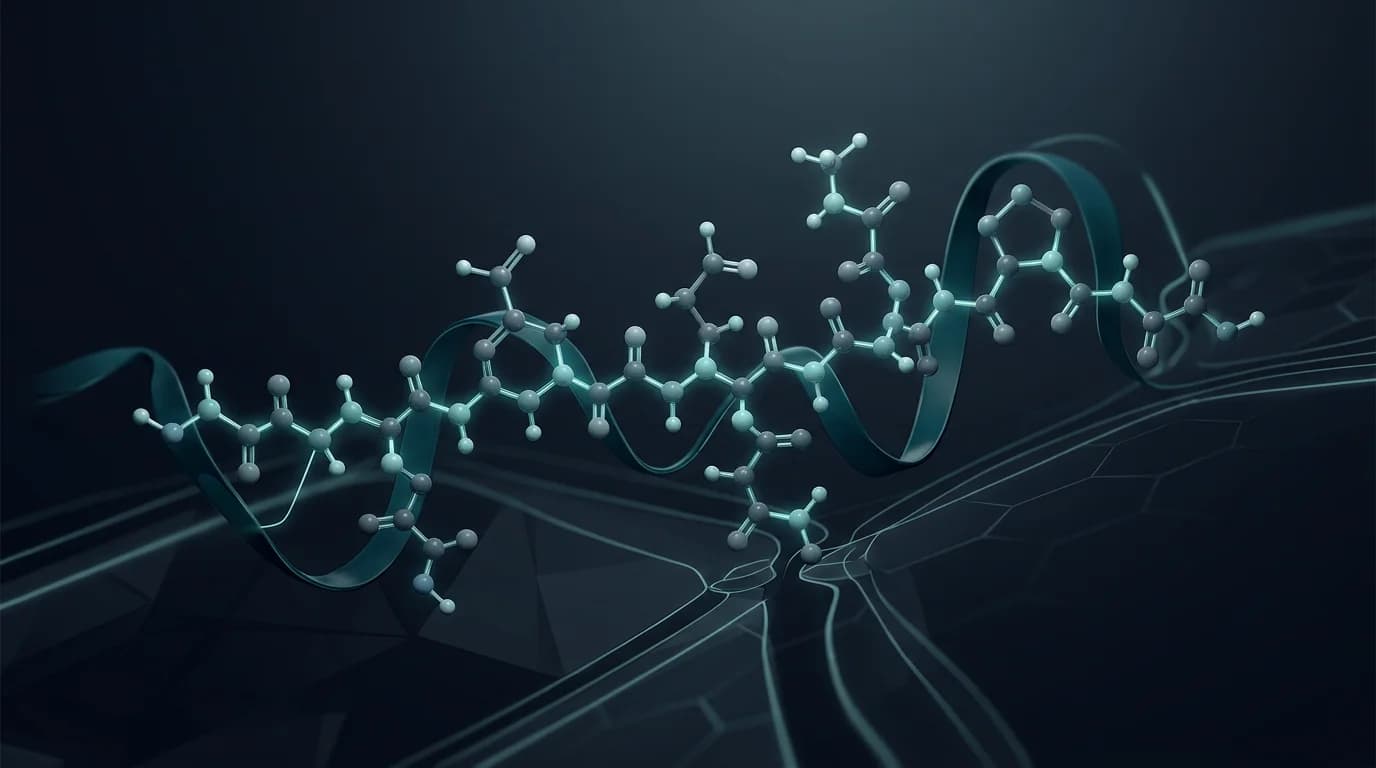
Larazotide acetate (AT-1001) is a zonulin antagonist peptide that regulates intestinal tight junctions. It has been studied extensively for celiac disease and may help reduce intestinal permeability ('leaky gut').
▶ Larazotide in 30 Seconds
Research overview only. Not medical advice.
Half-Life
2-4 hours (local gut activity)
Typical Dose
0.5-2 mg
Frequency
3x daily with meals
Routes
Oral
Half-Life Visualization
Half-Life Decay Curve
Concentration over time assuming initial dose = 100%
Use arrow keys to navigate: Left/Right for time, Up/Down for peptides
Shaded areas represent reported half-life variability from published studies.
| Peptide | Half-Life | 50% at | 25% at | 12.5% at | Redose Window |
|---|---|---|---|---|---|
Larazotide | 3h | 3h | 6h | 9h | 3h - 6h |
BPC-157 | 4h | 4h | 8h | 12h | 4h - 8h |
Comparing Larazotide with BPC-157
Open Full Comparison ToolMechanism of Action
Larazotide acetate is an octapeptide that acts as a competitive antagonist of zonulin at the intestinal tight junction. Zonulin is the only known physiological regulator of intestinal permeability, and its dysregulation is associated with various autoimmune and inflammatory conditions.
Zonulin and Tight Junctions
What is Zonulin?
Zonulin (also known as pre-haptoglobin 2) is a protein that modulates tight junctions between intestinal epithelial cells:
- Released in response to certain triggers (gluten, bacteria)
- Binds to receptors on epithelial cells
- Opens tight junctions, increasing permeability
- Allows passage of larger molecules through the gut barrier
Tight Junction Biology
Tight junctions are protein complexes that seal the space between epithelial cells:
- Composed of claudins, occludin, and ZO proteins
- Regulate paracellular transport
- When disrupted, allow antigens and pathogens into submucosa
How Larazotide Works
Competitive Antagonism
Larazotide competes with zonulin for binding sites:
- Structurally similar to the zonulin active site
- Prevents zonulin from binding to its receptor
- Keeps tight junctions closed and functional
Local Gut Activity
Critically, larazotide works locally in the intestine:
- Minimal systemic absorption (less than 1%)
- Acts directly on intestinal epithelium
- Degraded in the gut lumen
- Very low systemic side effect profile
Downstream Effects
Prevention of Antigen Translocation
- Reduces passage of gluten peptides through gut wall
- Decreases immune activation in celiac disease
- May reduce inflammation from other dietary antigens
Inflammation Reduction
- Less antigen exposure means less immune response
- Reduced cytokine production
- Decreased intestinal inflammation
Research & Evidence
Clinical Development: Larazotide has the most advanced clinical evidence of any peptide for gut permeability. It has completed Phase 3 trials and is under FDA review.
Phase 3 Clinical Trials
CeliAction Study (Phase 3)
The pivotal trial for celiac disease:
- 342 patients with celiac disease on gluten-free diet
- Randomized to larazotide 0.5mg TID or placebo
- Primary endpoint: Reduction in symptoms and days with symptoms
- Results: Significant reduction in symptoms vs placebo
Key Findings
- 26% reduction in symptom days
- Improvement in abdominal pain, bloating, tiredness
- Well-tolerated with adverse event profile similar to placebo
- Effective as adjunct to gluten-free diet
Phase 2 Studies
Dose-Finding Studies
Multiple Phase 2 trials established optimal dosing:
- Doses from 0.25mg to 8mg TID tested
- 0.5mg TID showed optimal benefit/risk
- Higher doses did not improve efficacy
- Confirmed local (non-systemic) mechanism
Gluten Challenge Studies
Studies where patients were deliberately exposed to gluten:
- Larazotide reduced GI symptoms after gluten exposure
- Reduced intestinal permeability measured by lactulose/mannitol test
- Decreased gluten-induced tight junction changes
Mechanistic Studies
Tight Junction Imaging
Biopsy studies showed:
- Preservation of tight junction structure with larazotide
- Reduced zonulin-mediated opening
- Maintained claudin and occludin organization
Permeability Testing
Functional permeability studies demonstrated:
- Reduced lactulose absorption (marker of permeability)
- Maintained mannitol absorption (transcellular route)
- Indicates specific tight junction protection
Beyond Celiac Disease
Other Conditions Under Investigation
- Non-celiac gluten sensitivity
- Irritable bowel syndrome
- Type 1 diabetes (permeability link)
- General "leaky gut" conditions
Dosing
Disclaimer: Larazotide is an investigational drug not yet approved by the FDA. Dosing information is from clinical trials. It should only be used under medical supervision in appropriate clinical settings.
Clinical Trial Protocols
Administration Guidelines
Timing with Meals
Critical for efficacy:
- Must be taken 15 minutes before meals
- Allows peptide to be present when food triggers zonulin release
- Most effective when taken before gluten exposure
Meal Association
- Take with breakfast, lunch, and dinner
- Skip dose if skipping meal
- Not effective if taken without food
Formulation
- Oral capsule (clinical trial formulation)
- Designed for gastric stability
- Releases in small intestine where it acts
- No reconstitution required
Pharmacokinetics
Absorption
- Oral: Designed for minimal absorption
- Less than 1% systemic bioavailability
- Acts locally in intestinal lumen
- Peak local concentration: ~1 hour post-dose
Distribution
- Remains primarily in GI tract
- Minimal plasma levels detectable
- Does not distribute systemically to any significant degree
- This is a feature, not a bug (reduces systemic side effects)
Metabolism
- Degraded by intestinal peptidases
- No hepatic metabolism (not absorbed)
- No CYP450 interactions
- No systemic drug interactions expected
Elimination
- Fecal elimination of parent compound and metabolites
- Duration of local effect: 3-4 hours
- Multiple daily dosing required for coverage
- No accumulation with repeated dosing
Synergy & Stacking
Gut Health Protocols
With BPC-157
Comprehensive gut repair approach:
- Larazotide: Prevents increased permeability
- BPC-157: Actively heals damaged gut lining
- Combined: Protection + repair
With KPV
Anti-inflammatory combination:
- Larazotide: Reduces antigen exposure
- KPV: Reduces inflammatory response to antigens
- Useful for inflammatory bowel conditions
With Probiotics
Microbiome support:
- Healthy bacteria produce short-chain fatty acids
- SCFAs support tight junction integrity
- Larazotide provides additional protection
Lifestyle Synergies
With Gluten-Free Diet
Essential combination for celiac:
- Diet removes primary trigger
- Larazotide provides additional protection
- Addresses accidental gluten exposure
With Elimination Diet
For identifying food triggers:
- Larazotide may provide protection during reintroduction
- Allows clearer identification of triggers
- Reduces confounding from permeability effects
What to Avoid
- Intentional gluten consumption (defeats purpose)
- Assuming larazotide allows unrestricted gluten (it doesn't)
- NSAIDs (independent gut damage)
Safety & Side Effects
Clinical Trial Safety Data
Adverse Events (Similar to Placebo)
- Headache: 6.5% (vs 6.2% placebo)
- Upper respiratory infection: 5.3% (vs 4.7% placebo)
- Urinary tract infection: 3.5% (vs 3.1% placebo)
- Nausea: 2.4% (vs 2.5% placebo)
Gastrointestinal Effects
- Generally well-tolerated
- No increased GI adverse events vs placebo
- Some patients report reduced symptoms (intended effect)
Why Safety Profile is Favorable
Minimal Systemic Exposure
- Less than 1% absorbed
- No systemic drug levels
- Limited potential for systemic toxicity
Local Mechanism
- Acts only in gut lumen
- Does not affect other organ systems
- Mechanism is competitive antagonism (reversible)
Long-Term Safety
Clinical Trial Data
- Up to 12-week treatment periods in trials
- No serious adverse events attributed to larazotide
- Long-term extension studies ongoing
Safety Note: Larazotide has one of the best safety profiles of any gut-active compound studied. This is directly related to its local, non-systemic mechanism of action.
Monitoring
Before Starting
Celiac Disease Confirmation
- Confirm diagnosis with serology and biopsy
- Ensure patient is on gluten-free diet
- Document baseline symptoms
Baseline Assessment
- Symptom diary (pain, bloating, etc.)
- Quality of life assessment
- Consider baseline celiac serology
During Treatment
Symptom Tracking
- Daily symptom diary recommended
- Track meal timing and content
- Note any accidental gluten exposures
Compliance Monitoring
- Ensure three-times-daily dosing
- Confirm timing with meals
- Assess gluten-free diet adherence
Follow-Up
Clinical Response
- Symptom improvement expected within 2-4 weeks
- No blood tests to monitor drug levels
- Celiac serology for disease monitoring (not drug monitoring)
Regulatory Status
Current Status
| Region | Status | Details |
|---|---|---|
| United States | Phase 3 completed | FDA review pending |
| European Union | Phase 3 completed | EMA application expected |
| Canada | Investigational | Following FDA process |
| Australia | Investigational | TGA application potential |
| WADA | Not prohibited | Not performance-enhancing |
Development Timeline
- 2000s: Discovery and preclinical development
- 2010-2015: Phase 2 clinical trials
- 2016-2020: Phase 3 trials
- 2020s: Regulatory submissions
- Future: Potential first zonulin antagonist approval
Availability
- Currently only available through clinical trials
- Not yet approved for prescription use
- Research chemical versions may exist but are not recommended
- Pharmaceutical-grade formulation expected upon approval
References
Get Our Free Peptide Research Guide
100 essential tips for safe peptide research, delivered as a free PDF.
Need Research Supplies?
Syringes, bacteriostatic water, vials, alcohol swabs, and more. Everything you need for peptide research.
Browse Supplies