Follistatin-344
Also known as: Follistatin, FST-344, FS-344, Activin-Binding Protein
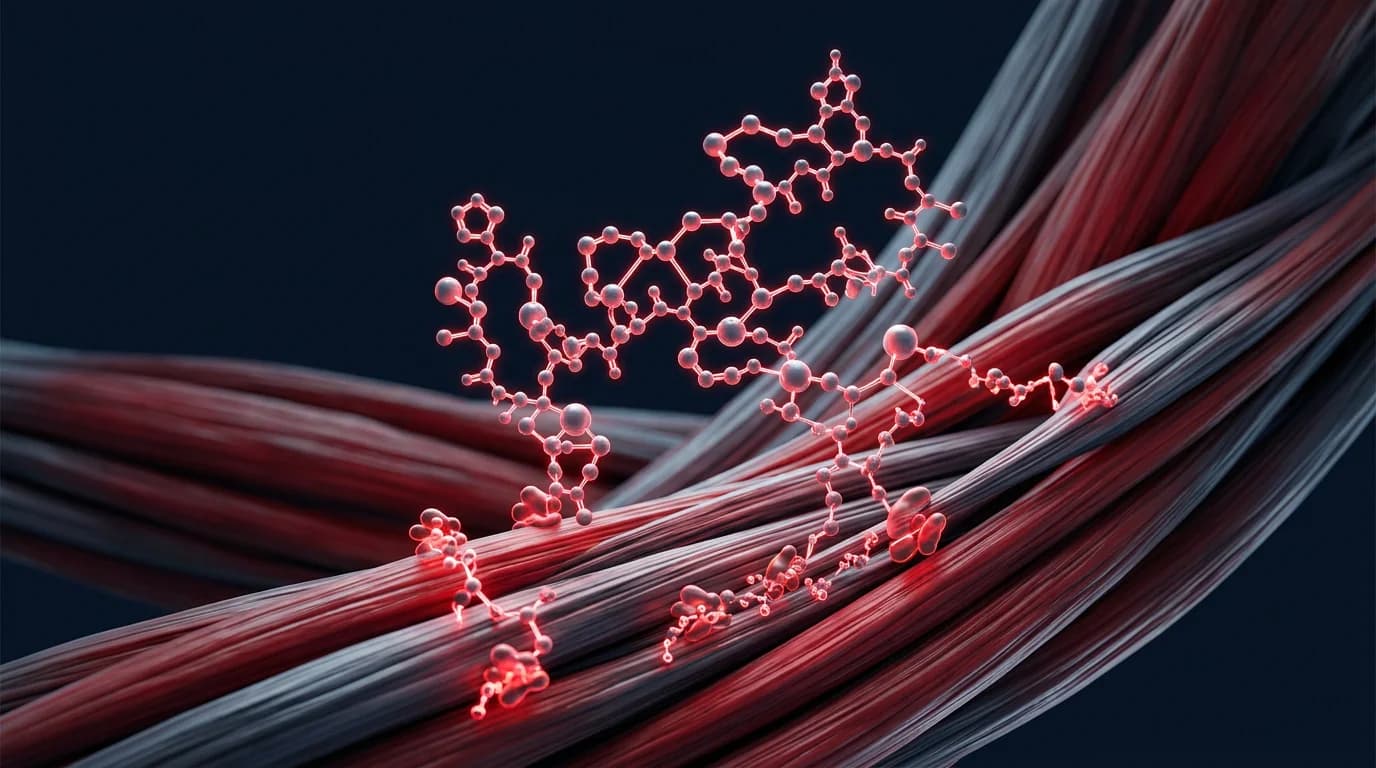
Follistatin-344 is a recombinant form of the naturally occurring glycoprotein follistatin, which functions as a potent myostatin inhibitor. By binding and neutralizing myostatin and other TGF-beta superfamily members, it removes the natural brake on skeletal muscle growth, promoting hypertrophy and potentially improving body composition.
▶ Follistatin-344 in 30 Seconds
Research overview only. Not medical advice.
Half-Life
Unknown
Typical Dose
100 mcg
Frequency
1x daily for 10-30 days
Routes
Subcutaneous
Overview
Follistatin-344 (FST-344) is a recombinant version of the naturally occurring human glycoprotein follistatin, a 344-amino acid protein that functions as a potent antagonist of myostatin, activin, and other members of the TGF-beta superfamily. Follistatin was first identified in 1987 in ovarian follicular fluid, where it was found to inhibit follicle-stimulating hormone (FSH) secretion -- hence its name.
The 344-amino acid isoform (FST-344) is the full-length precursor form of follistatin. In the body, FST-344 is processed into shorter isoforms (FST-315 and FST-288) that have different tissue distribution and binding properties. FST-344, when administered exogenously, is believed to be processed similarly, with effects distributed across multiple tissues.
Follistatin's primary claim to research interest is its role as a myostatin inhibitor. Myostatin (also known as GDF-8) is a powerful negative regulator of skeletal muscle mass. Animals with natural myostatin mutations (such as Belgian Blue cattle and "bully" whippet dogs) exhibit dramatic muscle hypertrophy. By neutralizing myostatin, follistatin effectively removes the biological brake on muscle growth.
Key Characteristics
- Origin: Naturally occurring human glycoprotein, first isolated from ovarian fluid (1987)
- Classification: TGF-beta superfamily antagonist / myostatin inhibitor
- Molecular Weight: ~37,800 g/mol (glycoprotein)
- Isoforms: FST-344 (precursor), FST-315 (circulating), FST-288 (tissue-bound)
- Research Status: Gene therapy trials for muscular dystrophy; limited injectable studies
- Unique Feature: Inhibits multiple growth-limiting factors, not just myostatin
Mechanism
Follistatin-344 operates through direct protein-protein interaction with members of the TGF-beta superfamily, functioning as a molecular "trap" that prevents these ligands from activating their receptors.
Primary Mechanisms
1. Myostatin Neutralization
The most studied mechanism of follistatin:
- Direct Binding: Follistatin binds directly to myostatin (GDF-8) with high affinity
- Receptor Blockade: The follistatin-myostatin complex cannot bind to activin type IIB receptors (ActRIIB) on muscle cells
- Smad Pathway Inhibition: Without myostatin receptor activation, the Smad2/3 signaling cascade that inhibits muscle protein synthesis is suppressed
- Result: Removal of the myostatin "brake" allows muscle satellite cells to proliferate and muscle fibers to undergo hypertrophy
2. Activin Inhibition
Follistatin also binds and neutralizes activins A and B:
- Activins, like myostatin, signal through ActRIIB and suppress muscle growth
- Activin A is also involved in inflammatory signaling, fibrosis, and cachexia
- Follistatin's inhibition of activin contributes to its anti-fibrotic and anti-cachectic properties
- The FSH-suppressing effect (original discovery) is mediated through activin inhibition
3. Broader TGF-beta Modulation
Follistatin has affinity for additional TGF-beta family members:
- GDF-11: Structurally similar to myostatin; involved in aging-related muscle decline
- BMP (Bone Morphogenetic Proteins): Some BMPs are bound by follistatin, potentially affecting bone and cartilage metabolism
- The breadth of TGF-beta modulation is both the strength and the risk of follistatin therapy
Cellular Effects
At the cellular level, follistatin-344 has been shown to:
- Increase satellite cell activation and proliferation in skeletal muscle
- Promote myofiber hypertrophy through increased protein synthesis (mTOR pathway de-repression)
- Reduce muscle fibrosis by inhibiting activin-mediated fibroblast activation
- Potentially affect adipose tissue through activin/myostatin pathway modulation
- Influence reproductive hormone signaling (FSH, LH) through activin antagonism
- Modulate inflammatory responses through TGF-beta superfamily effects
Research
Research Note: Follistatin research is primarily preclinical, with dramatic results in animal models. Human data is extremely limited and comes primarily from gene therapy trials for muscular dystrophy, not injectable follistatin administration. The gap between animal model results and human clinical evidence is significant. The injectable form (FST-344) has minimal published human data.
Muscle Growth and Hypertrophy
Animal Studies
Follistatin has produced striking results in preclinical models:
- Myostatin-knockout mice exhibit approximately 2x normal muscle mass
- Follistatin gene transfer in mice produced 15-30% increases in muscle mass within weeks
- Non-human primate studies (macaques) demonstrated 12-15% increases in muscle size and strength following AAV-follistatin gene therapy
- Effects were observed in both fast-twitch and slow-twitch muscle fibers
- Muscle quality (force per unit area) was maintained, indicating functional hypertrophy
Human Gene Therapy Trials
Limited but promising human data from gene therapy approaches:
- Nationwide Children's Hospital conducted the first human follistatin gene therapy trial in Becker muscular dystrophy patients
- AAV1-FS344 delivery to quadriceps showed improvements in the 6-minute walk test
- No serious adverse events related to follistatin expression
- Muscle biopsies showed evidence of increased muscle fiber size
- These studies used gene therapy (sustained expression), not injectable protein
Muscular Dystrophy
Research on follistatin for muscle-wasting diseases:
- Duchenne and Becker muscular dystrophy models showed significant functional improvement
- Muscle-specific follistatin overexpression rescued dystrophic phenotype in animal models
- Combination with gene correction strategies (exon skipping) showed synergistic benefit
- Follistatin gene therapy trials for inclusion body myositis (IBM) are underway
Body Composition
Preclinical observations on metabolic effects:
- Follistatin overexpression reduced fat mass in addition to increasing muscle mass
- Brown adipose tissue activity may be enhanced through myostatin pathway inhibition
- Glucose tolerance improved in follistatin-treated animals independent of exercise
- The combination of increased muscle mass and reduced fat mass improved overall metabolic health

Reproductive Effects
Due to follistatin's original discovery context:
- FSH levels are affected by follistatin-mediated activin inhibition
- Animal studies showed temporary FSH suppression with exogenous follistatin
- Implications for fertility are unclear but theoretically significant
- The FST-288 isoform has stronger gonadal effects than FST-315
Dosing
Disclaimer: All dosing information is for research reference only. Follistatin-344 is not approved for human use by the FDA or other regulatory agencies. The injectable form has minimal human dosing data. Most human research has used gene therapy, not injectable protein. Consult a healthcare provider before considering any peptide or protein therapy.
Research Protocols
Based on limited community reports and extrapolation from preclinical data:
Administration Notes
Subcutaneous Injection
- Standard route for systemic distribution
- Abdominal subcutaneous tissue is the typical injection site
- Effects are systemic rather than localized to the injection site
- Inject slowly to minimize protein degradation from shear forces
Intramuscular Injection
- Some protocols suggest injection directly into target muscle groups
- Localized effects are theorized but not well-validated for injected protein
- Rotating between major muscle groups is suggested
Reconstitution
When using lyophilized Follistatin-344:
- Use bacteriostatic water for reconstitution
- Reconstitute GENTLY -- do not shake or vortex (protein can denature)
- Roll the vial gently between fingers to dissolve
- Typical concentration: 1mg in 1ml bacteriostatic water = 1mg/ml
- Store reconstituted protein refrigerated (2-8C)
- Use within 7 days of reconstitution (protein stability is limited)
- Do NOT freeze reconstituted solution (freezing can denature the protein)
Pharmacokinetics
Absorption
- Subcutaneous: Absorption rate and bioavailability are not well-characterized for this large protein
- At ~37.8 kDa, follistatin-344 is significantly larger than most peptides, which may limit subcutaneous absorption
- The glycosylation of native follistatin affects its pharmacokinetics; recombinant versions may differ
Distribution
- Endogenous follistatin is found in nearly all tissues
- FST-344 is processed into FST-315 (predominant circulating form) and FST-288 (tissue-bound form)
- FST-315 circulates in the bloodstream and acts systemically
- FST-288 binds to cell-surface heparan sulfate proteoglycans for localized action
- Skeletal muscle, liver, ovary, and skin are primary distribution sites
Metabolism
- Proteolytic degradation by tissue and plasma proteases
- Glycosylation of native follistatin provides some protease resistance
- Recombinant follistatin-344 from E. coli expression systems lacks glycosylation and may have reduced half-life
- Mammalian cell-expressed versions (CHO cells) retain glycosylation
Elimination
- Half-life: Not precisely characterized for injected recombinant protein
- Endogenous follistatin turnover suggests hours to days depending on isoform and glycosylation
- FST-288 (tissue-bound) has a longer effective duration at target sites
- FST-315 (circulating) is cleared more rapidly from plasma
- Protein size limits renal filtration; hepatic degradation is the presumed primary route
Synergy & Stacking
Follistatin-344 is sometimes considered alongside other growth-promoting compounds, though combinations increase risk substantially.
Common Combinations
Follistatin-344 + IGF-1 LR3
A theoretically potent anabolic combination:
- Follistatin removes myostatin's inhibition of muscle growth
- IGF-1 LR3 provides direct anabolic signaling through the IGF-1 receptor
- Together they address both the "brake removal" (follistatin) and "accelerator" (IGF-1) of muscle growth
- This combination carries heightened risk and should be approached with extreme caution
Follistatin-344 + BPC-157
For connective tissue support during muscle growth:
- Rapid muscle hypertrophy can strain tendons and ligaments
- BPC-157 supports connective tissue repair and adaptation
- A pragmatic approach to managing the structural demands of enhanced muscle growth
- No direct interaction between the two compounds expected
Follistatin-344 + Resistance Training
The most important "stack":
- Follistatin removes the biological limit on muscle growth
- Progressive resistance training provides the mechanical stimulus for hypertrophy
- Without training stimulus, follistatin's effects on muscle mass are reduced
- Adequate protein intake (1.6-2.2 g/kg) is essential to support enhanced protein synthesis
Timing Considerations
- Administer follistatin-344 at a consistent time daily during the cycle
- Morning administration may align with the natural anabolic hormonal environment
- Cycle length is typically 10-30 days followed by an extended off period
- Allow significant washout between cycles (at least equal to cycle length)
Safety
Known Side Effects
Due to extremely limited human injectable data, the safety profile is poorly characterized:
Theoretical/Reported (community reports)
- Joint and tendon discomfort (tendons may not adapt as quickly as muscles grow)
- Injection site reactions (redness, swelling, pain)
- Fatigue during initial use
- Feeling of tightness in muscles
Theoretical Concerns (Based on Mechanism)
- FSH suppression and potential reproductive effects (activin antagonism)
- Cardiac muscle effects (myostatin inhibition is not skeletal muscle-specific)
- Tumor promotion (TGF-beta pathway modulation in cancer biology is complex)
- Fibrosis modulation (could be beneficial or harmful depending on context)
- Bone metabolism effects (BMP pathway interference)
- Immune dysregulation (TGF-beta is a master immune regulator)
Not Well-Studied
- Long-term effects of repeated cycles
- Effects on non-skeletal muscle tissues
- Reproductive recovery after use
- Interaction with underlying health conditions
Contraindications
Avoid or use with extreme caution if:
- Active or history of cancer
- Cardiac conditions (cardiomyopathy, heart failure)
- Reproductive concerns or trying to conceive
- Under 18 years of age
- Concurrent use of anabolic steroids without medical supervision
Important: Follistatin-344 is rated "caution" -- the lowest safety confidence rating -- for good reason. Unlike well-studied peptides like BPC-157 or ipamorelin, injectable follistatin has essentially zero published human pharmacokinetic or safety data. The protein's effects extend far beyond muscle growth, touching reproductive function, immune regulation, fibrosis, and potentially tumor biology. Recombinant follistatin from research suppliers may lack proper glycosylation, altering its pharmacological properties unpredictably. Anyone considering use should understand they are operating with minimal safety data in a high-risk domain.
Drug Interactions
Due to limited data, most interactions are theoretical:
- Immunosuppressants (TGF-beta pathway involvement in immune regulation)
- Anabolic agents (additive and potentially unpredictable growth effects)
- Fertility medications (FSH modulation through activin inhibition)
- ACE inhibitors/ARBs (TGF-beta pathway overlap)
Monitoring
Baseline Assessments
Before starting any follistatin-344 protocol:
- Comprehensive metabolic panel (liver, kidney function)
- Complete blood count
- FSH, LH, testosterone, estradiol (reproductive hormone panel)
- IGF-1 level
- Cardiac evaluation (echocardiogram recommended)
- Body composition (DEXA or bioimpedance)
- Tendon and joint baseline assessment
- Cancer screening appropriate for age and sex
During Use
- Reproductive hormones at 2 weeks (watch for FSH suppression)
- Monitor for tendon or joint pain (muscles may outgrow connective tissue)
- Track muscle measurements and strength objectively
- Liver function tests at 2 weeks
- Watch for signs of cardiac strain (shortness of breath, chest discomfort)
- Blood pressure monitoring
- Track subjective wellbeing and recovery
Post-Protocol
- Repeat reproductive hormone panel at 2 and 4 weeks post-cycle
- Body composition comparison to baseline
- Cardiac reassessment if any symptoms noted during use
- Monitor for maintenance of muscle gains after discontinuation
- Full metabolic panel to ensure normalization
- Allow at least 30-60 days before considering another cycle
Regulatory
Current Status
| Region | Status |
|---|---|
| United States | Not FDA approved; research chemical |
| European Union | Not approved for human use |
| Australia | Not scheduled; research use only |
| Canada | Not approved; research compound |
| WADA | Prohibited (S4.2: Myostatin Inhibitors) |
Legal Considerations
- Classified as a research chemical in most jurisdictions
- Explicitly prohibited by WADA under the category of myostatin inhibitors
- Athletes in tested sports face sanctions for follistatin use
- Not a controlled substance in most countries
- Available from research protein suppliers, though quality and glycosylation status vary enormously
- Gene therapy applications are regulated separately under biologics frameworks
Future Outlook
- Gene therapy approaches (AAV-follistatin) are progressing through clinical trials for muscular dystrophies
- Injectable recombinant follistatin faces pharmaceutical development challenges (protein stability, delivery, half-life)
- Myostatin inhibitor antibodies (e.g., bimagrumab) represent an alternative pharmacological approach
- The concept of "removing the brake" on muscle growth continues to attract intense research interest
- Understanding the full scope of TGF-beta modulation effects is essential before broader clinical use
- Muscle-wasting conditions (sarcopenia, cachexia, muscular dystrophy) remain the primary therapeutic targets
References
Compare Follistatin-344 Prices
2 vendors| Vendor | Quantity | Price | $/mg | |
|---|---|---|---|---|
Core PeptidesBest Value | 1mg | $138.00 | $138.00/mg | View Deal |
Biotech Peptides | 1mg | $162.00 | $162.00/mg | View Deal |
For research purposes only. We may earn a commission.
See all vendors →Get Our Free Peptide Research Guide
100 essential tips for safe peptide research, delivered as a free PDF.
Where to Buy Follistatin-344
Compare prices from 2 vendors • Best value: $138.00/mg
1
$138.00
$138.00/mg
1
$162.00
$162.00/mg
Disclaimer: These products are sold for research purposes only. Prices and availability may change. Prices as of 4/19/2026.
Need Research Supplies?
Syringes, bacteriostatic water, vials, alcohol swabs, and more. Everything you need for peptide research.
Browse Supplies